Stairs are intentionally designed to connect one level to another, yet they hold a kind of magic. Depending on where you are, you might be ascending toward an extraordinary view or
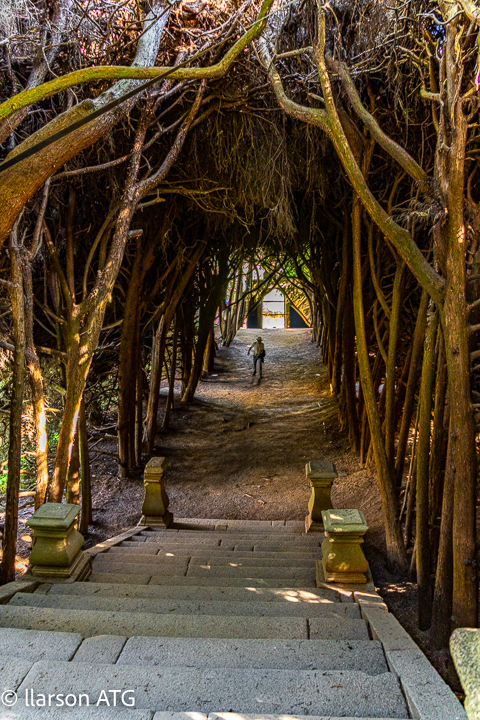
descending into a place that feels strange, hidden, or mysterious. They are transitional spaces, neither fully here nor there, and it is within that in-between quality that their power lies.
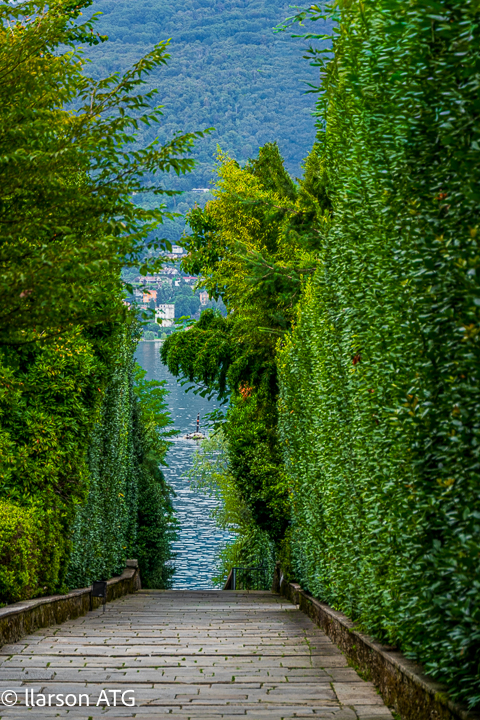
As we step into a new year, our own movement forward resembles the act of climbing stairs. Progress rarely happens all at once. Instead, it comes step by step, with effort, pauses, and moments of reflection along the way. Stairs remind us that advancement requires intention, balance, and patience.
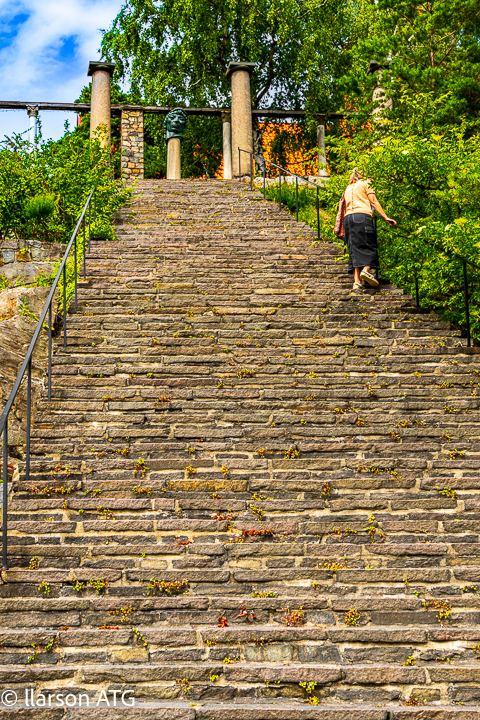
In my explorations of gardens, I have encountered countless sets of steps. Sometimes they simply lead into a garden, serving a utilitarian purpose by bridging a vertical rise in the land and allowing access to a new space. Dirt slopes can be manageable when dry, but once rain falls, footing becomes uncertain. Steps provide stability on a slant, transforming an obstacle into a navigable path. Still, they demand effort. Moving through a garden by way of stairs is not passive; it asks something of the body.
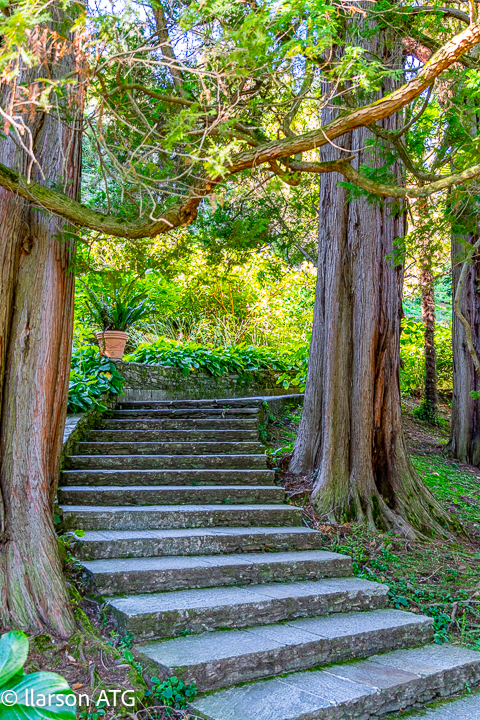
Predictable and carefully placed steps rarely call attention to themselves. We accept them as part of the journey—a brief challenge to reach the next view. Occasionally, a friendly stranger passes by, descending as you ascend, reminding you that the journey is shared.
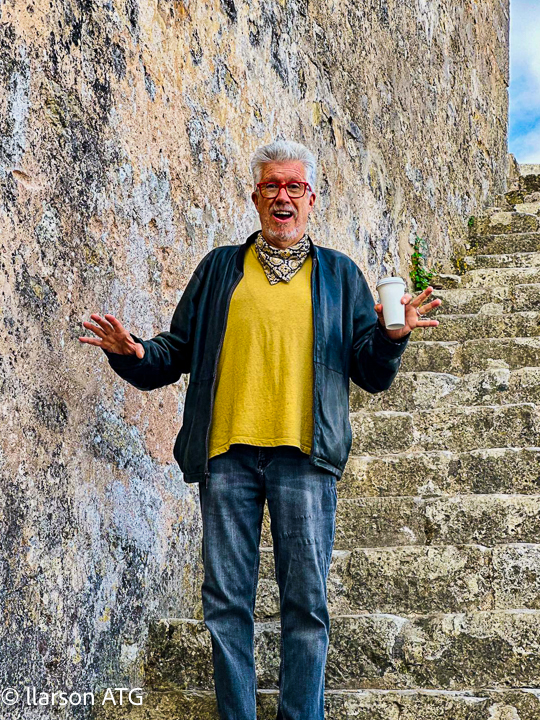
We are often told to “take the stairs” for the sake of our health, and exploring stairways in gardens replaces the monotony of gym equipment with something far more engaging. In gardens, stairs can feel magical.
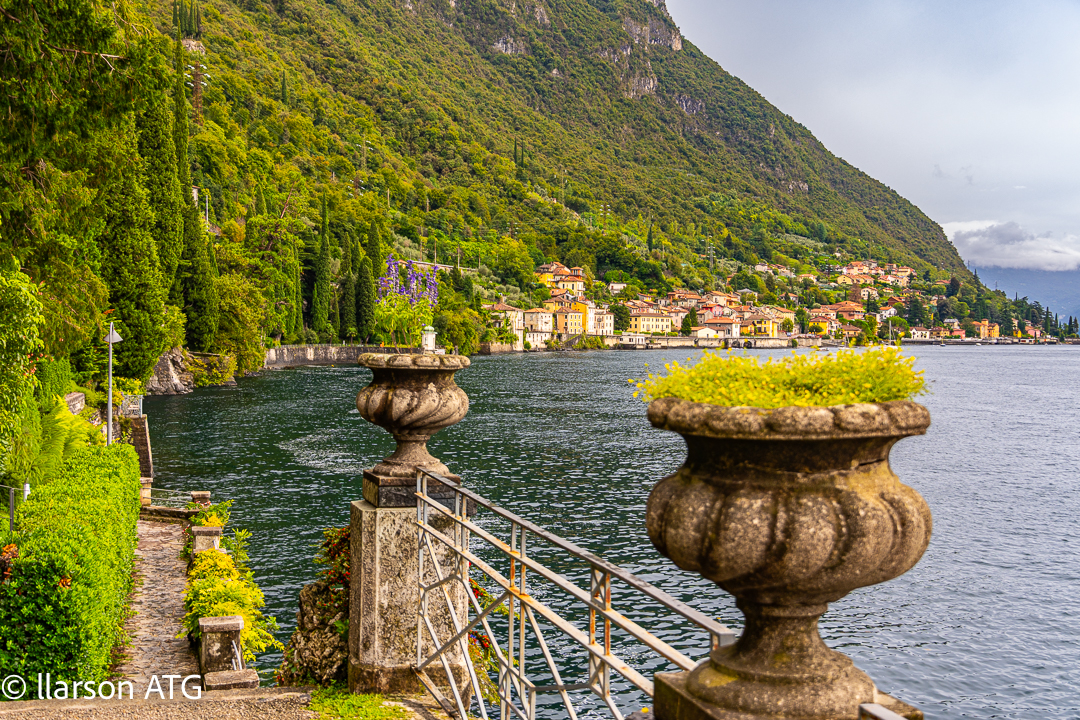
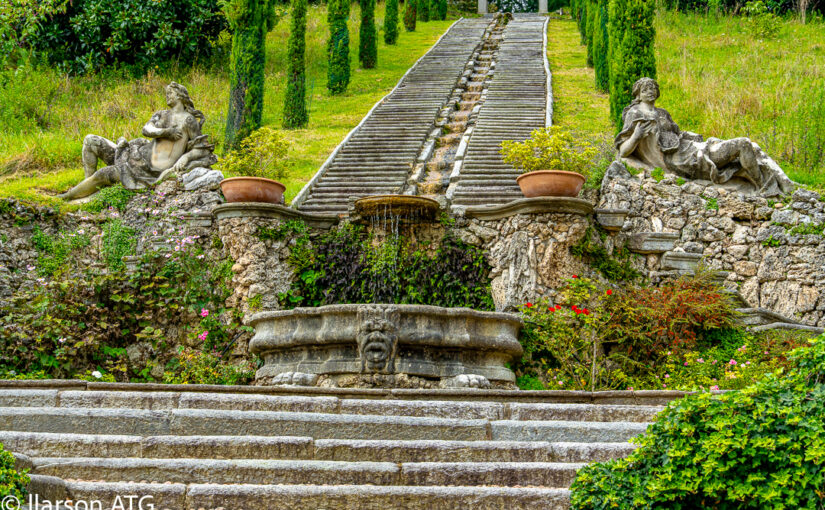
In Italian gardens especially, reaching the top often requires climbing multiple flights, yet each turn offers a fresh perspective. With every shift in direction, the landscape reveals itself anew.

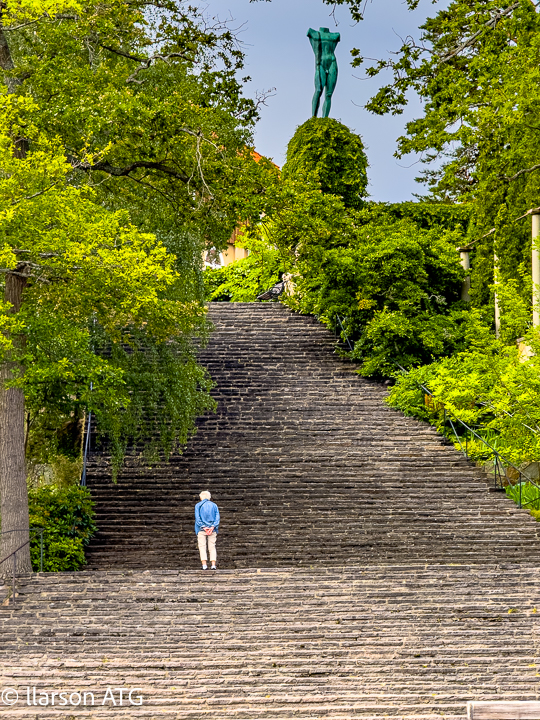
Stairs generate curiosity. What lies above? What waits below? Contemporary staircases are standardized, with familiar riser heights and angles that offer comfort through predictability. We rarely notice how much we rely on that consistency. In contrast, older gardens in Europe and Asia often feature steps with rises of ten or even twelve inches—far steeper than the seven inches we expect.
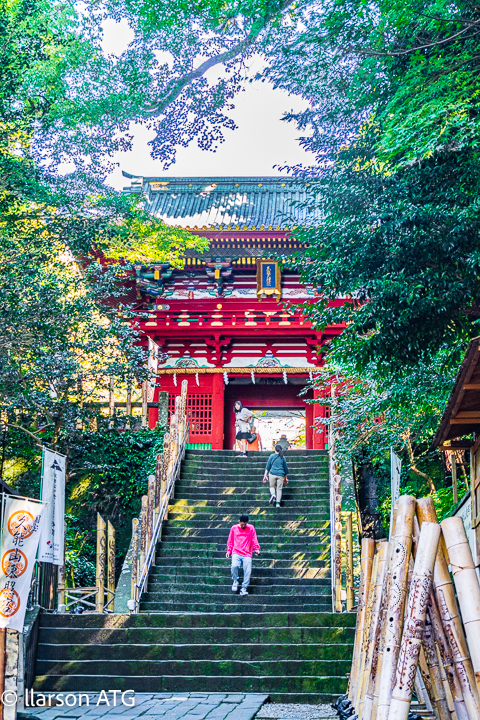
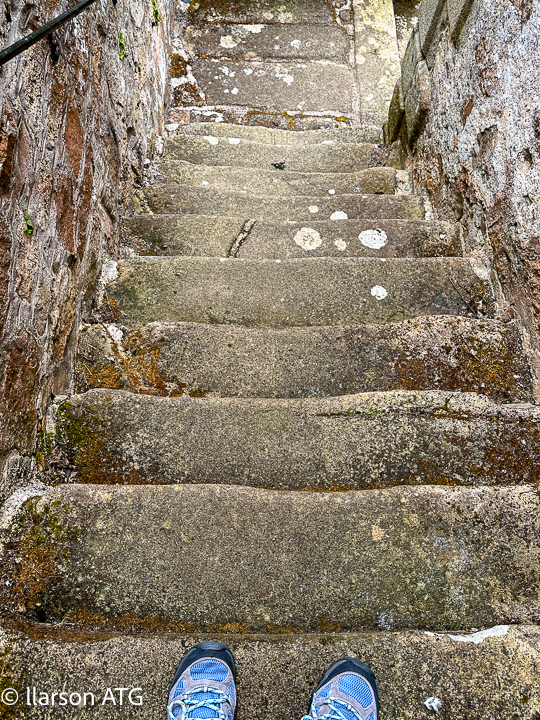
These steps make climbing strenuous and descending risky. Sometimes there is no railing to grasp, no support beyond one’s own balance. Stairs will get you there, but never all at once, and never without effort.
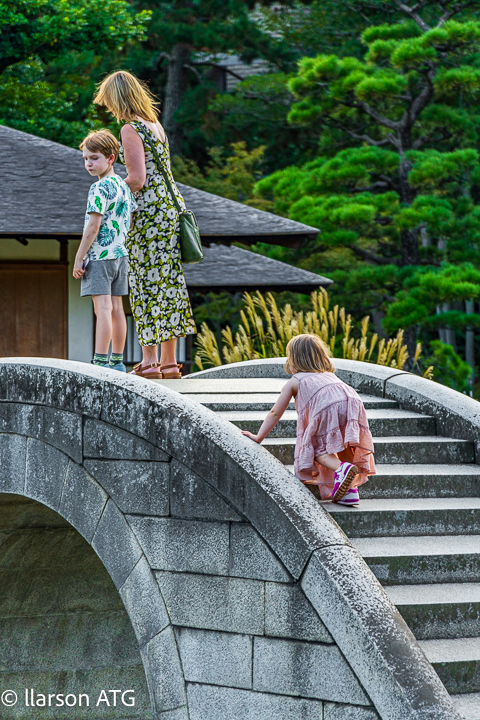
They also invite rest. One can sit on a step to recover from a demanding climb or simply to absorb the surroundings. I once encountered an entire class of students sitting on a staircase, resting and chatting so completely that there was no clear path through. On another occasion, I was redirected to a different entrance of a hotel so an influencer and her photographer could continue a photo session on the stairs. While stairways make striking backdrops, blocking the entire passage felt like a bit unfair.
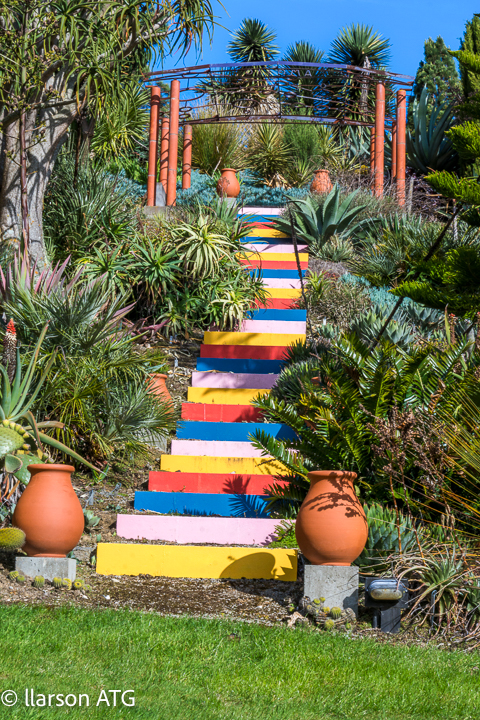
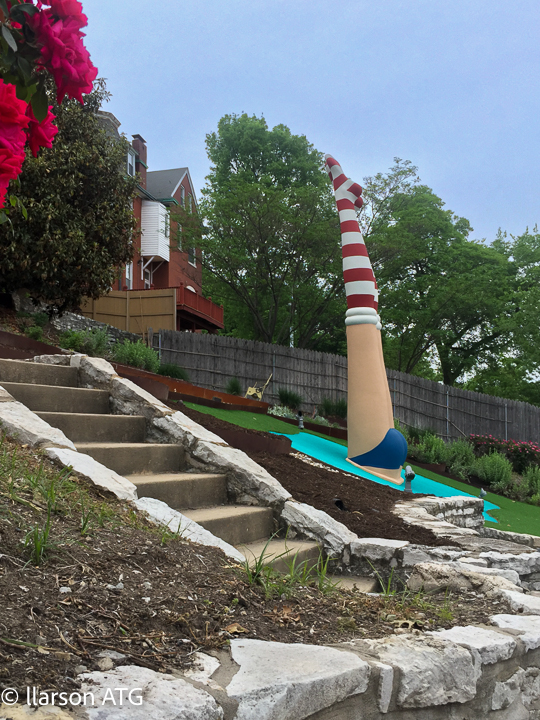
As you climb, it is important to watch where you are going, but also to look to the sides. Gardens often place sculptures, plants, or benches alongside stairs, offering opportunities to pause and take in the view.
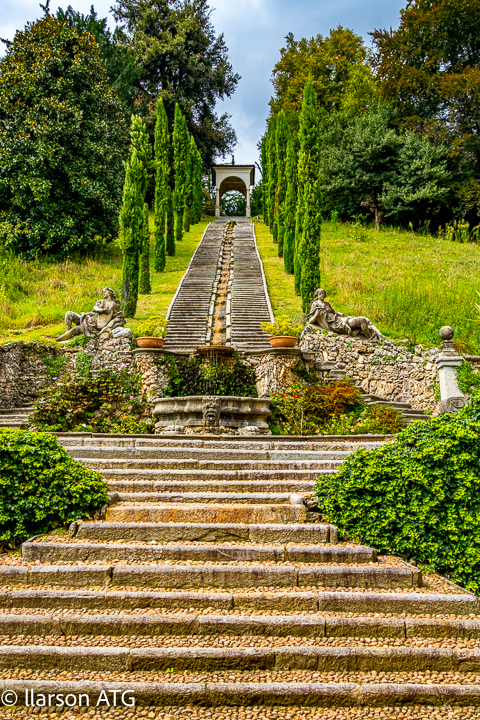
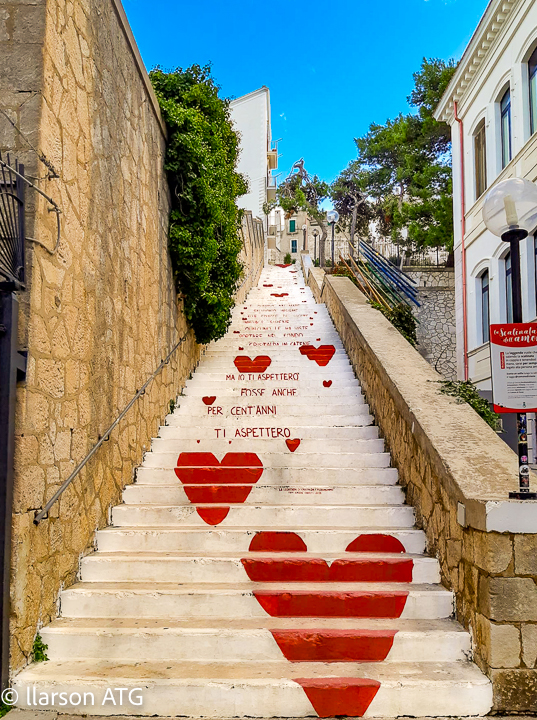
Stairs themselves can be grand architectural statements—constructed of marble, painted in bright colors for whimsy, or designed to curve out of sight and heighten anticipation.
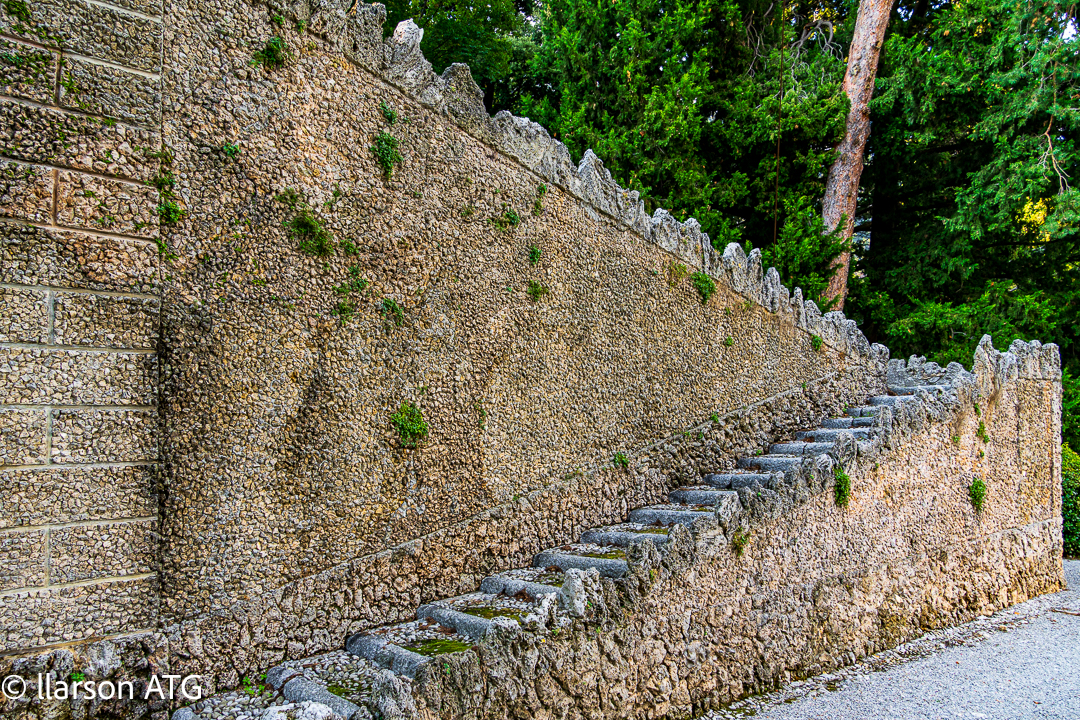
In some gardens, a staircase serves as a focal point meant to impress; in others, it is rough and uneven, functional but risky. Like all garden elements, stairs require maintenance, and neglect can quickly turn them from inviting to dangerous.
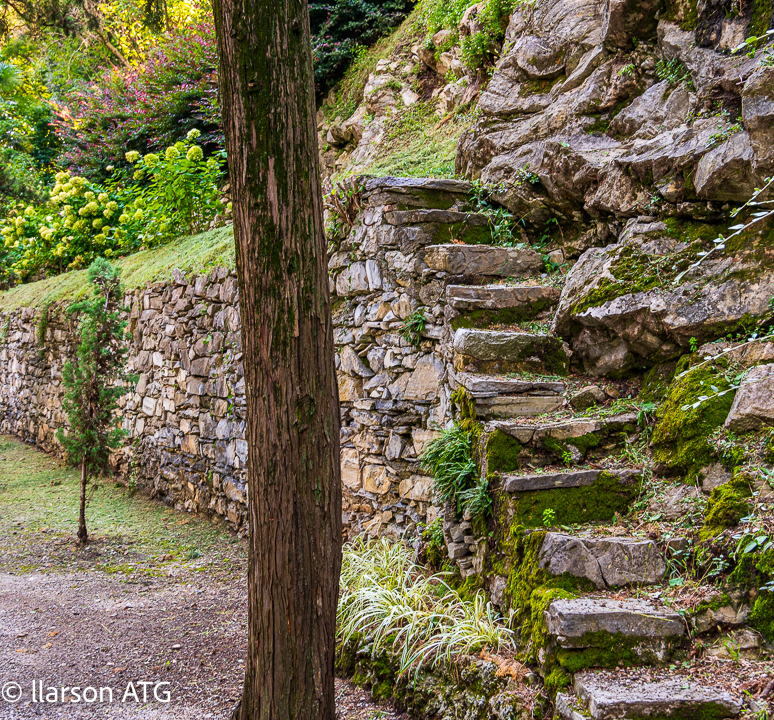
Building stairs is no small task. I once helped build three simple steps on a riverbank, and hours were spent moving dirt, measuring carefully, and tamping soil. Adding stone increased the challenge even more. That experience deepened my respect for every staircase I encounter, no matter how modest.
Today, increased awareness of accessibility has reshaped how we think about stairs. Ramps are essential for those who cannot climb steps, and some designs attempt to integrate both. In Vancouver, a staircase at Robson Square incorporates a ramp within the same space—a concept that is both ingenious and complex.
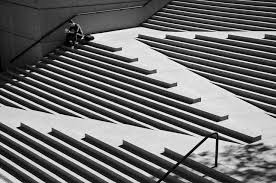
While visually striking, the design presents challenges and requires a great deal of space, reminding us that thoughtful transitions are rarely simple.
Ultimately, stairs symbolize movement, effort, and discovery. Whether in gardens or in life, they ask us to proceed deliberately, to pause when needed, and to remain curious about what lies ahead. Like the new year itself, they invite us forward—one step at a time.

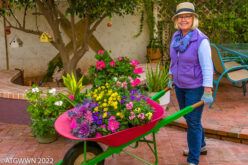
If you are going to climb stairs you need to be prepared.
So beautiful and interesting! You have been to so many wonderful places!
It has been such fun to make these discoveries!
You look amazing and healthy to climb stairs
Beautiful pictures
Happy new year
Becky Hasler
Happy new Year! Just trying to keep moving!
Just Beautiful. Makes me want to look for stairs in my neighborhood.
Oh do go looking! Thank you
I love your pictures but also your write up is charming.
So glad you are traveling along with me
What a wonderful set of steps, and places!!
Beautiful places and beautiful photos!
You both look wonderful, happy and healthy!
Happy New Year!
Josephine Vincze
Thanks Jo, lots of steps!
Such a beautiful variety
All are so different!
Thanks again for a visually stunning & captivating take on stairs.
You both look vibrant & ready for 2026 adventures!!
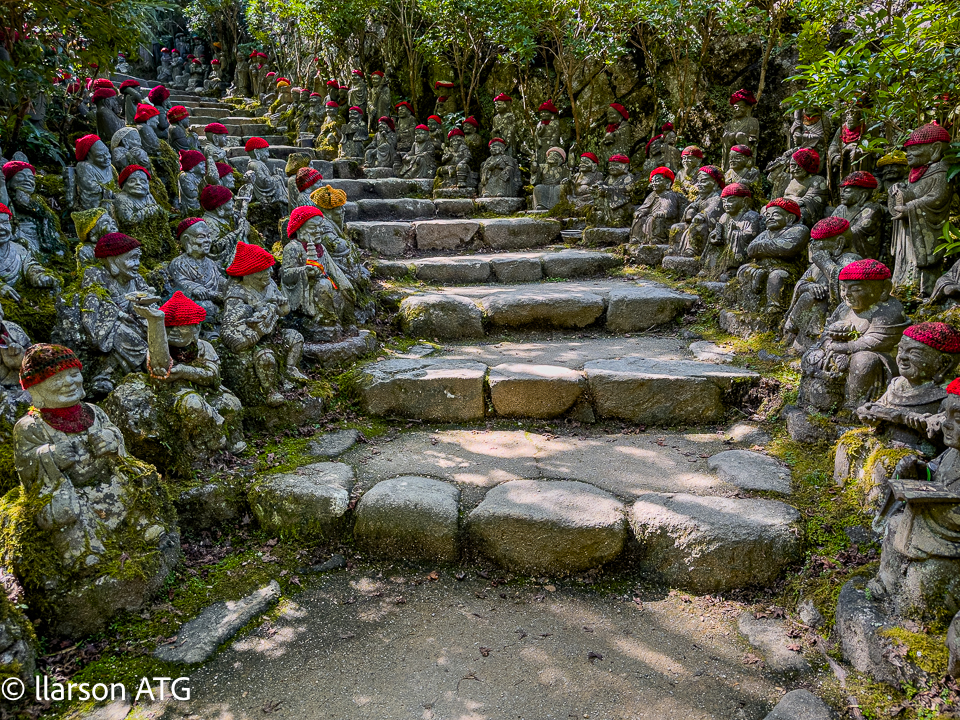
Especially curious about the figures with red- knitted caps along the steps in Miyajima Island, Hiroshima, Japan.
What can you tell us?
About the red hats, at Daisho-in Temple there are nearly 500 little Rakan statues (enlightened disciples of Buddha) each with a different facial expression that you pass by as you climb to the top. The little hats placed on their heads are offerings from temple visitors given as acts of kindness and respect.