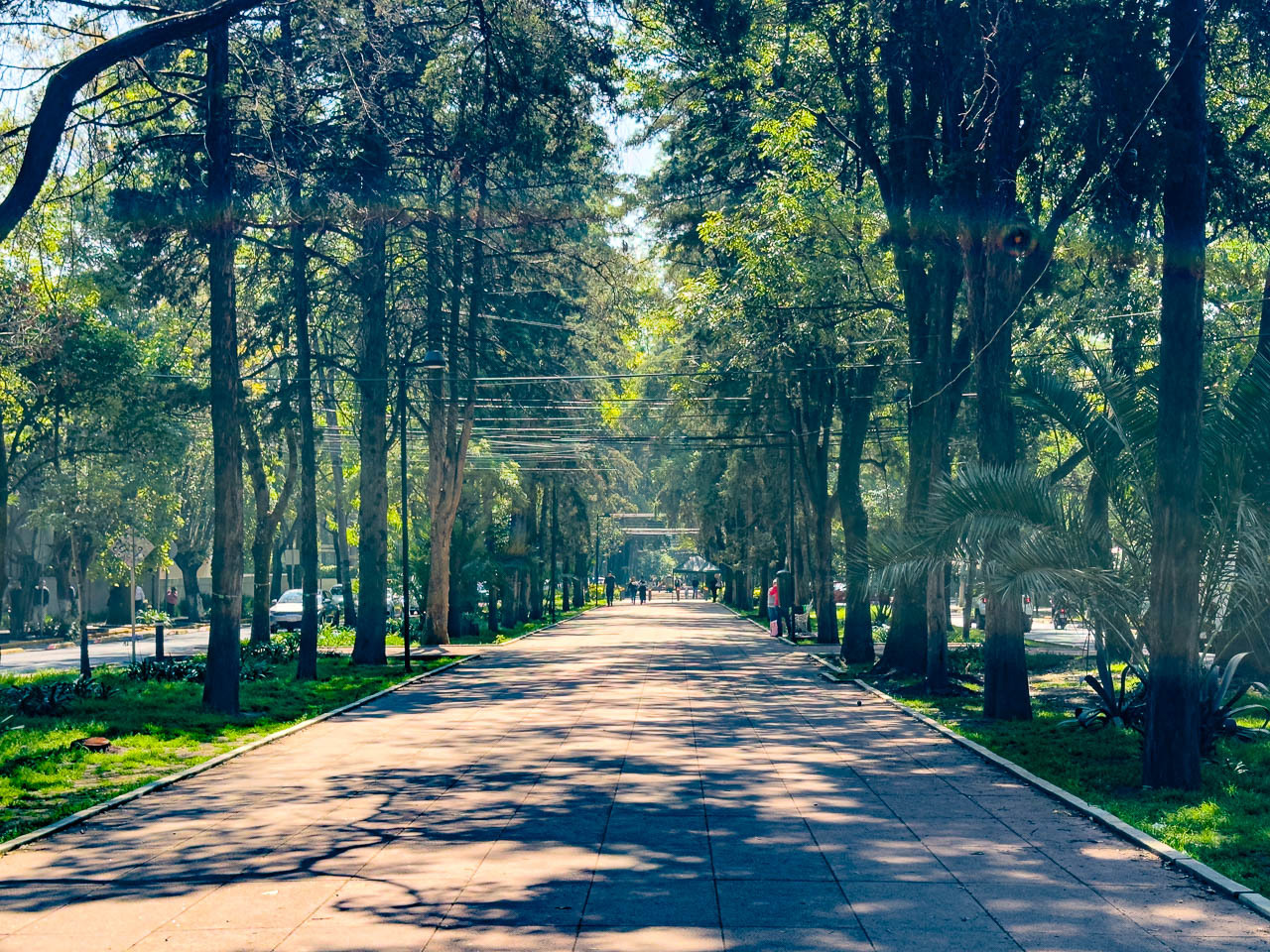
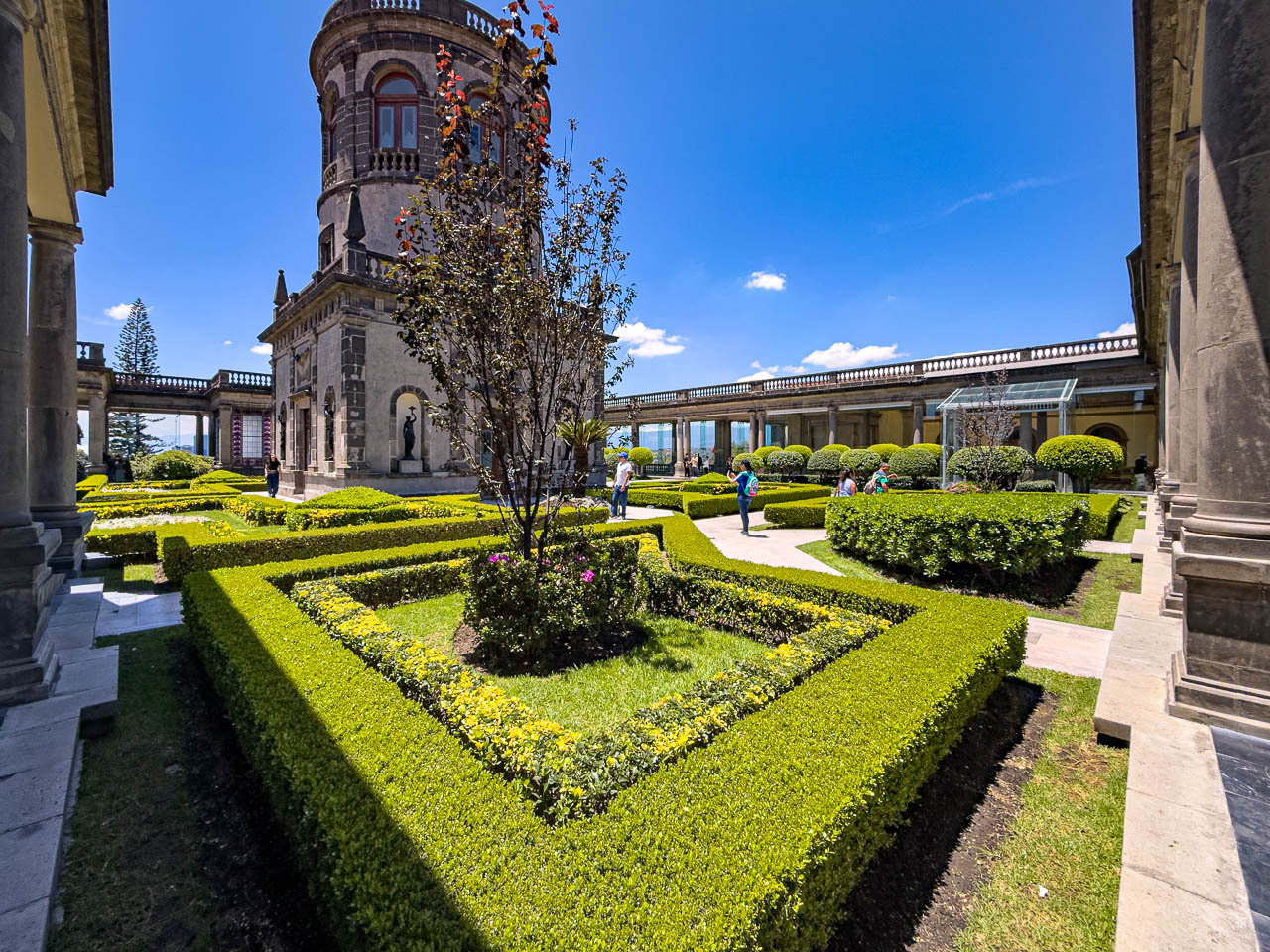
I went walking in Chapultepec (chuh-pool-tuh-pek) Park in Mexico City. It is a park built around a rock formation that the Aztecs celebrated in 1325, then named Tenochtitlan.
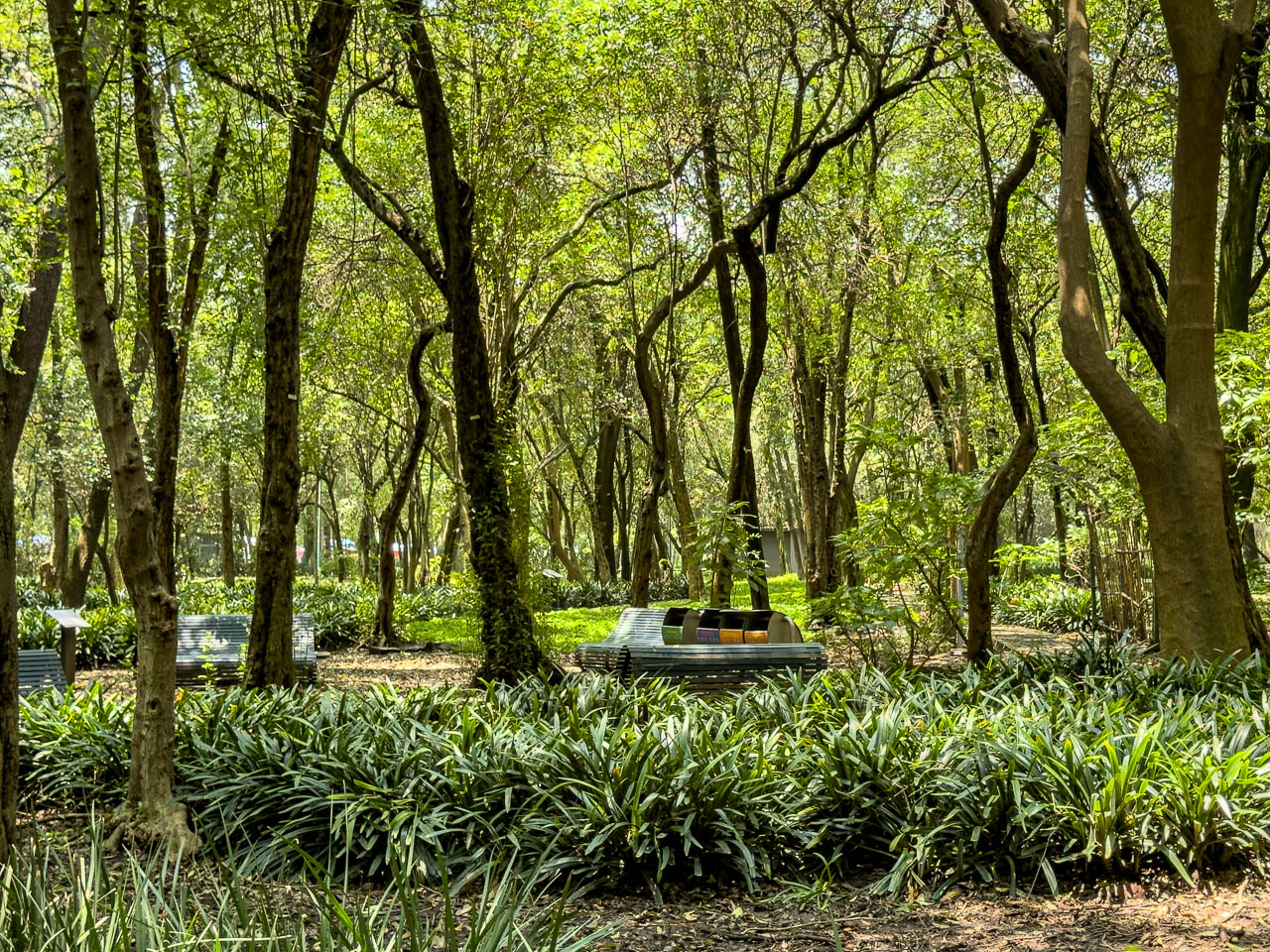
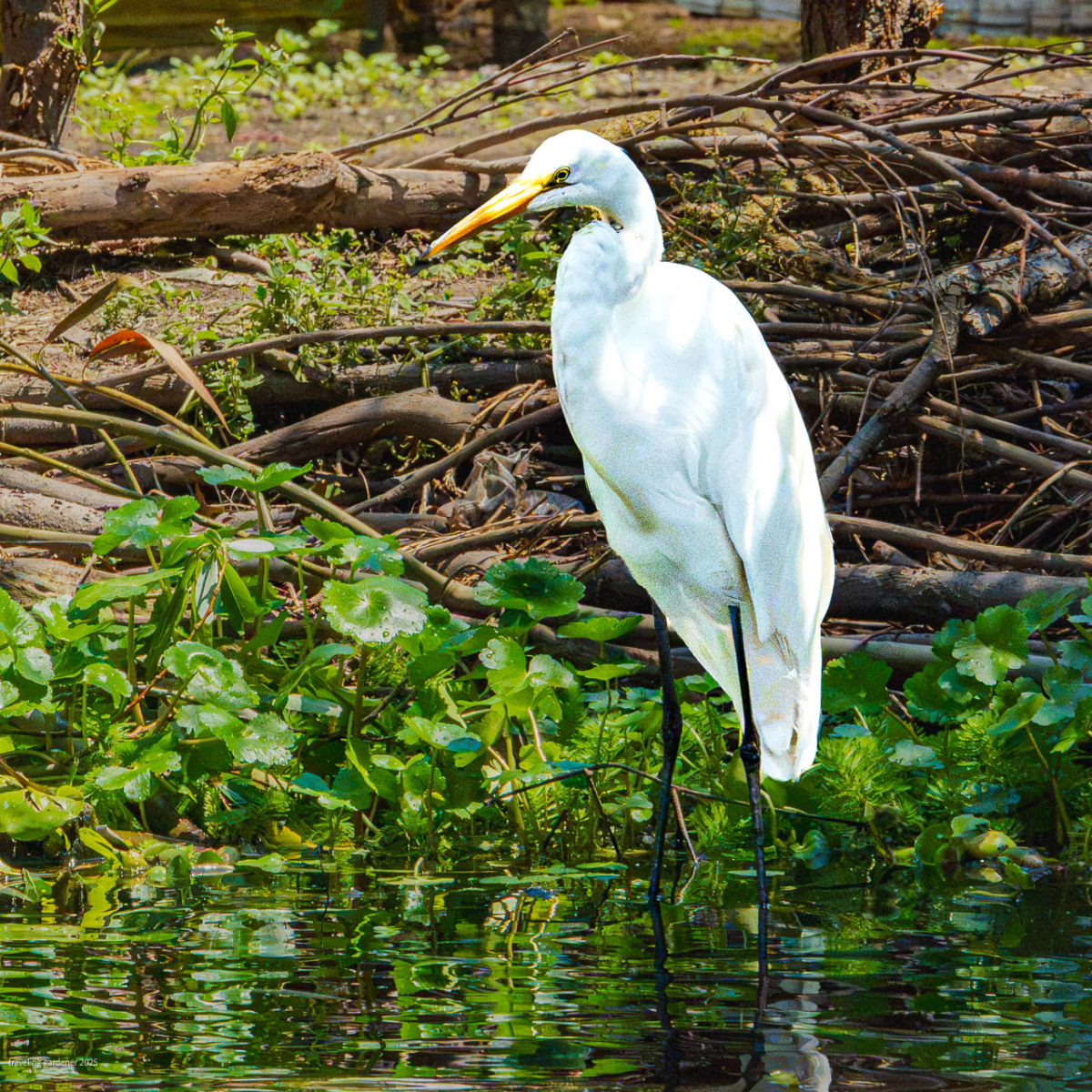
Bosque de Chapultepec, or the forest of grasshopper hill, serves as a green lung of Mexico City. It is a public paradise offering trees, plants, ponds, birds, butterflies, flowers, and all the critters living among and under the leaves. It is twice as large (1700 acres) as New York’s Central Park. It includes a castle, presidential palace, a zoo, and museums.
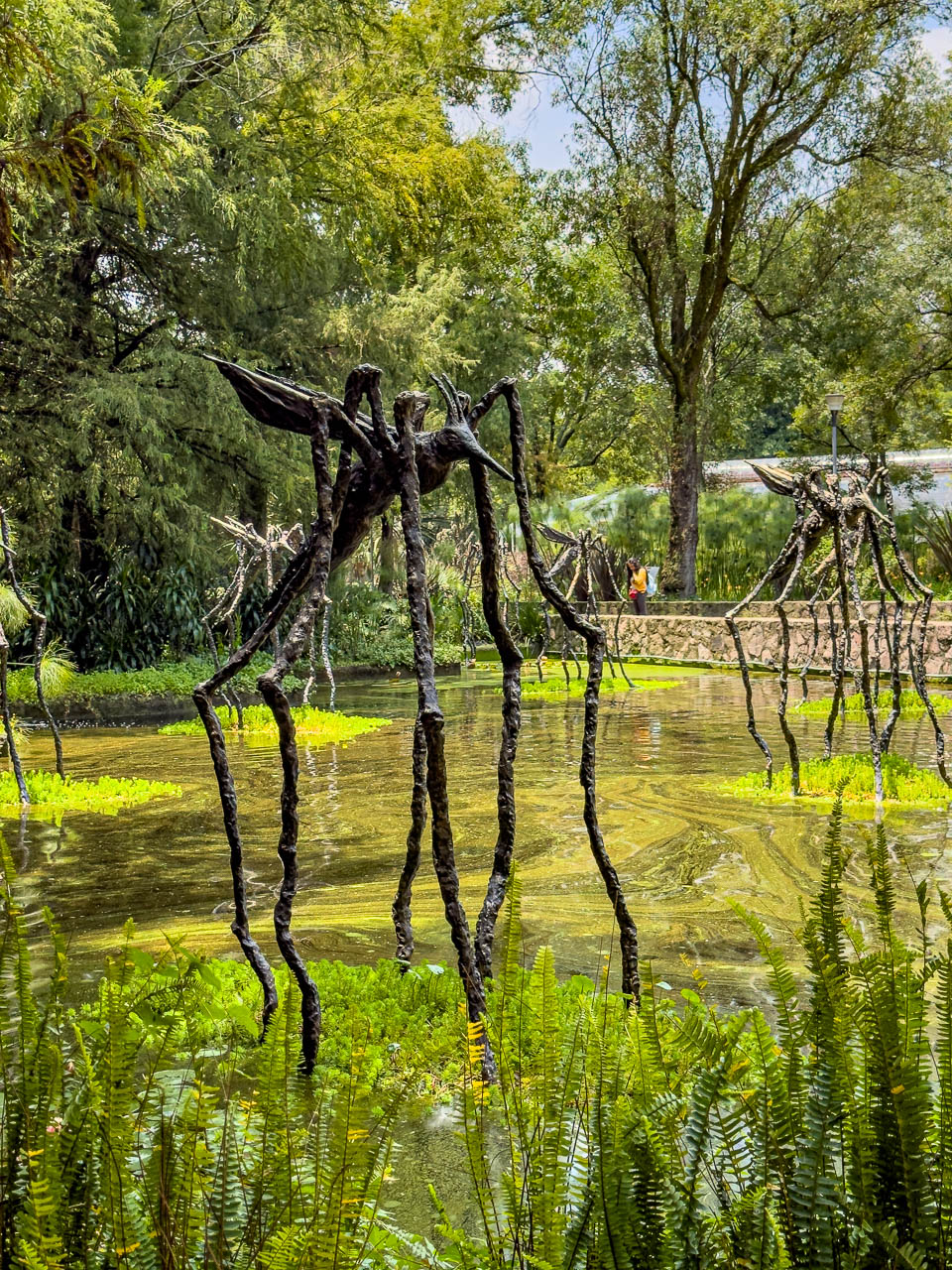
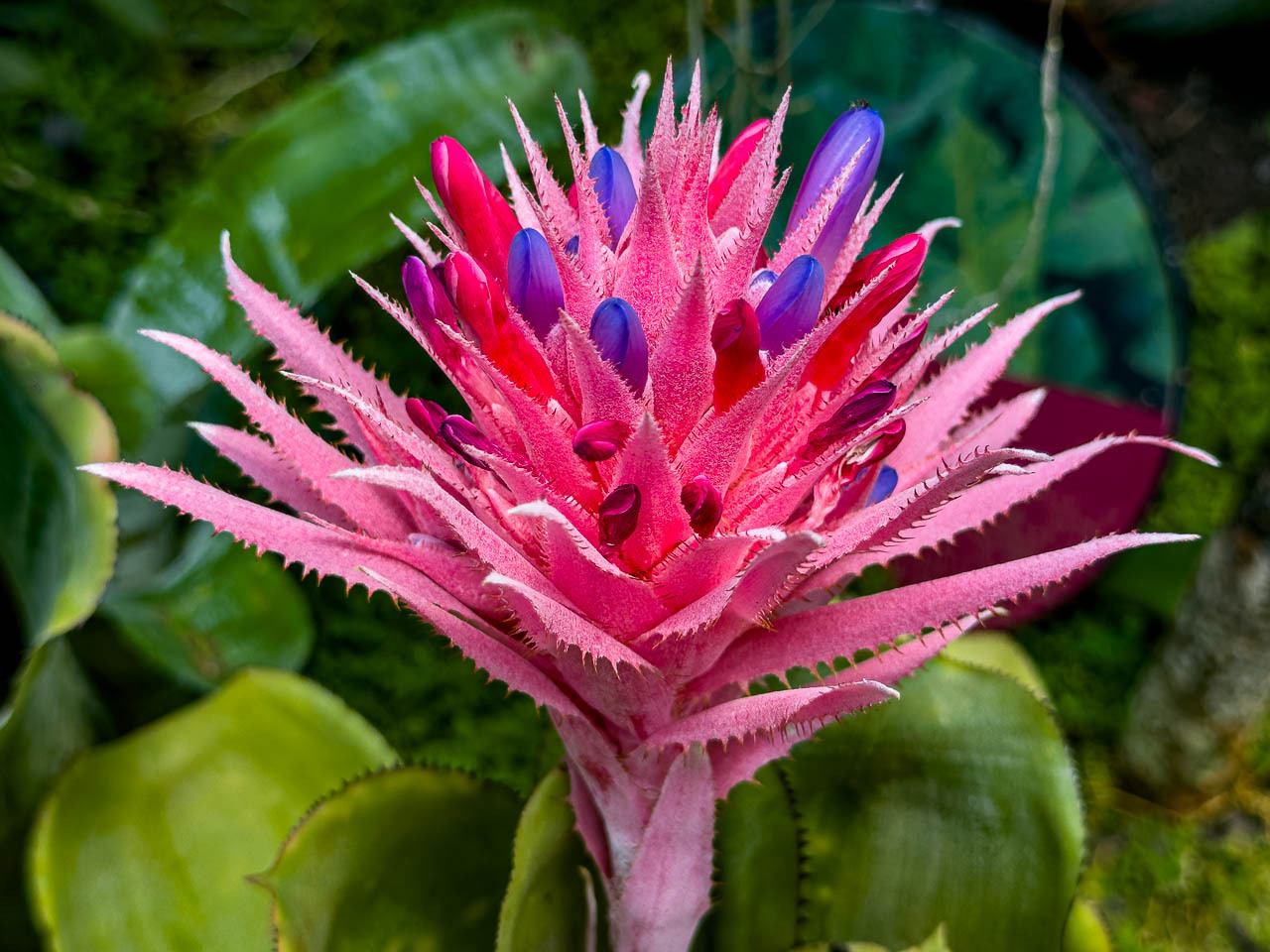
A separate Botanical Garden and Conservatory is part of the park, and in August it was lush and green.
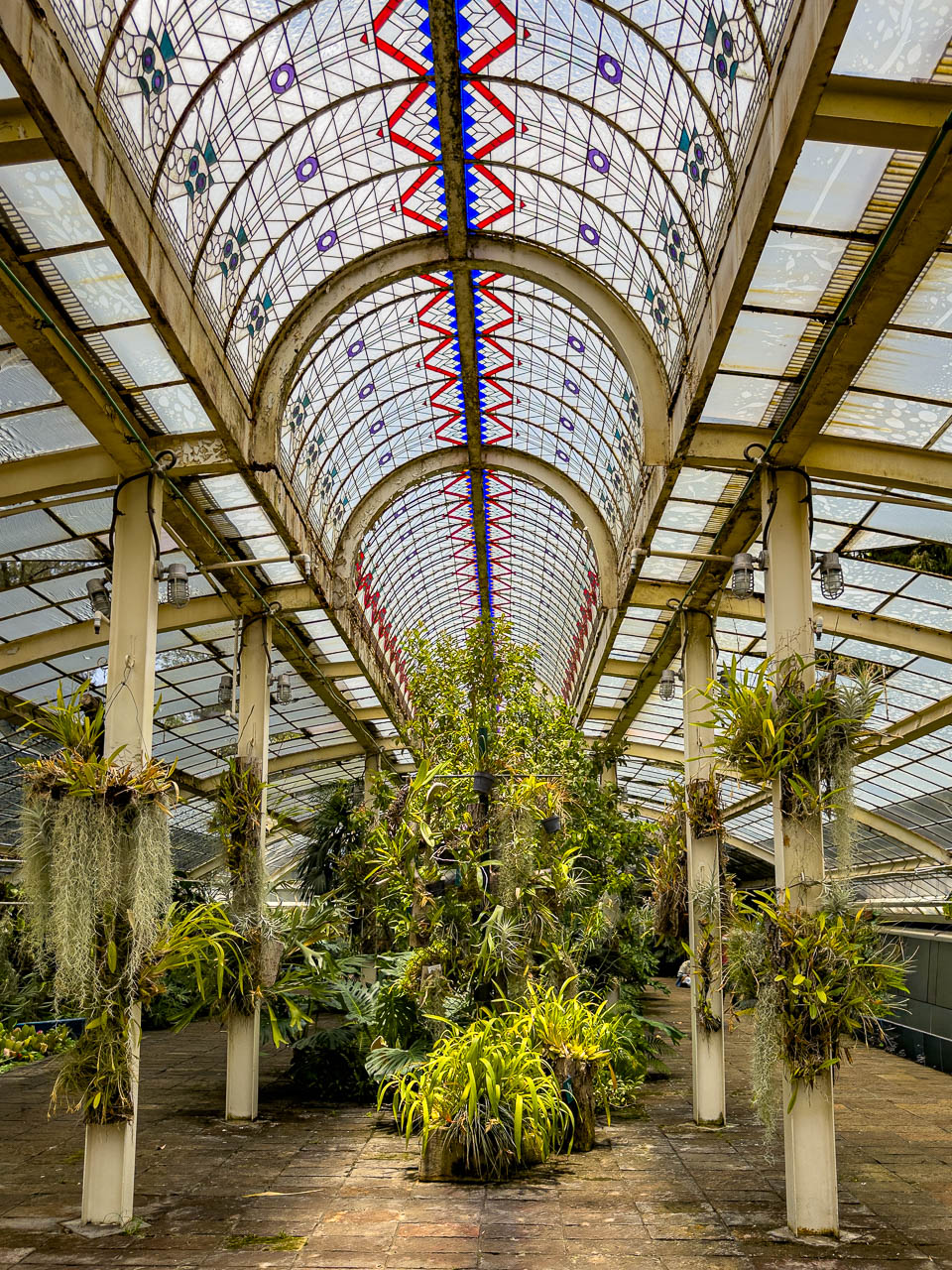
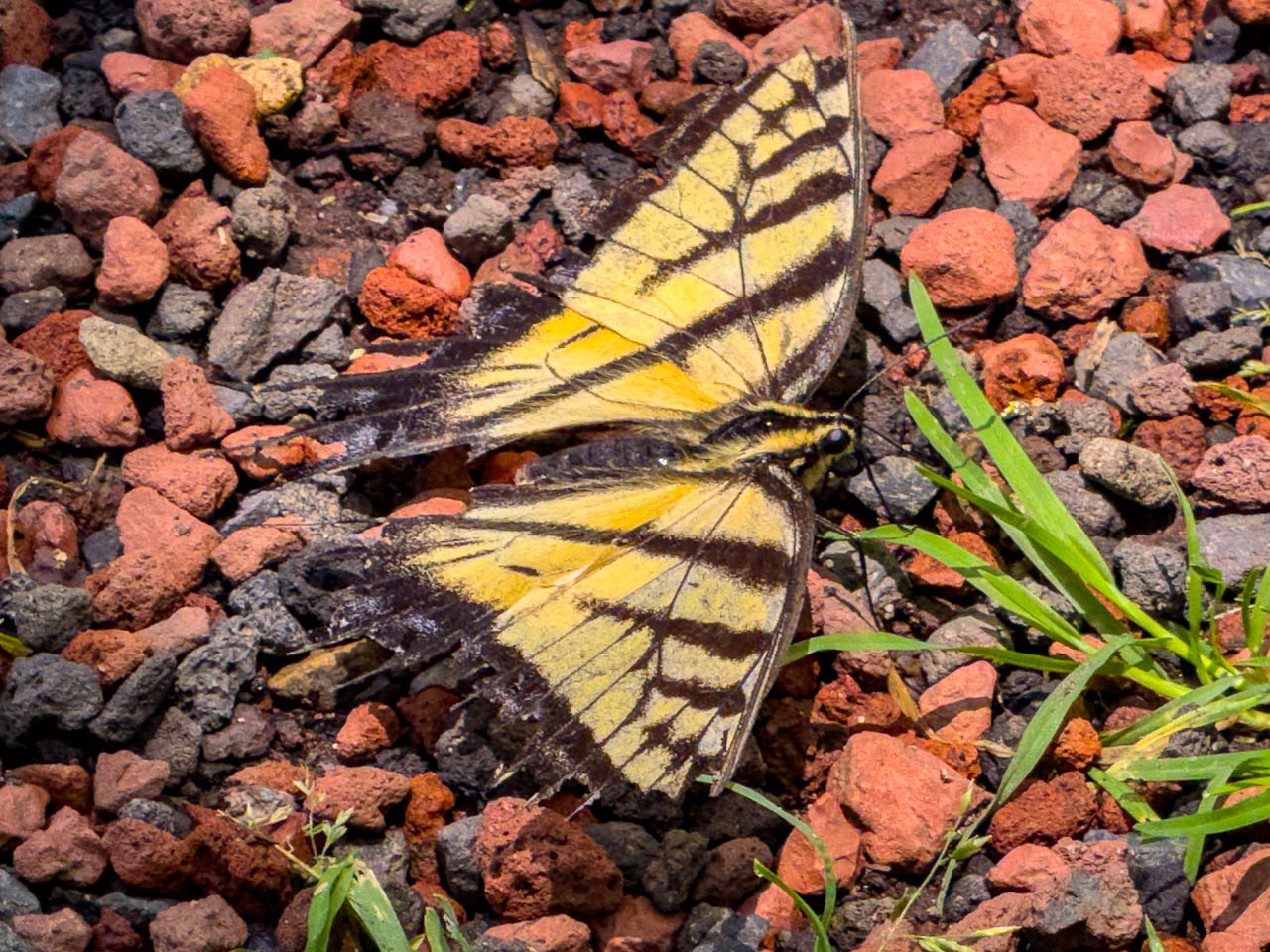
Mexico City is at an altitude of 7300’. Orchids and flowering trees attracted butterflies and plein air artists.
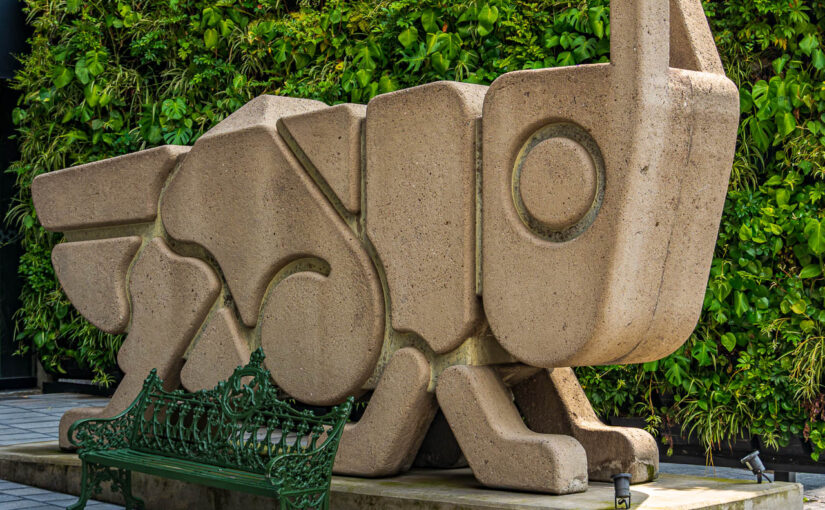
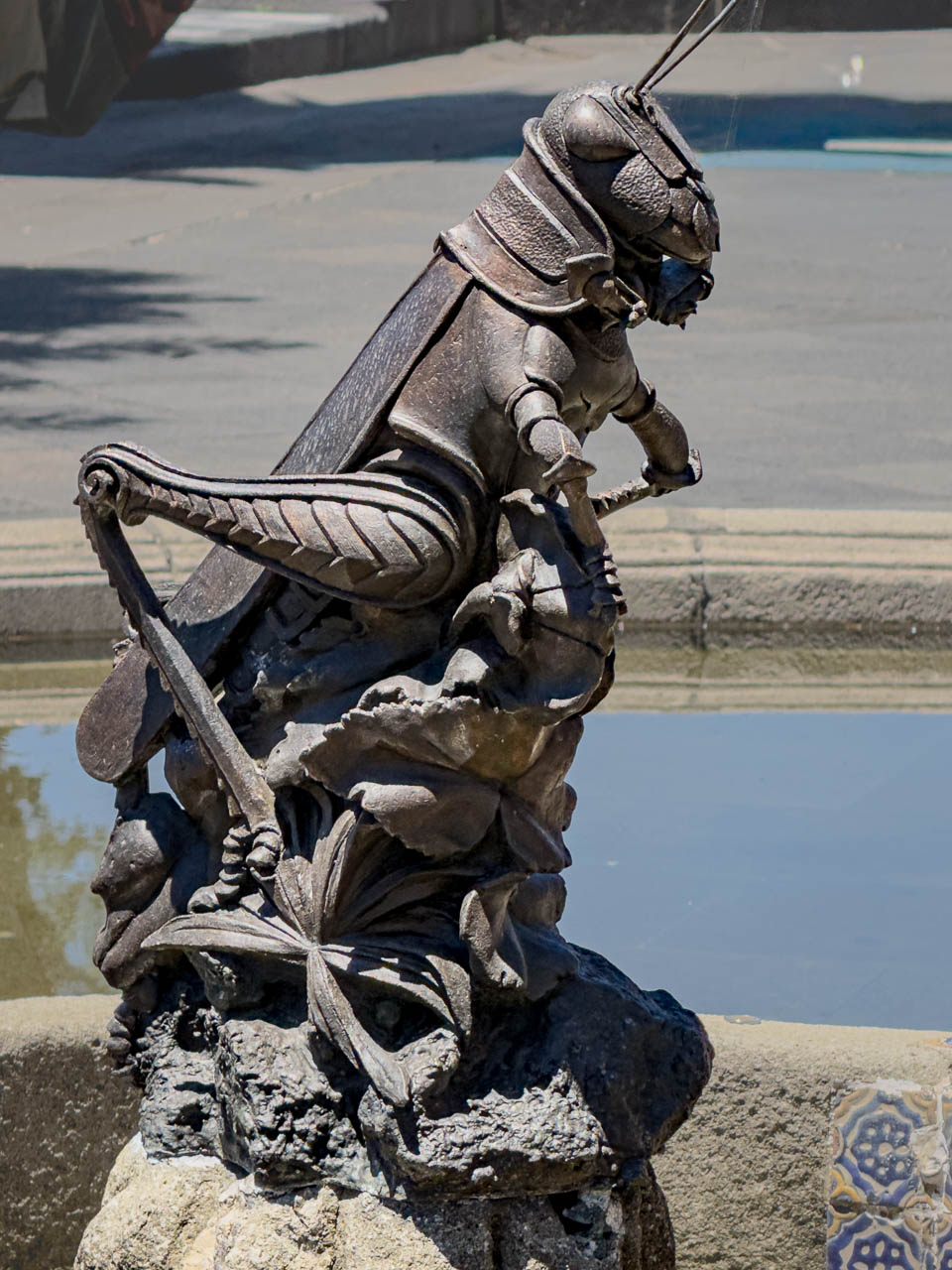
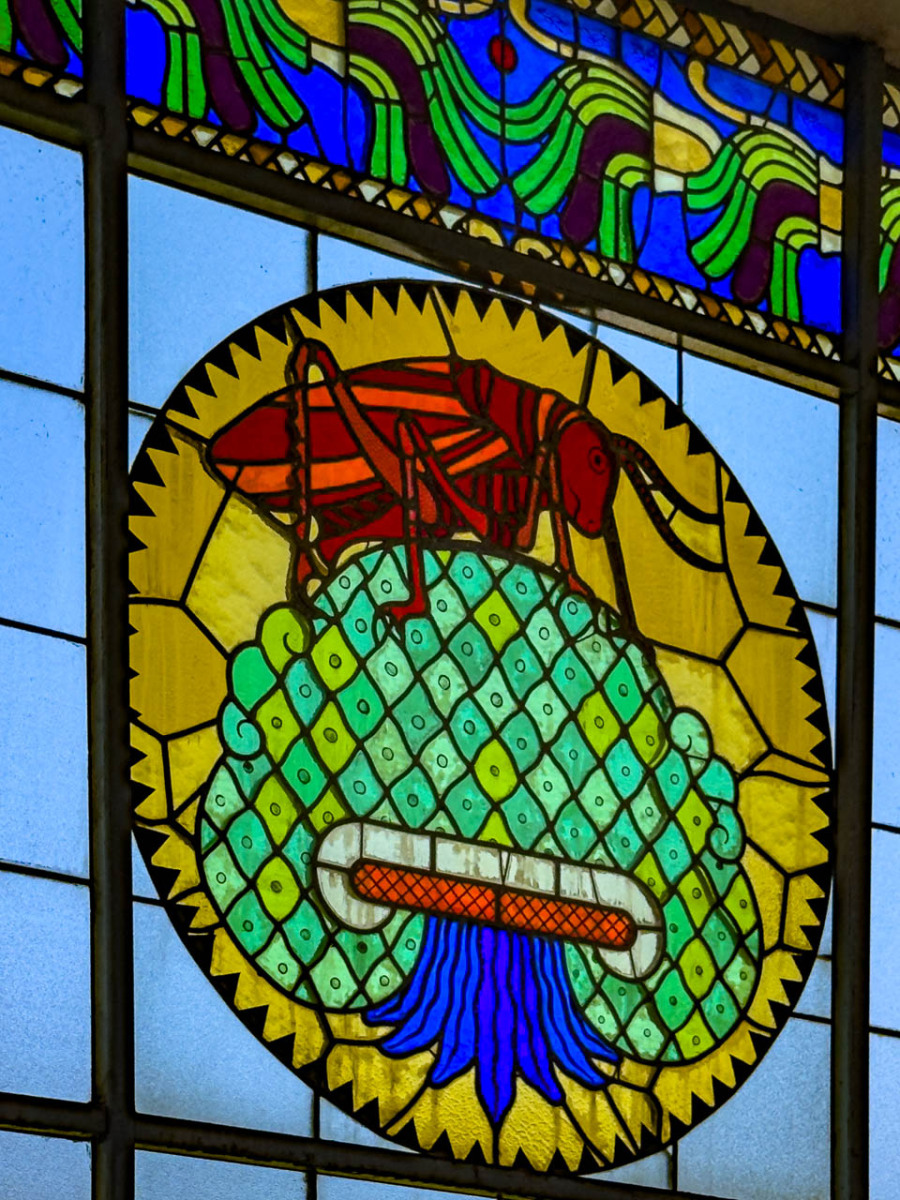
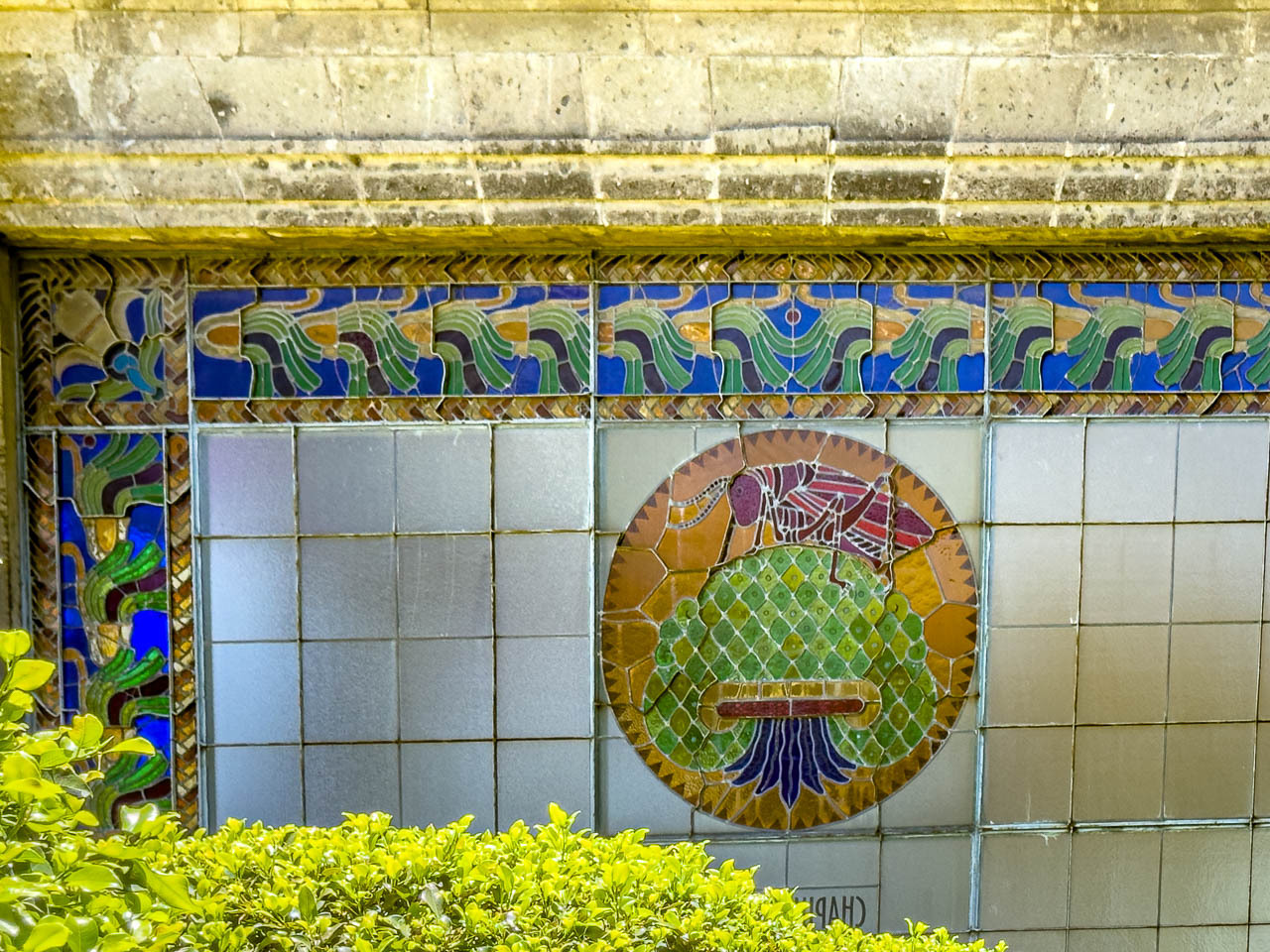
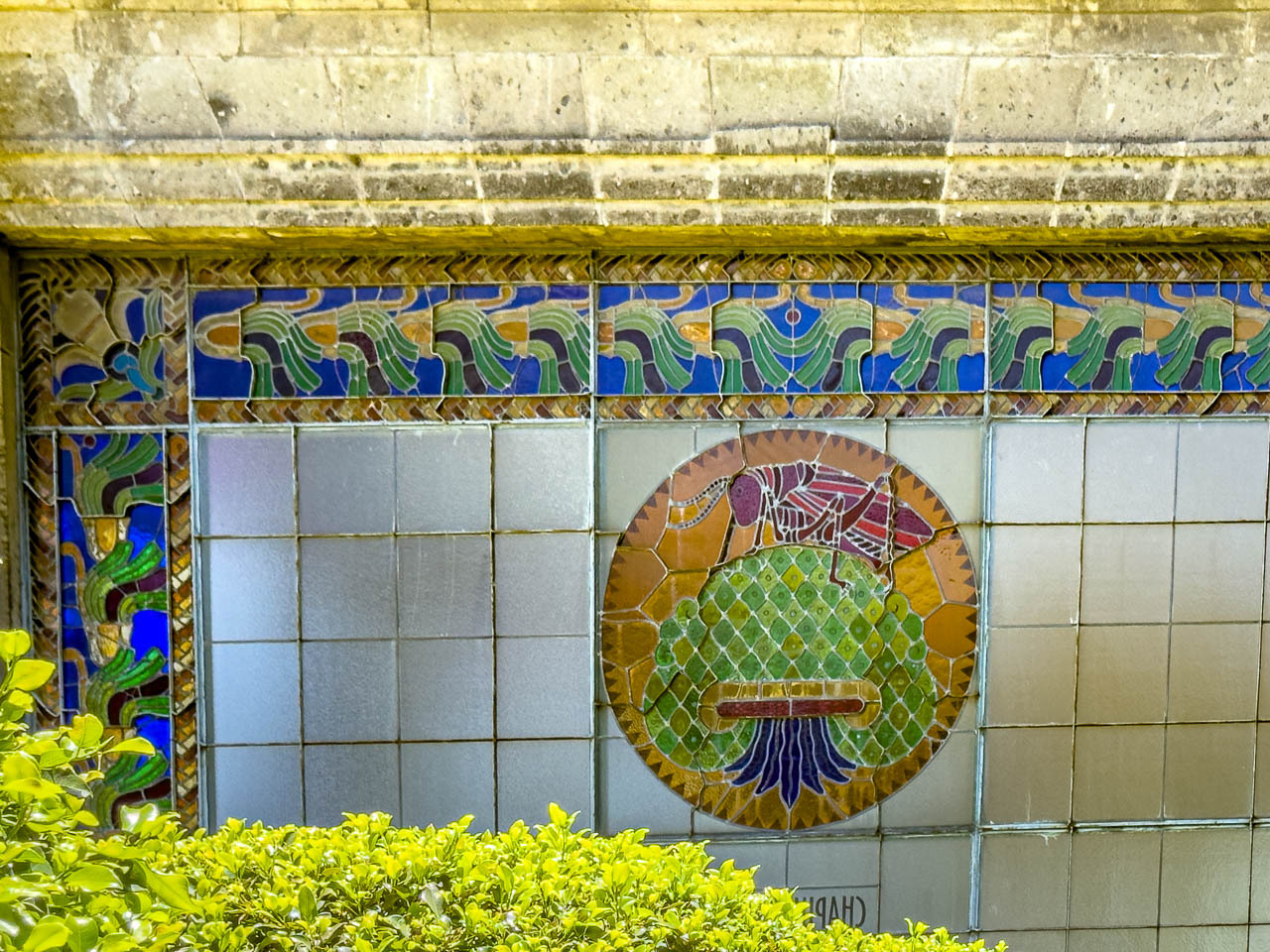
About those grasshoppers, chapulín: they were a major source of protein in the Aztecs’ diet. Even today, it is offered as a crunchy “spicy like peanuts” topping for guacamole. I wasn’t brave enough to try it. But the reverence for the grasshopper continues in sculpture and signage.
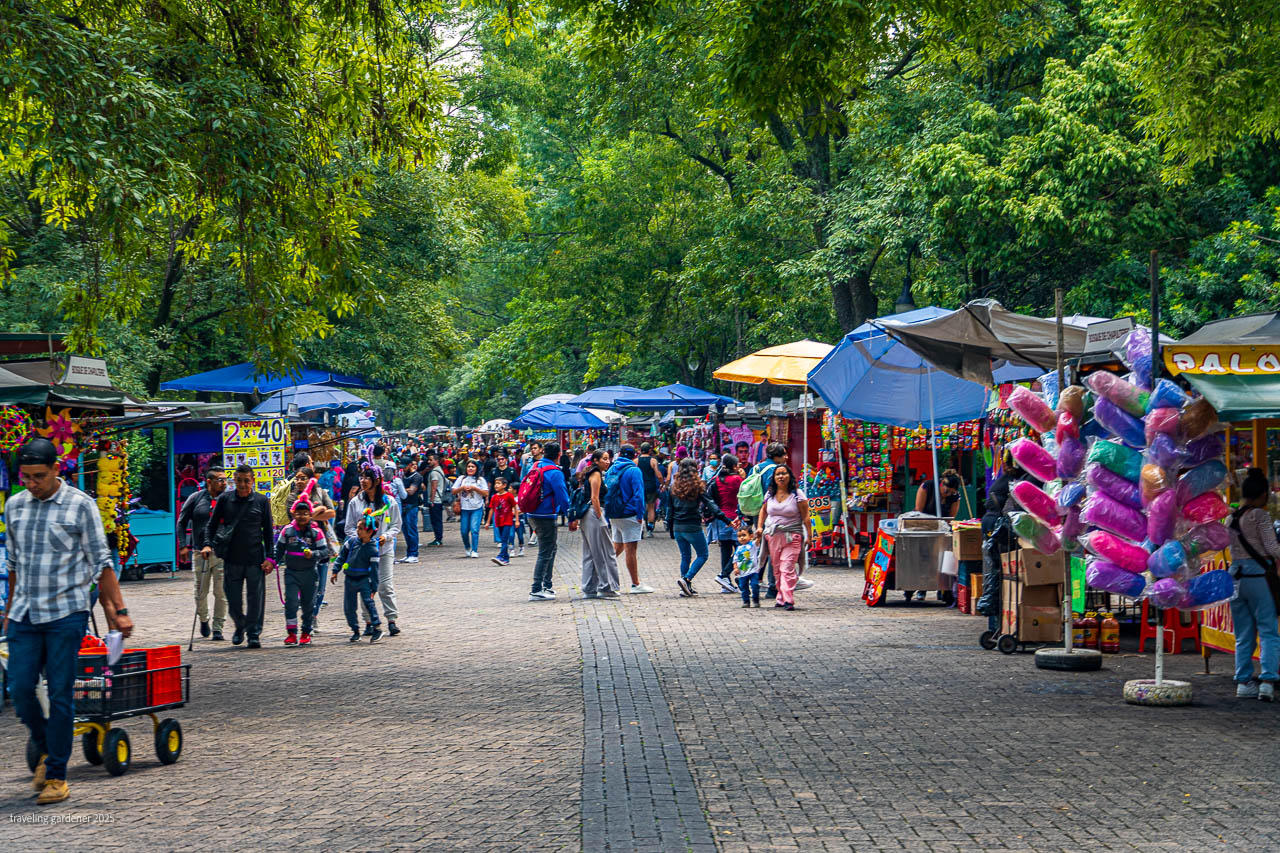
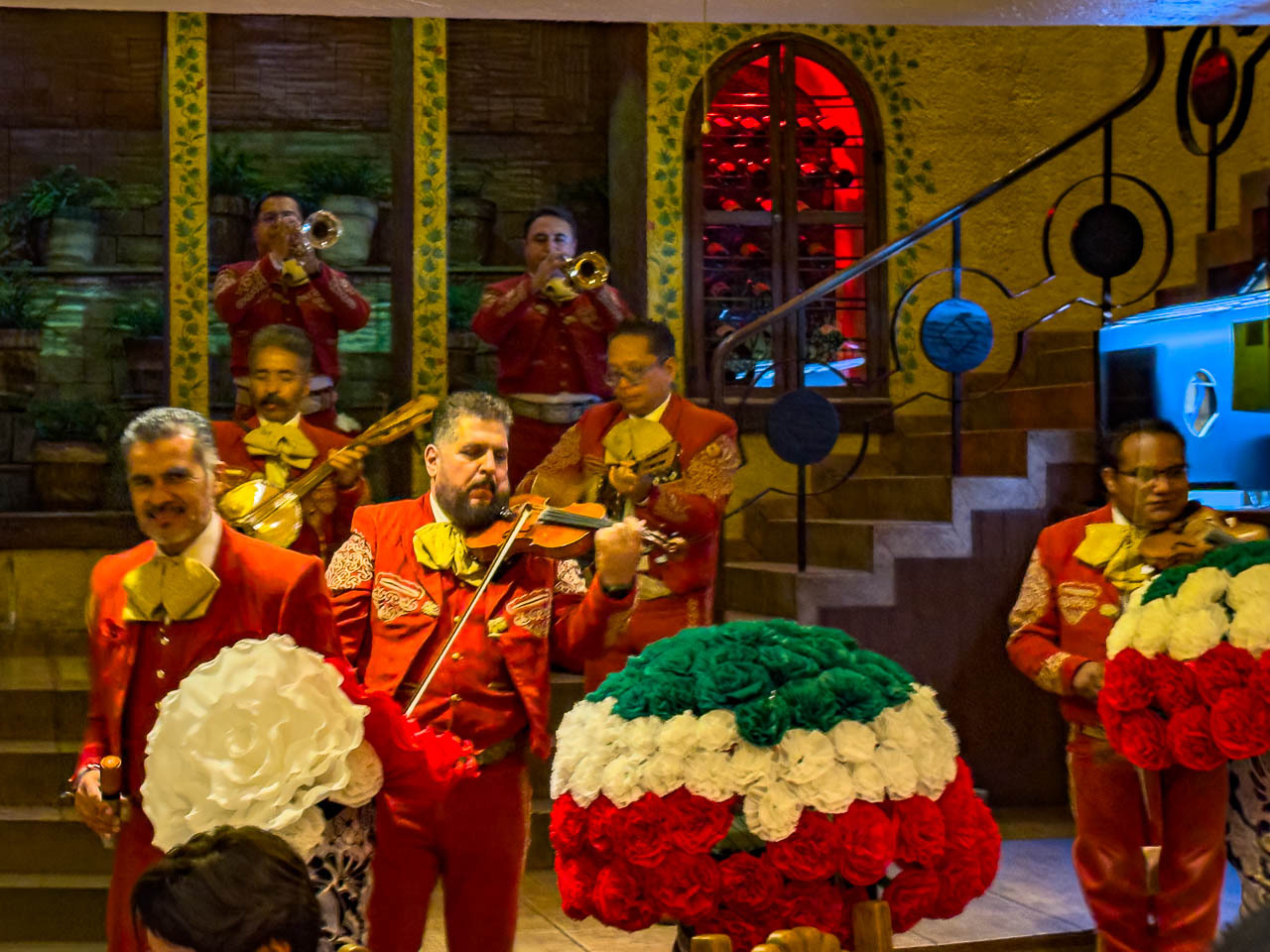
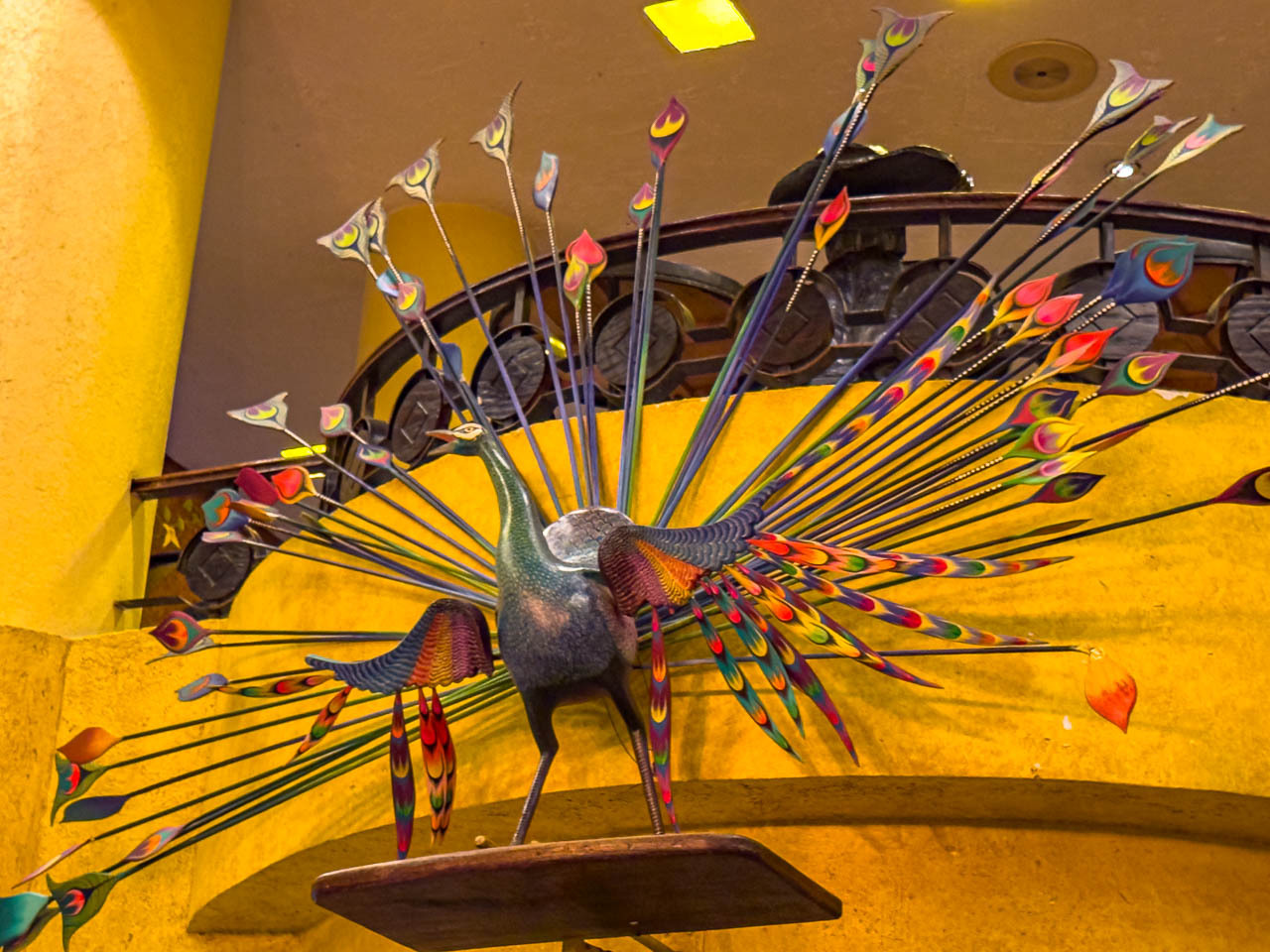
Mexico City is alive with art, architecture, history, music, and dance.
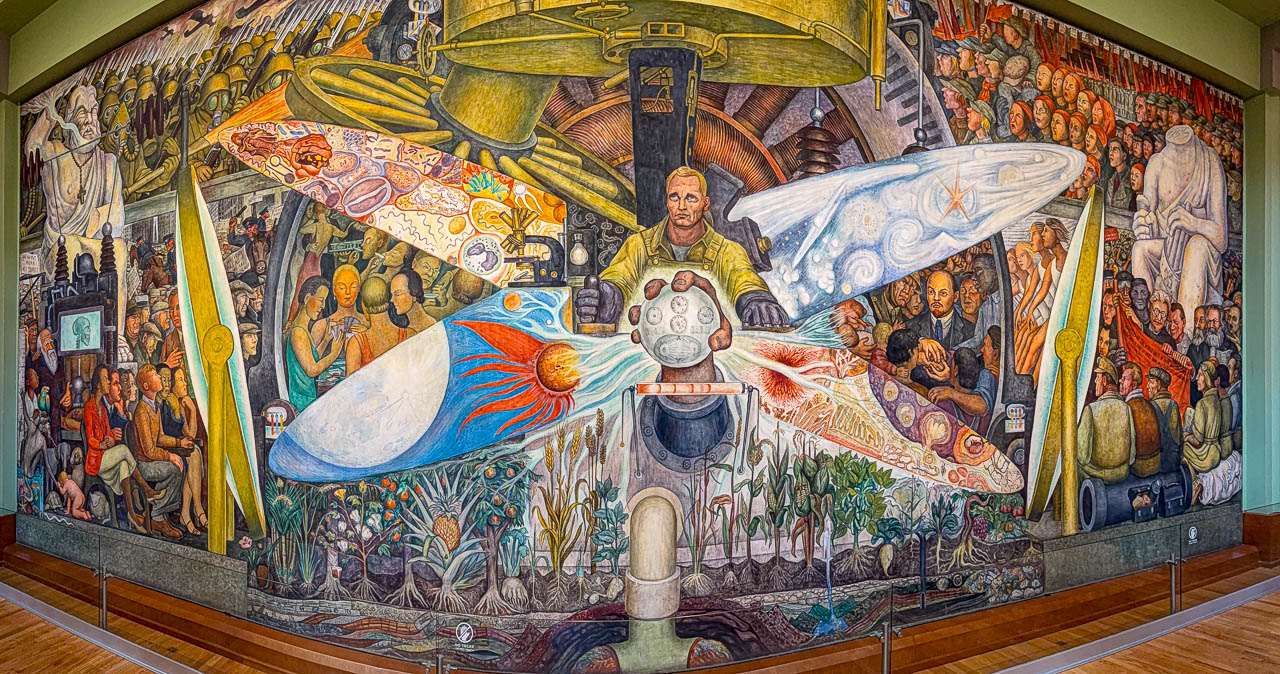
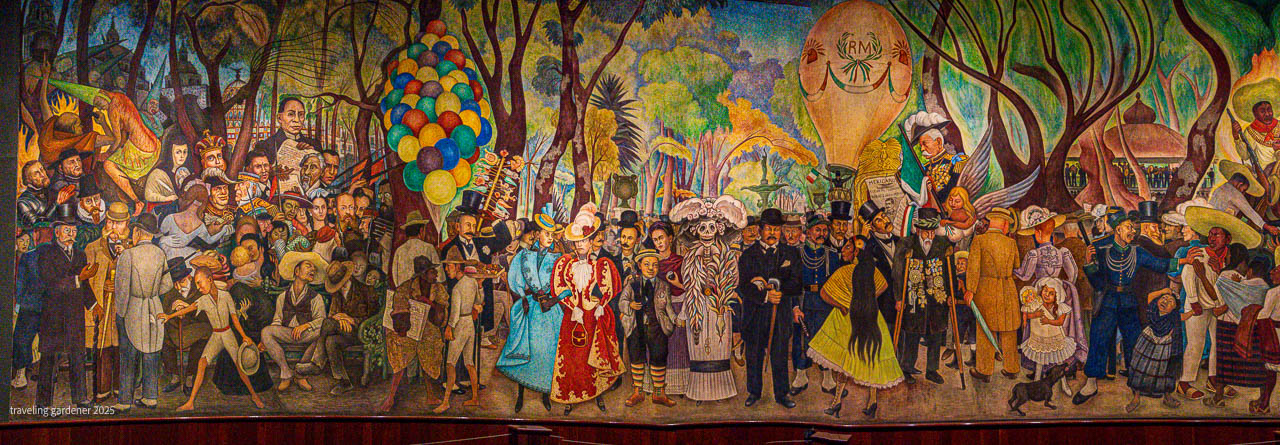
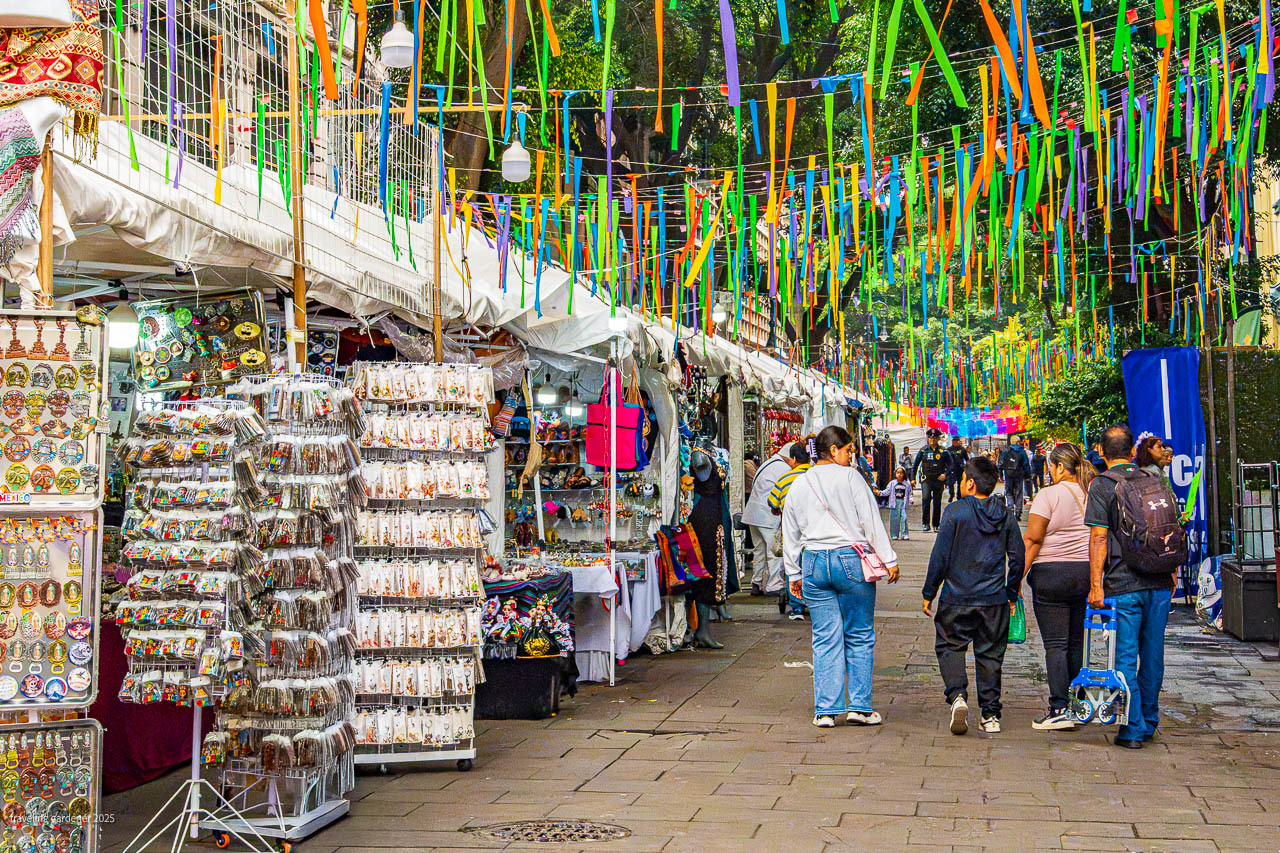
Murals color the streets; buildings and nearly every surface pop with color.
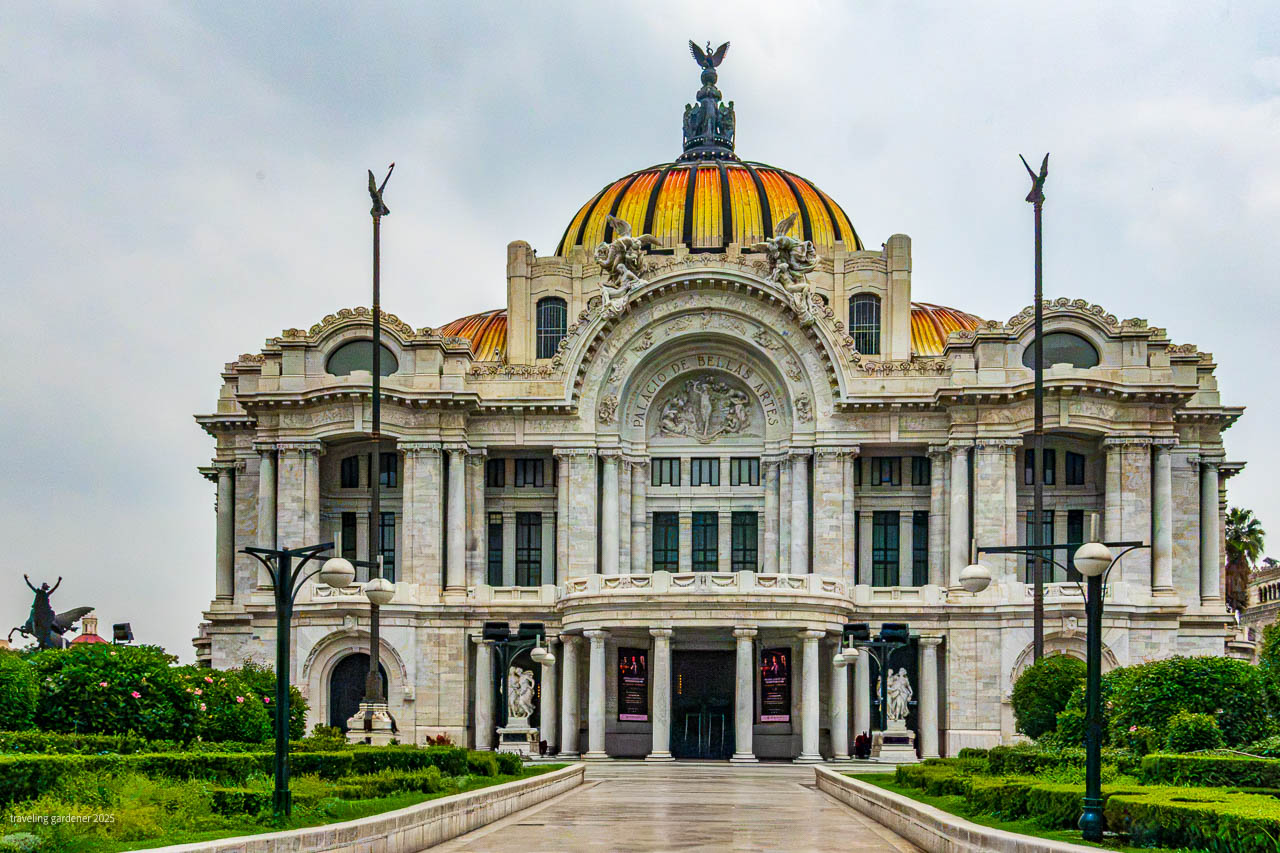
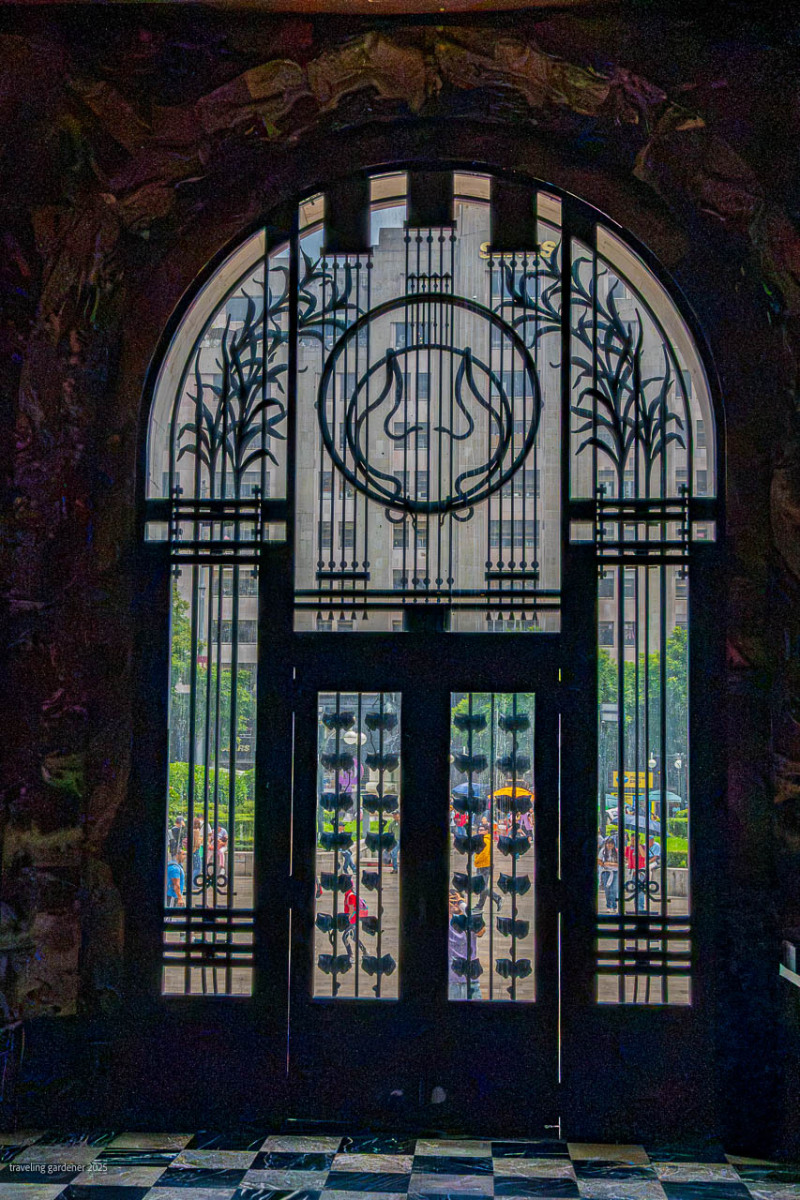
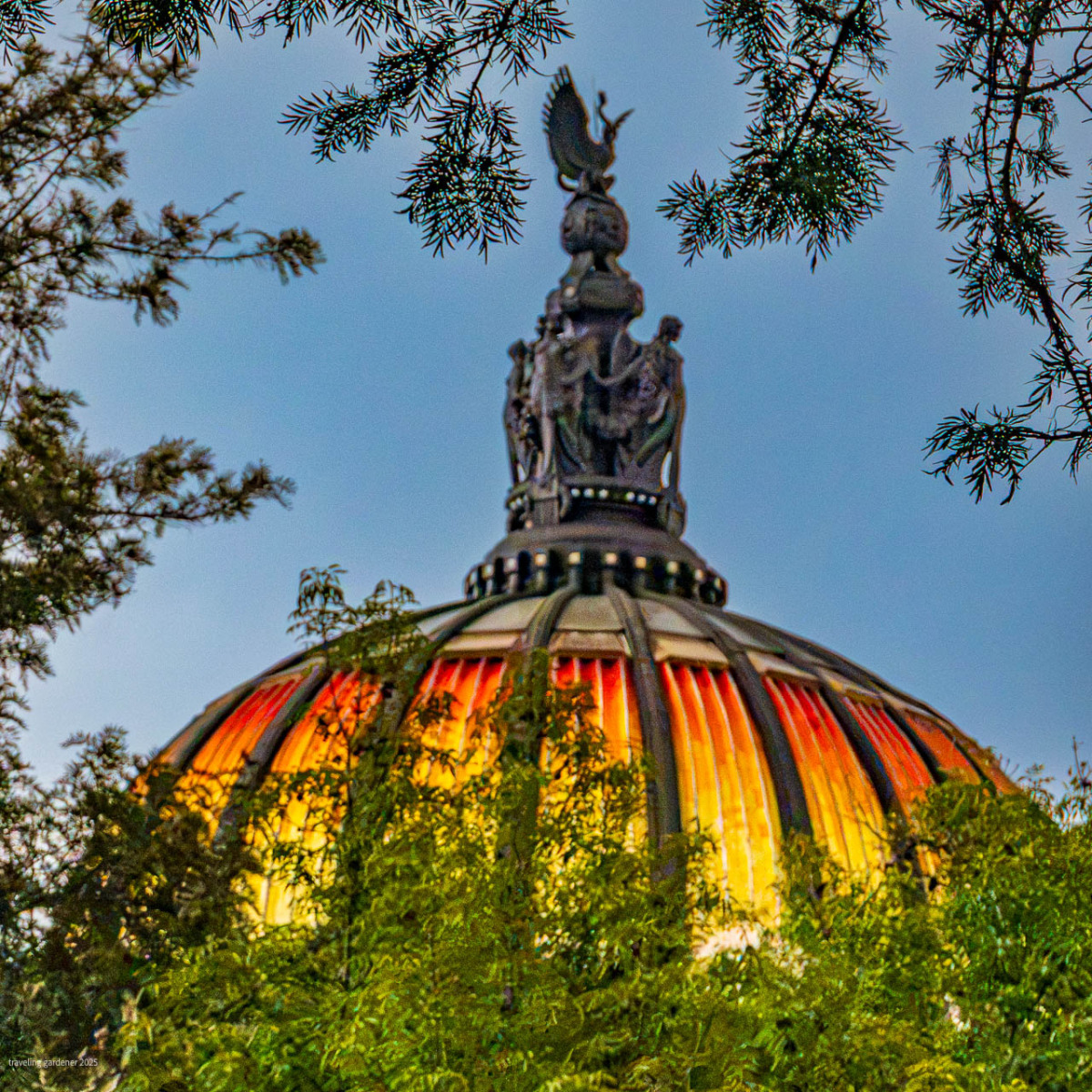
The Palace of the Arts is built of Italian marble, with an Art Nouveau exterior and an Art Deco interior.
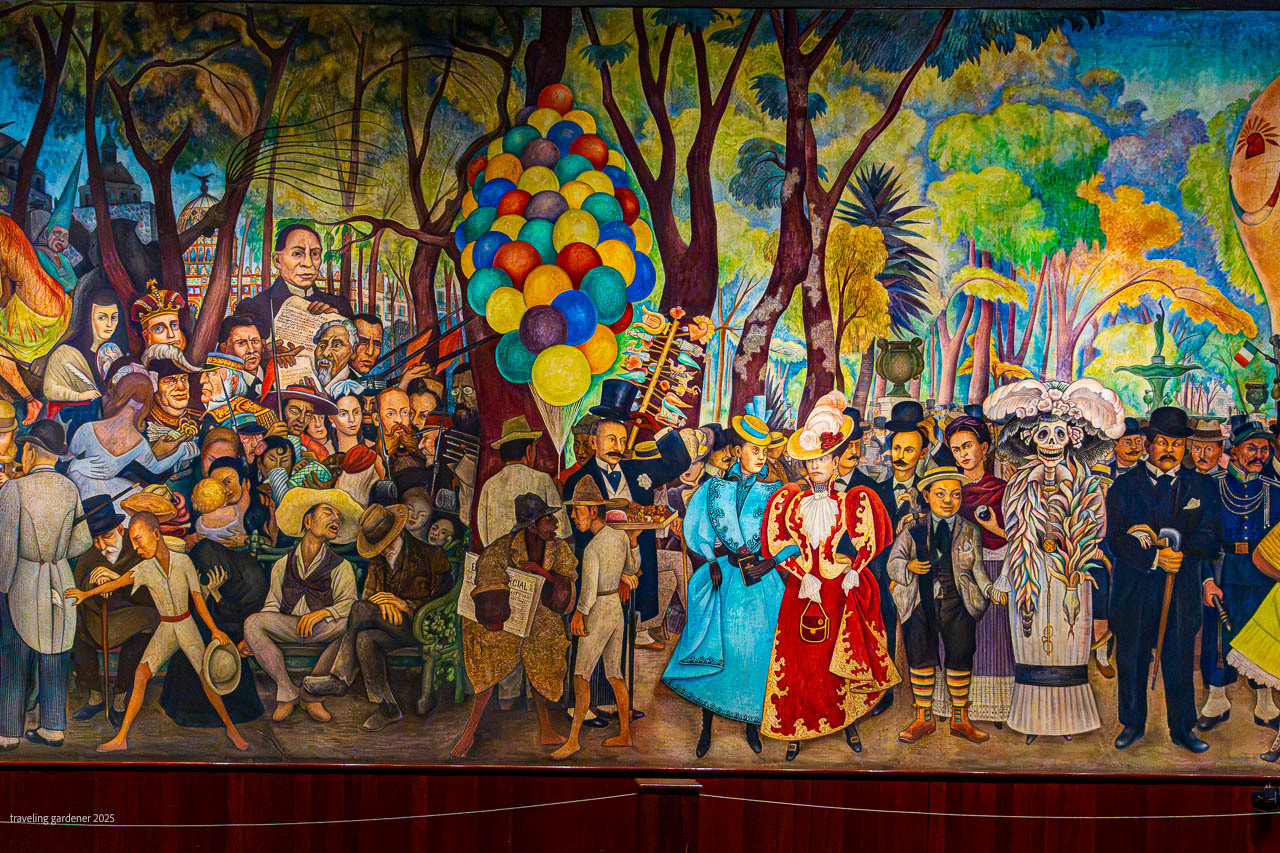
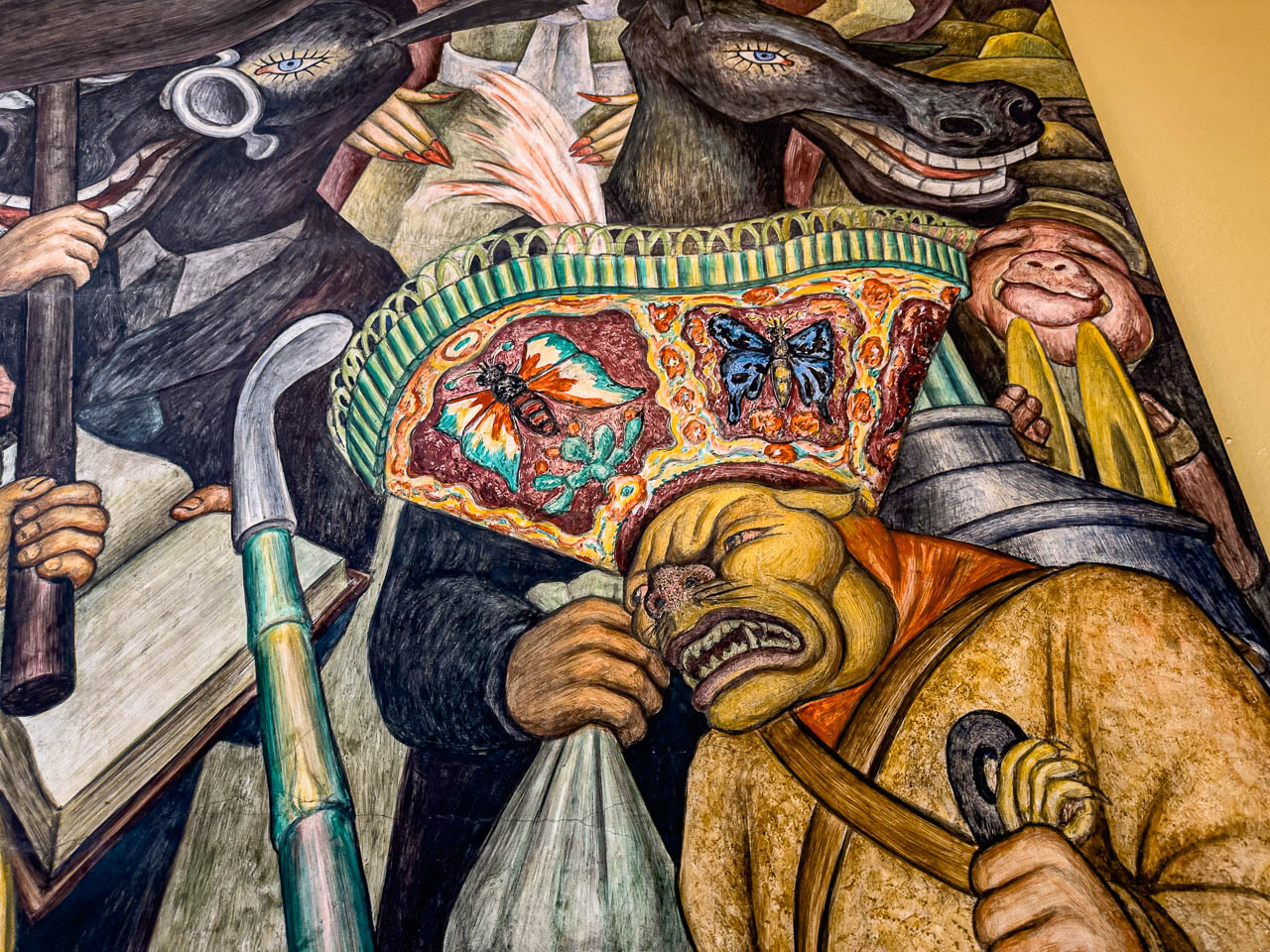
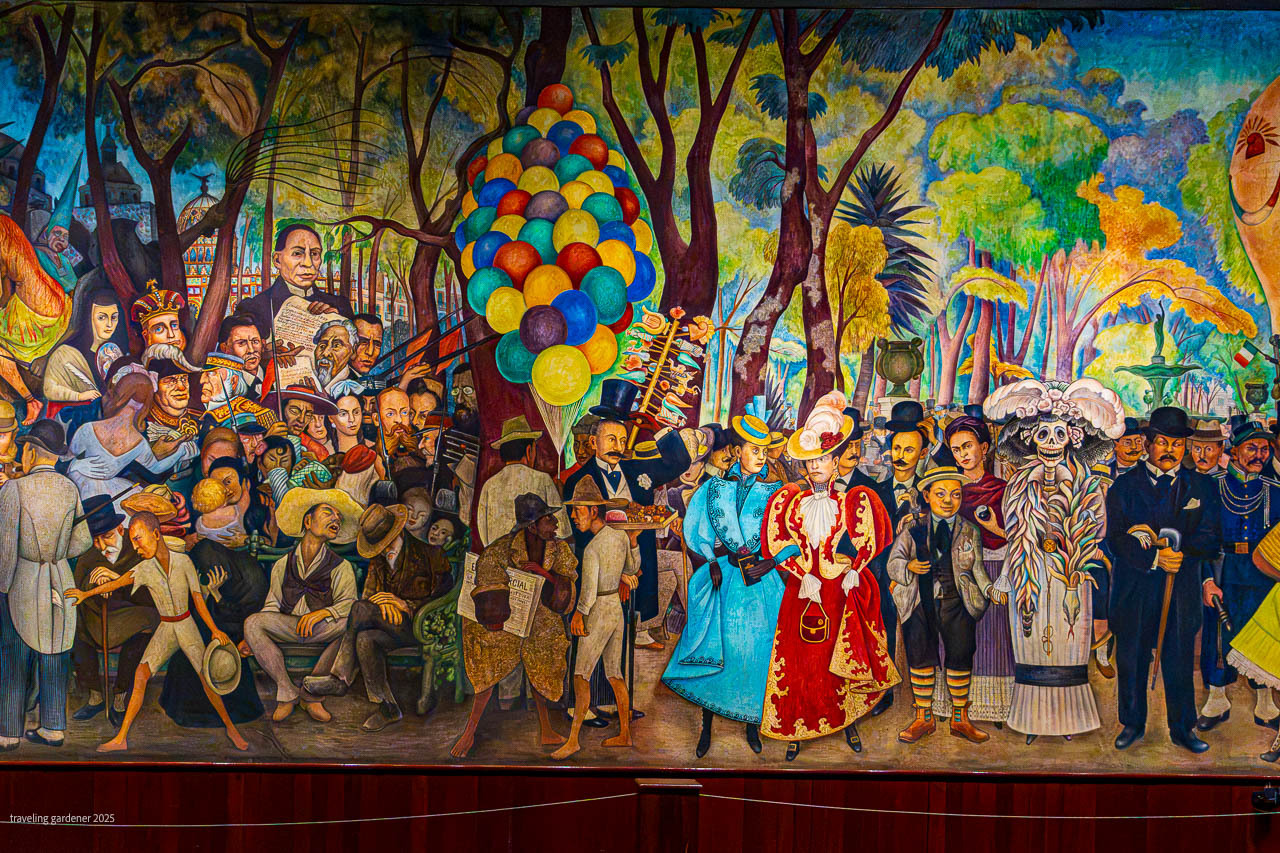
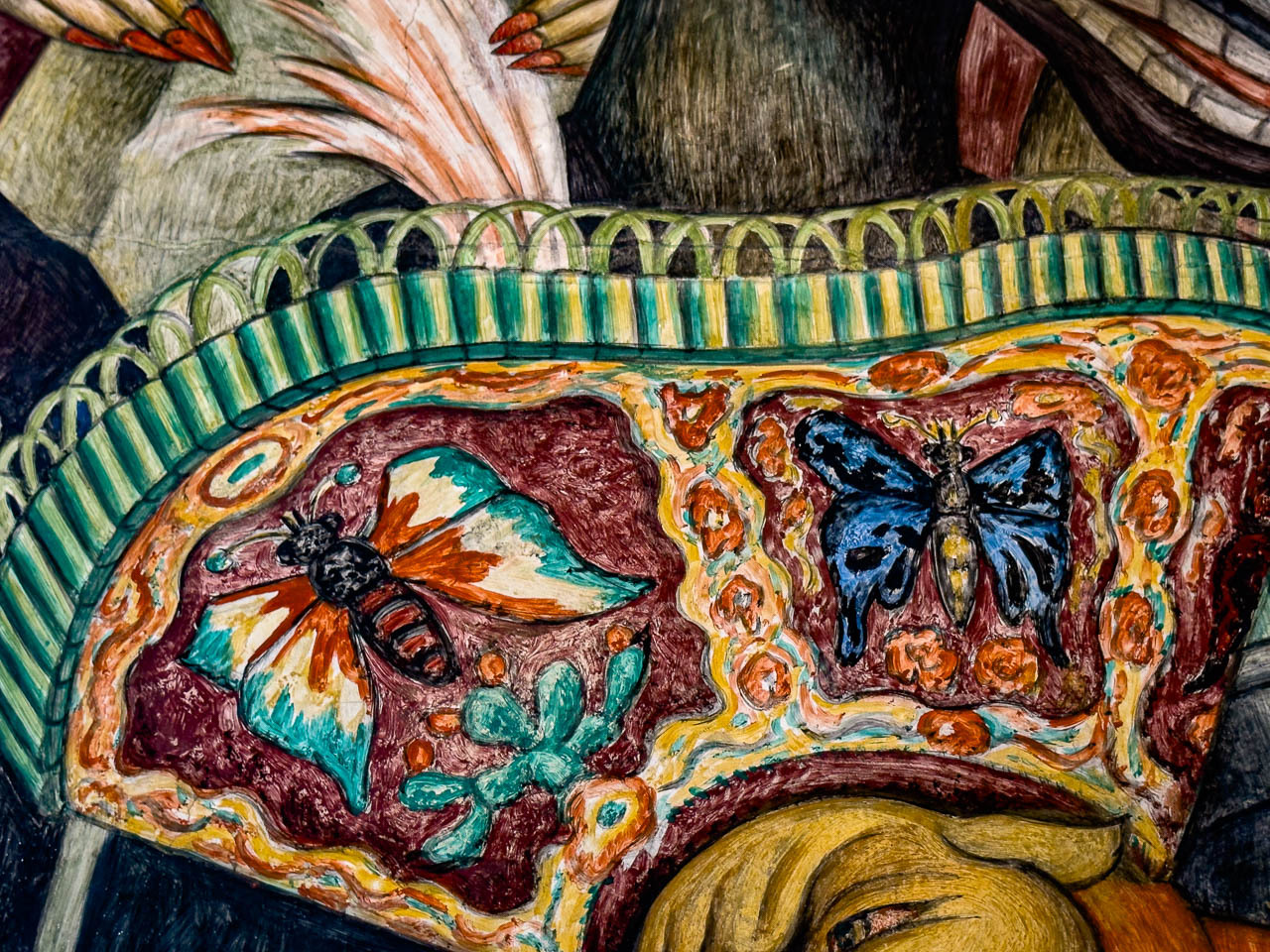
The interior features a hall of murals, including Diego Rivera’s masterpiece, Man at the Crossroads, which Rivera recreated here himself. Rivera originally created and painted it for New York’s Rockefeller Center in 1933. After it was finished there, it was destroyed on Rockefeller’s order as politically unacceptable.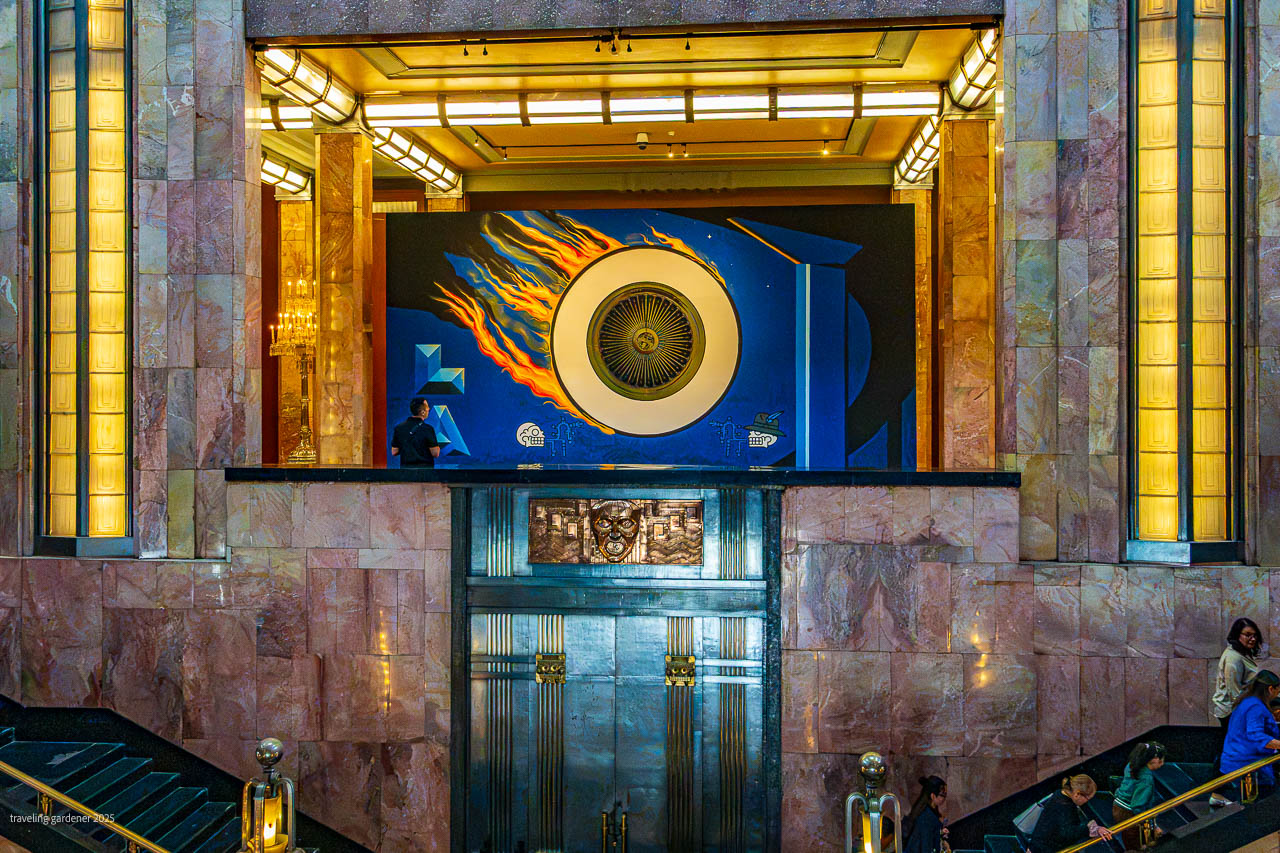
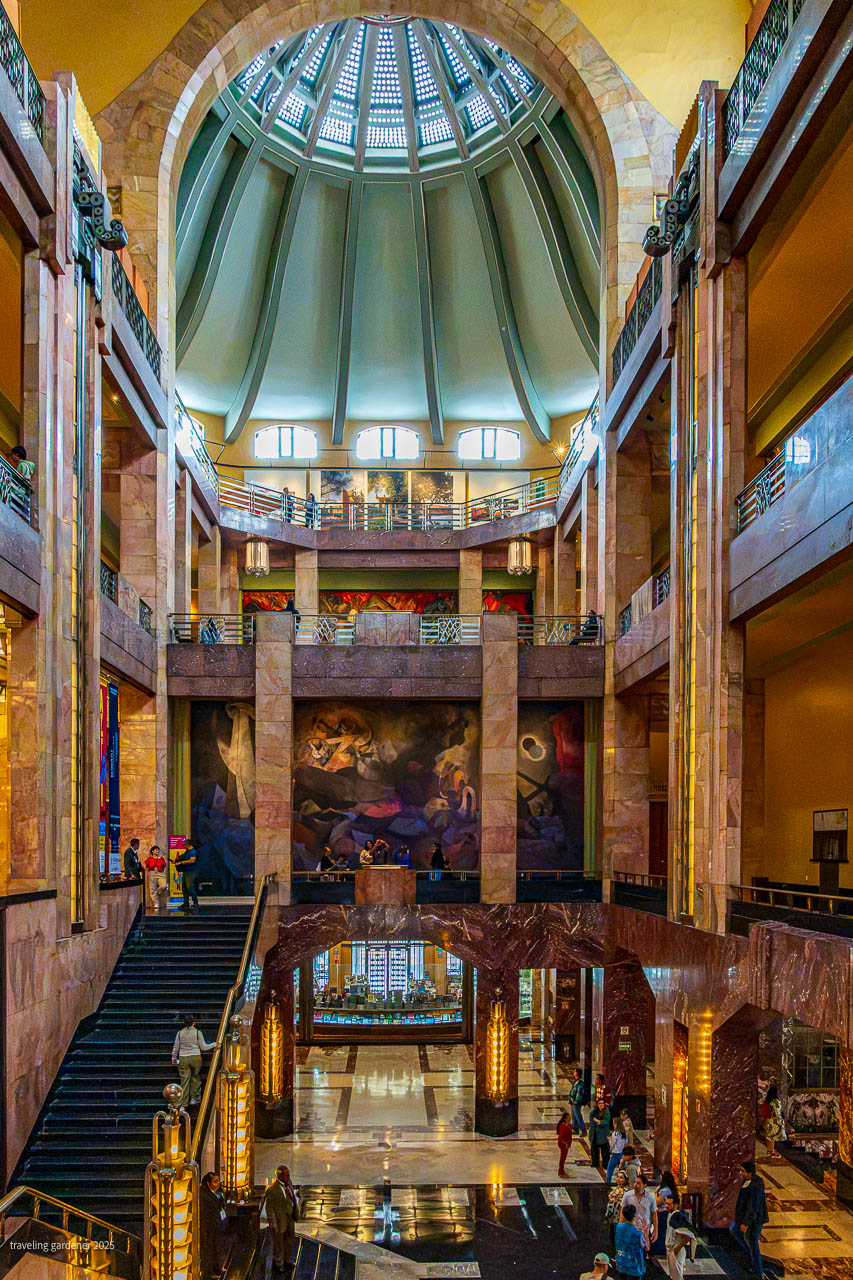
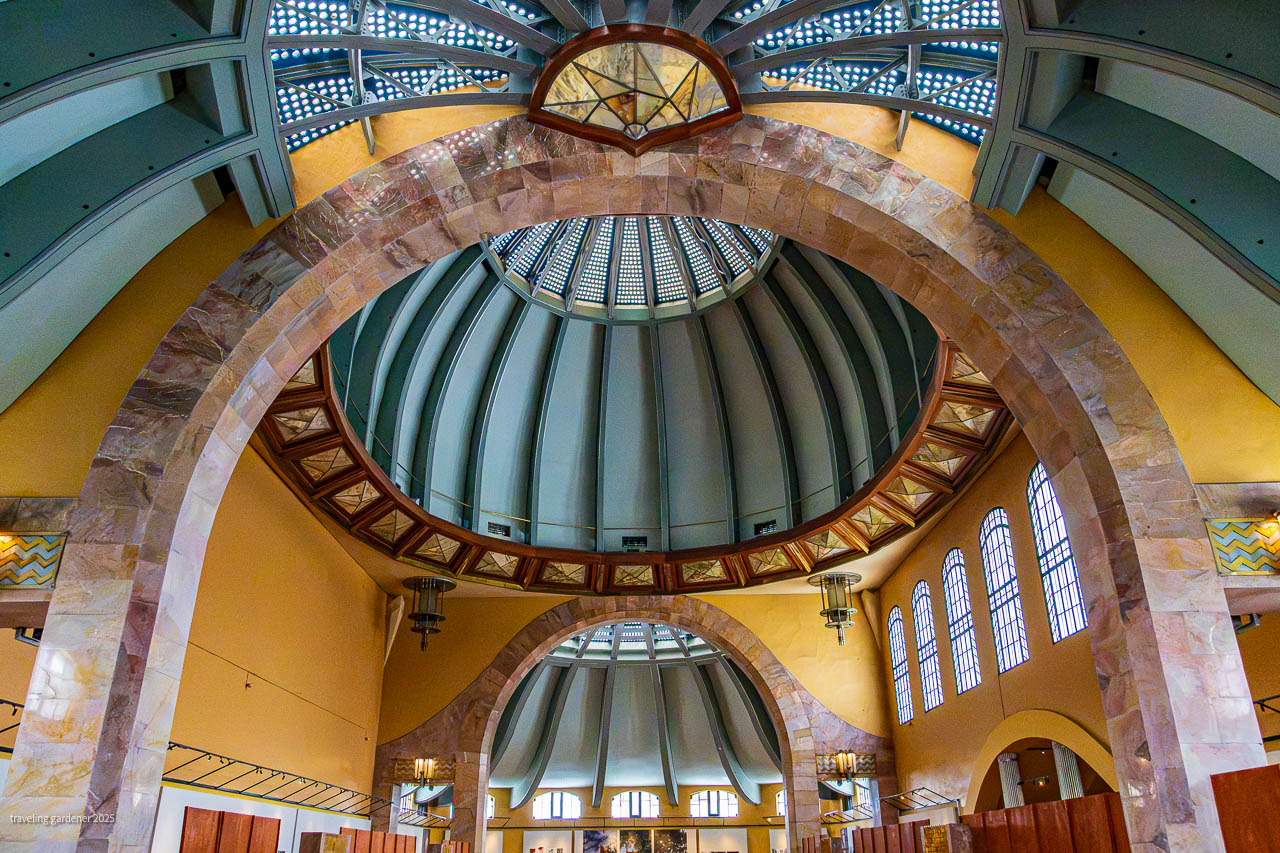
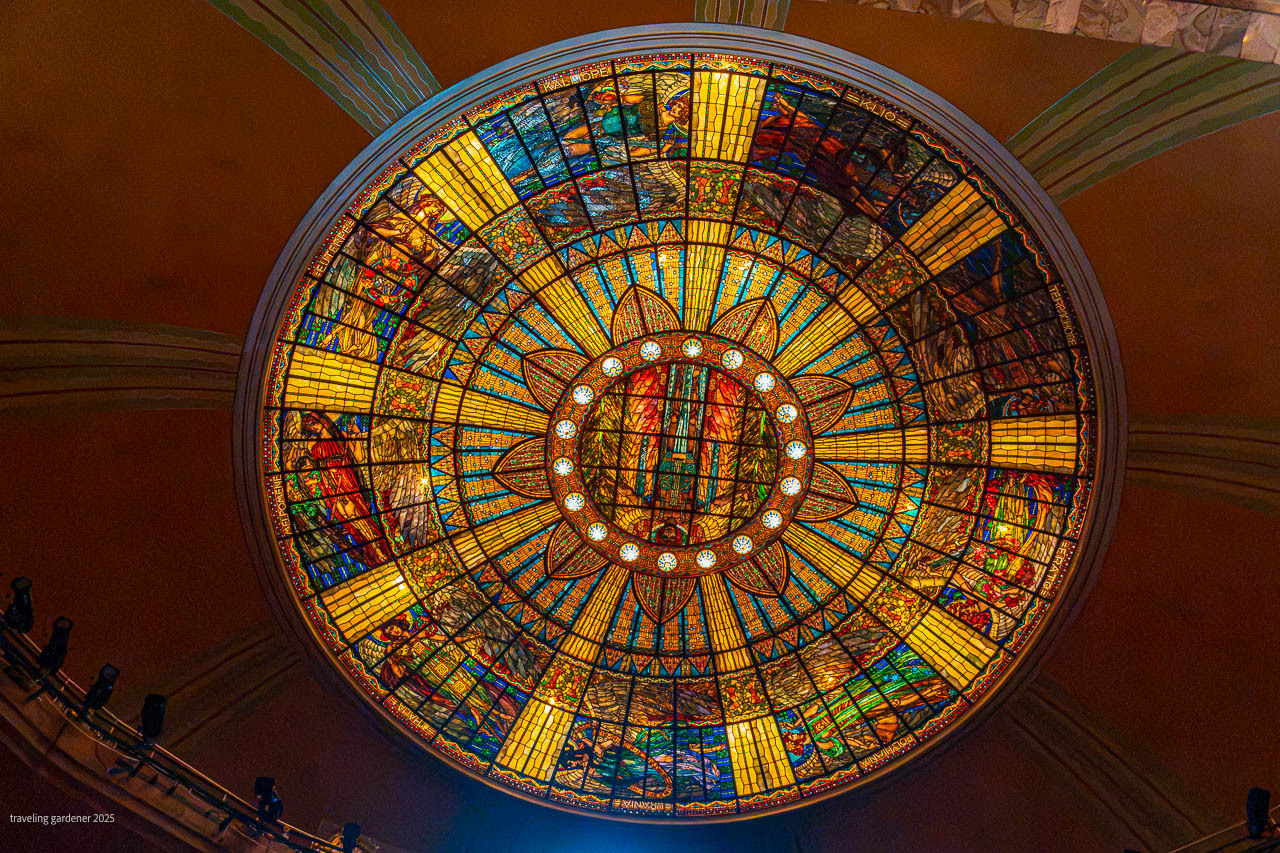
The Palace of the Arts theatre hosts major arts events and is home to Ballet Folklórico de México, Compañía Nacional de Ópera, and the Bellas Artes National Symphony Orchestra. Every corner of the building is a work of art, but the stage “curtain,” which is a “stained glass foldable panel created out of nearly a million pieces of iridescent colored glass by Tiffany’s in New York.
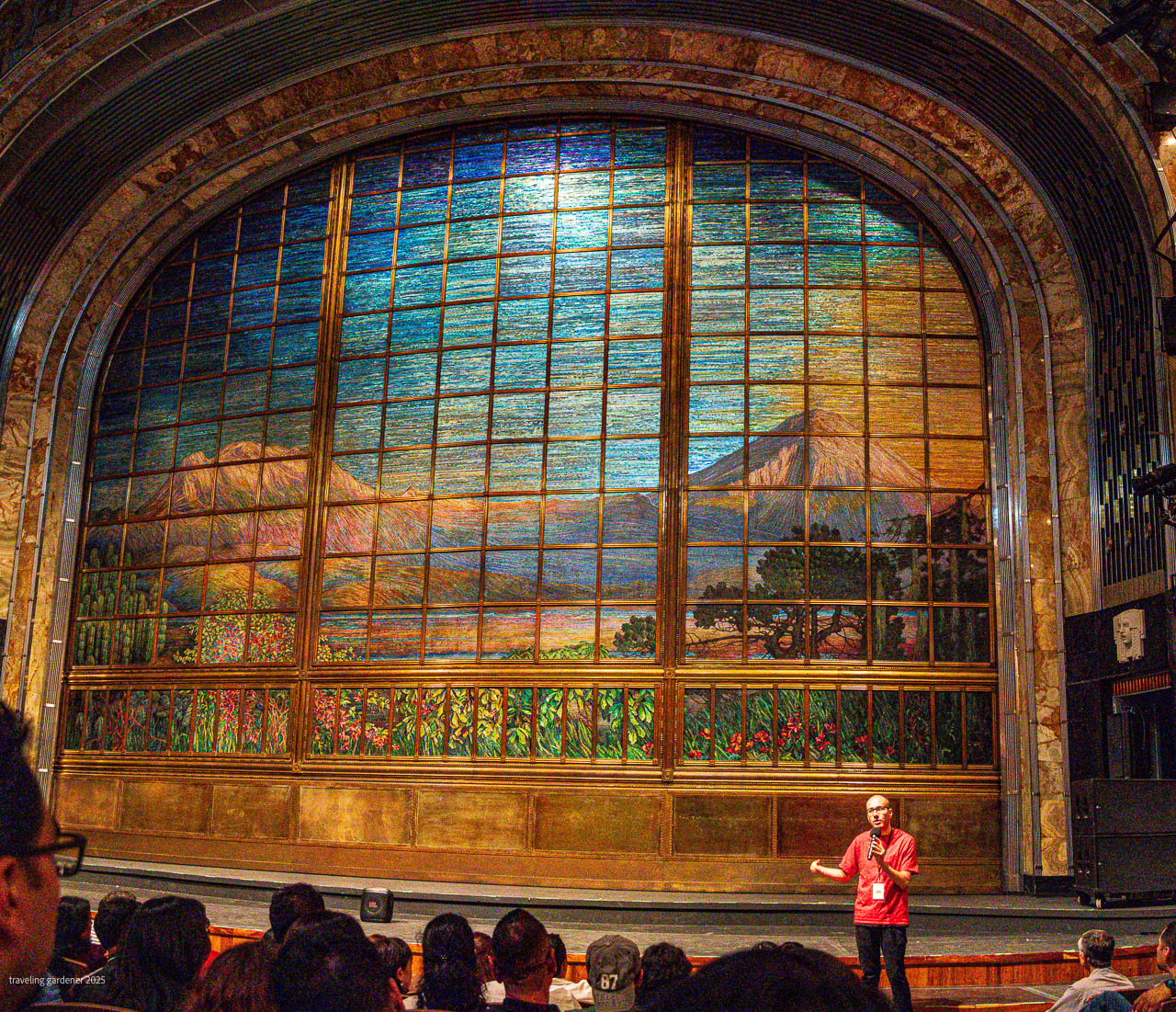
This stage curtain is the only one of its type in any opera house in the world and weighs 24 tons. The curtain’s design features the volcanoes Popocatépetl and Iztaccíhuatl at the center. Around them is a Mexican landscape surrounded by images of sculptures from Yautepec and Oaxaca.” 2
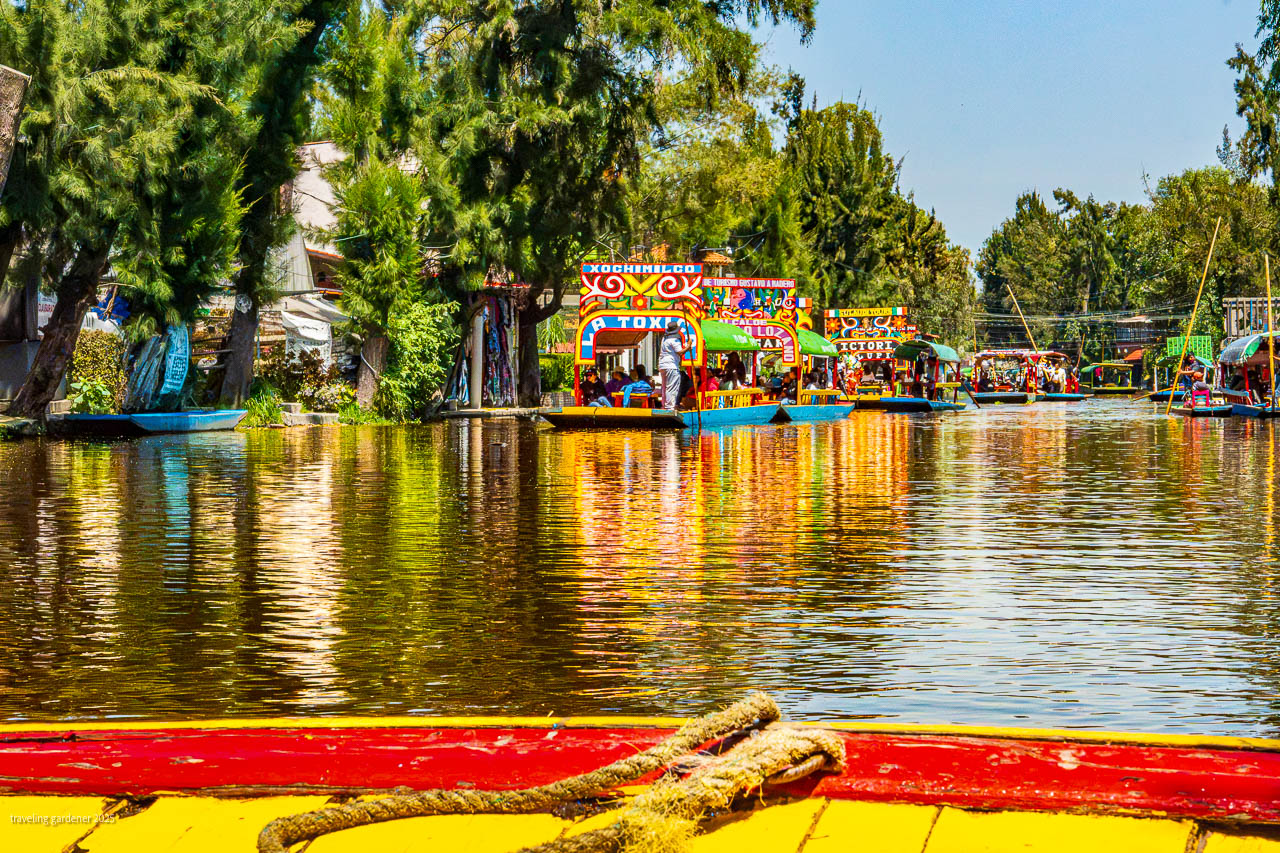
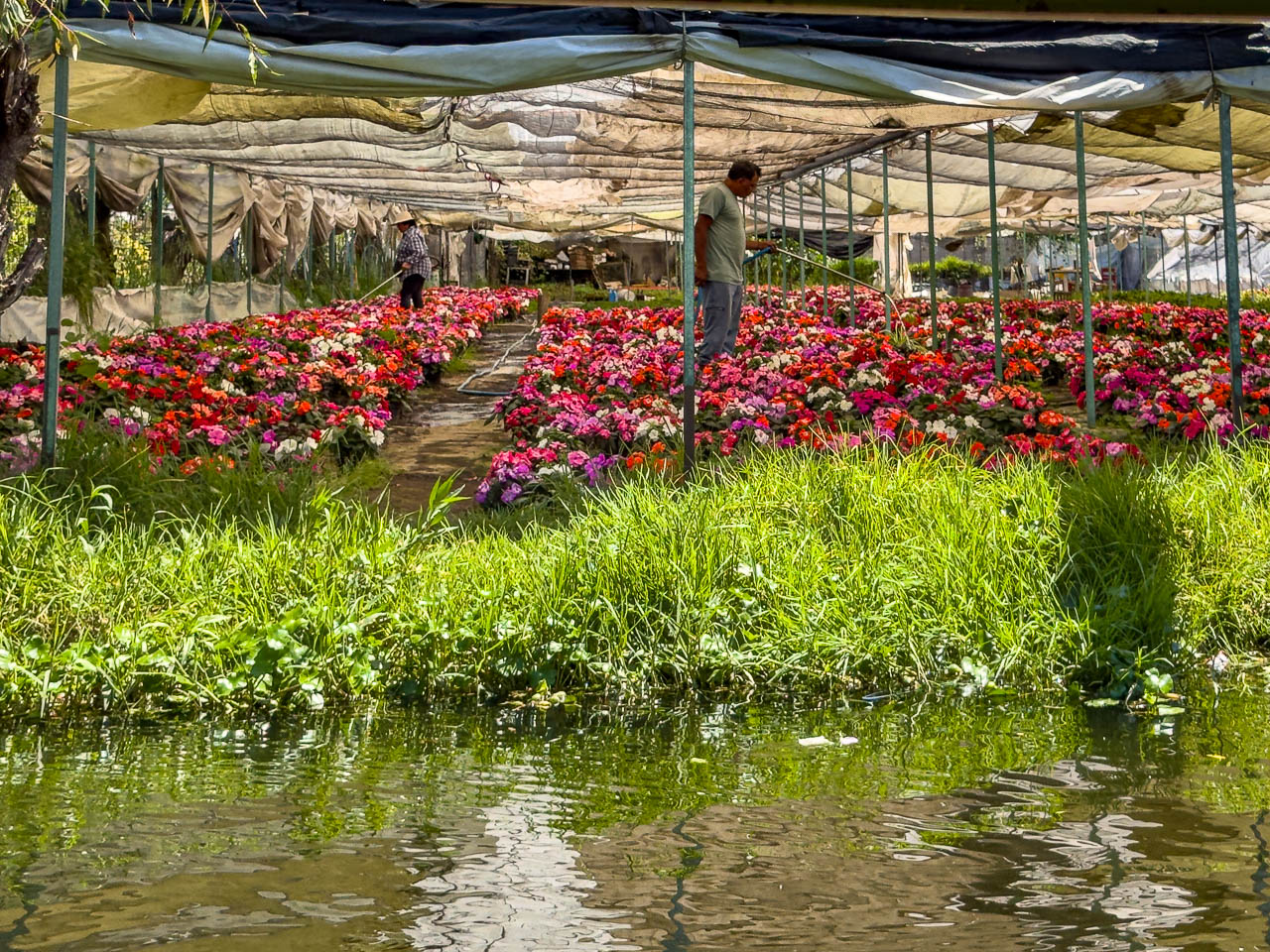
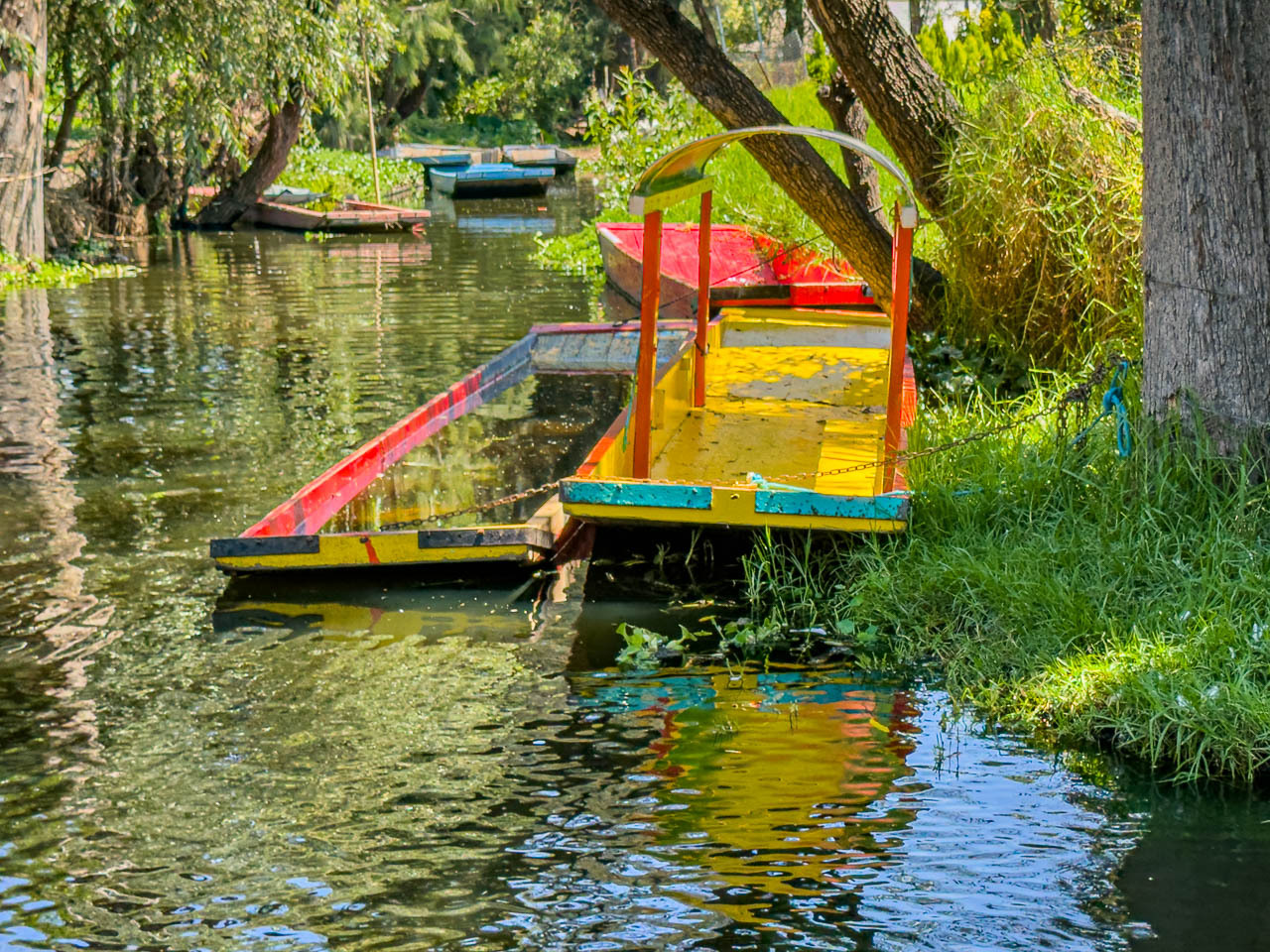
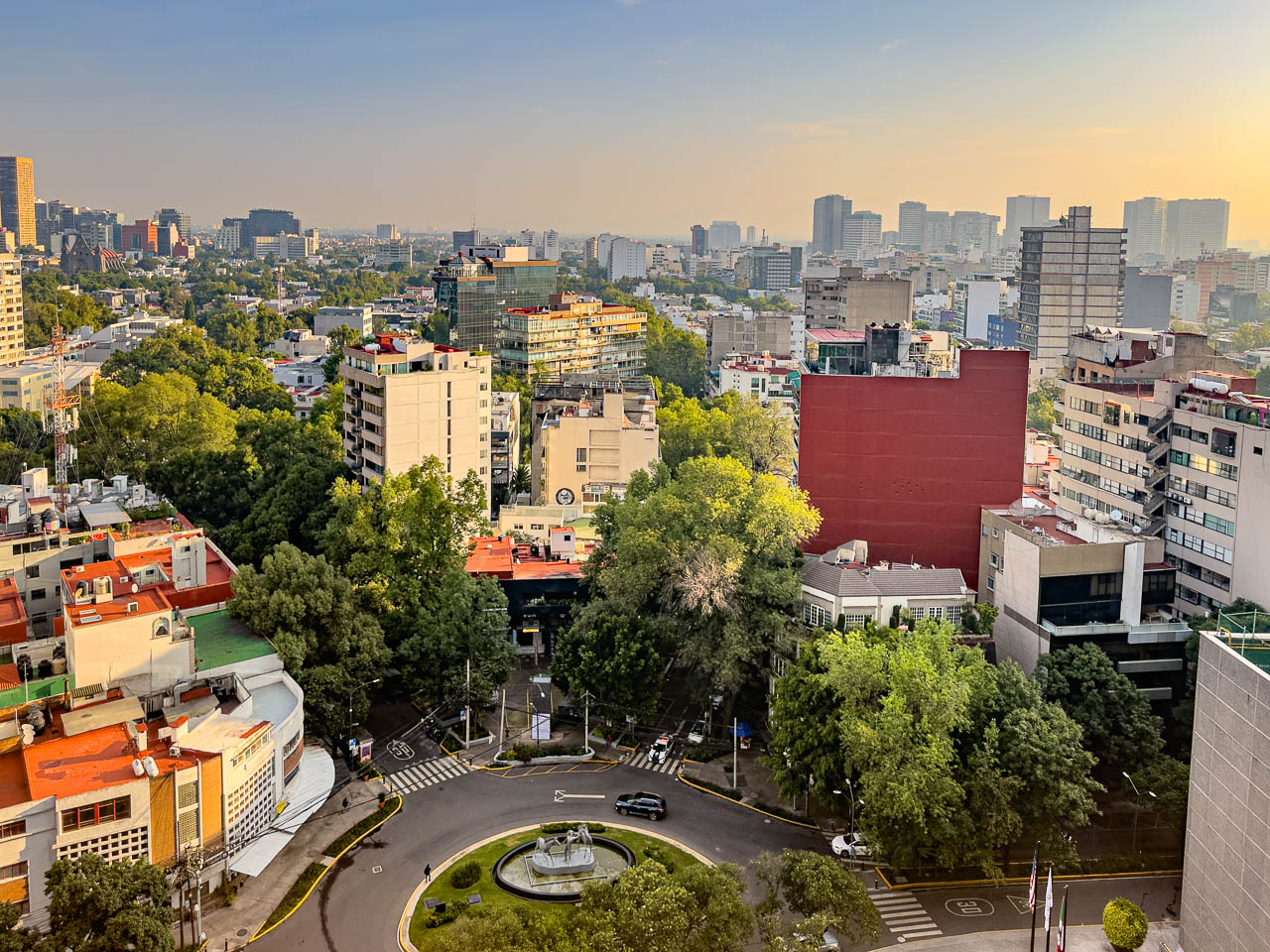 Mexico City is home to 25 million people and sits on a soft, clay-rich bed of the ancient Lake Texcoco. This causes foundational construction challenges and provides great soil for growing trees and parks. A network of green walking paths crisscrosses the city. Early in its history, as the city expanded onto the swampy marshland, the Floating Garden of Xochimilco developed. Families farmed the gardens, or chinampas, using soil pulled from the marshland. Willow trees anchored the garden space and held the soil in place.
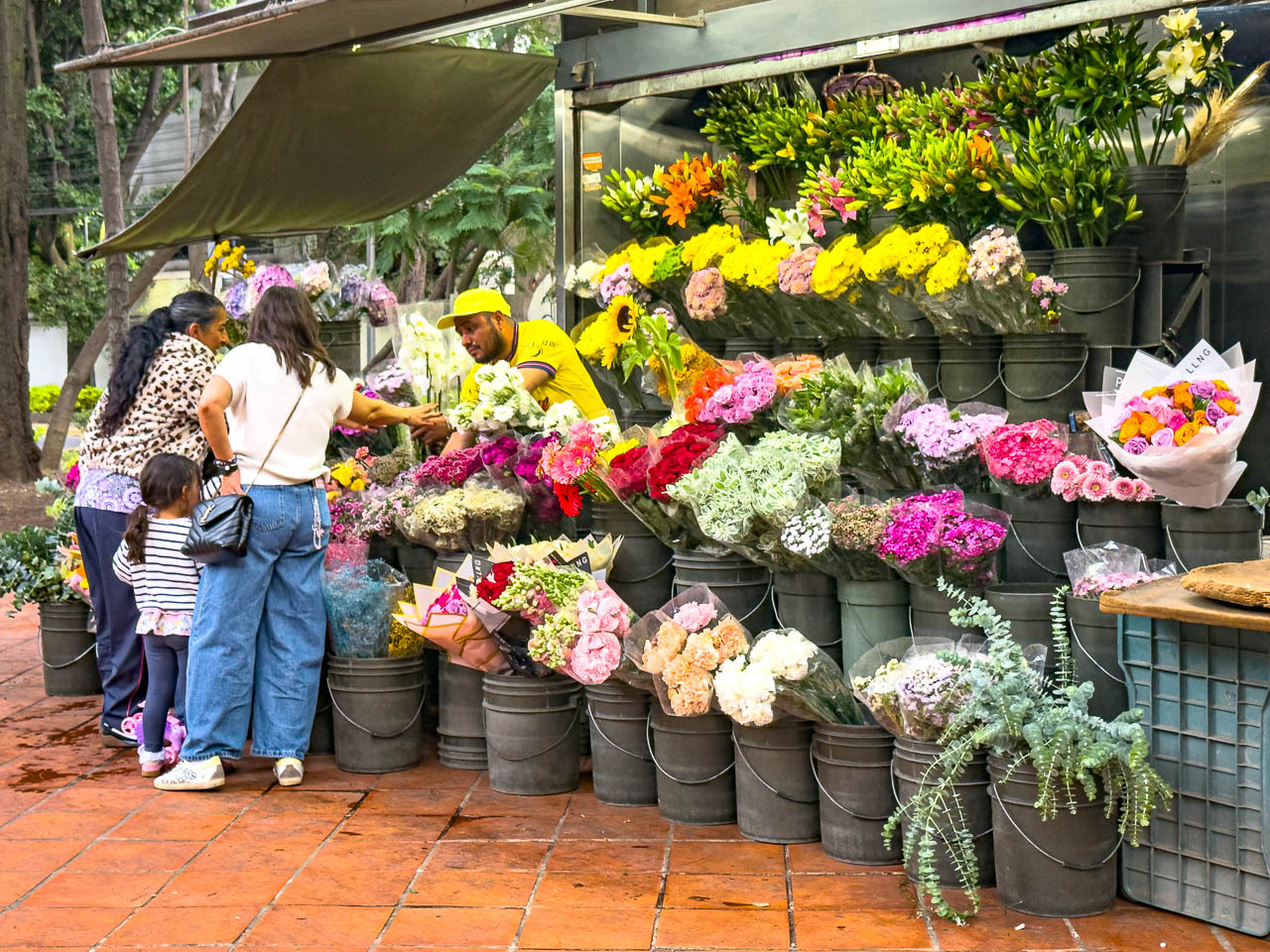
 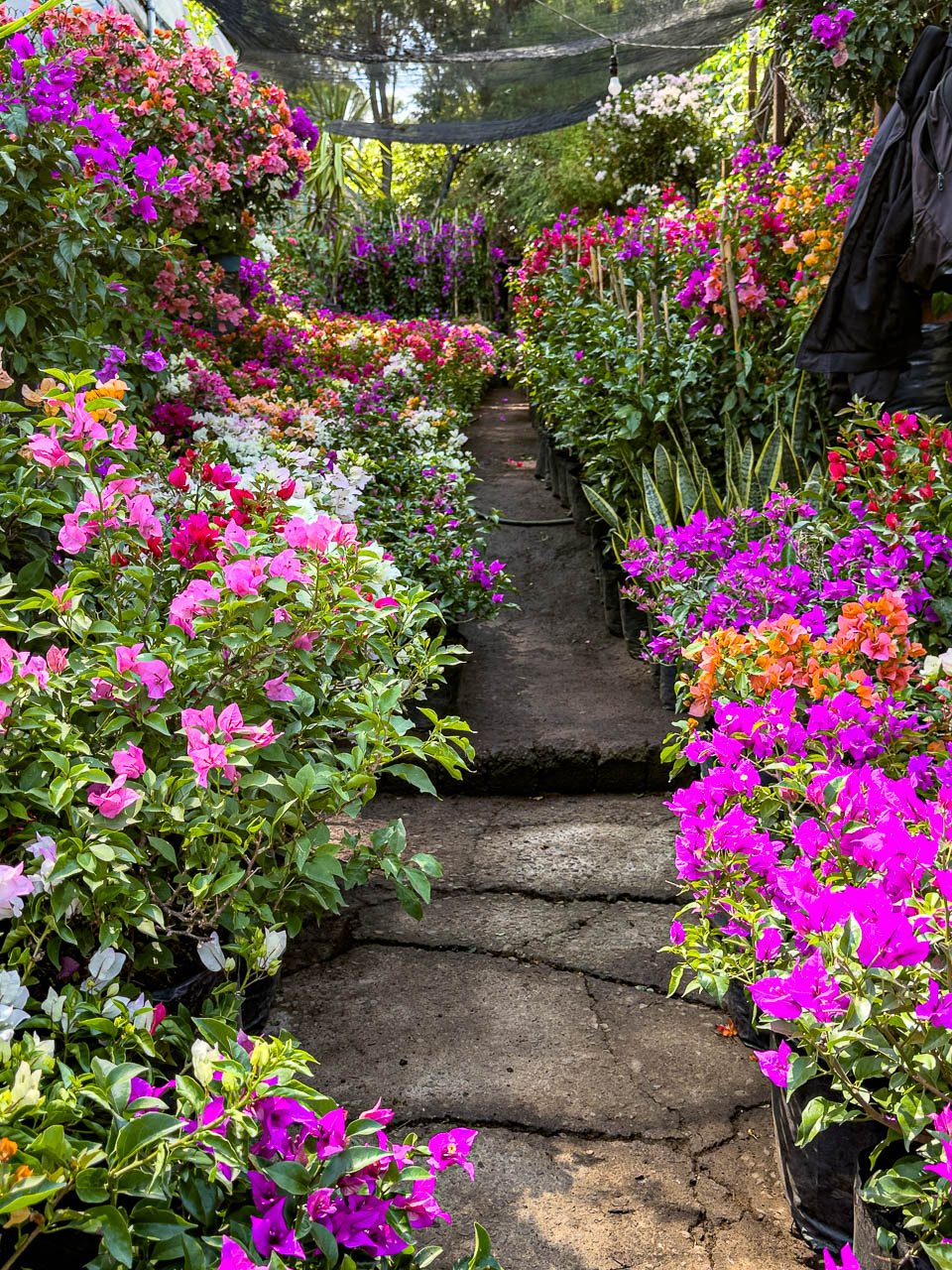 Monty Don writes that these 1,000-year-old man-made islands are perhaps the world’s oldest surviving gardens. These gardens fed the city with corn (maize), beans, squash, chilies, and marigolds. And today, they are pure compost for growing.3 Marigolds in bright orange are revered by the Aztecs and are still used today in the celebration of “The Day of the Dead,” as their color is believed to be vivid enough to guide souls to the altars families create to welcome their return.
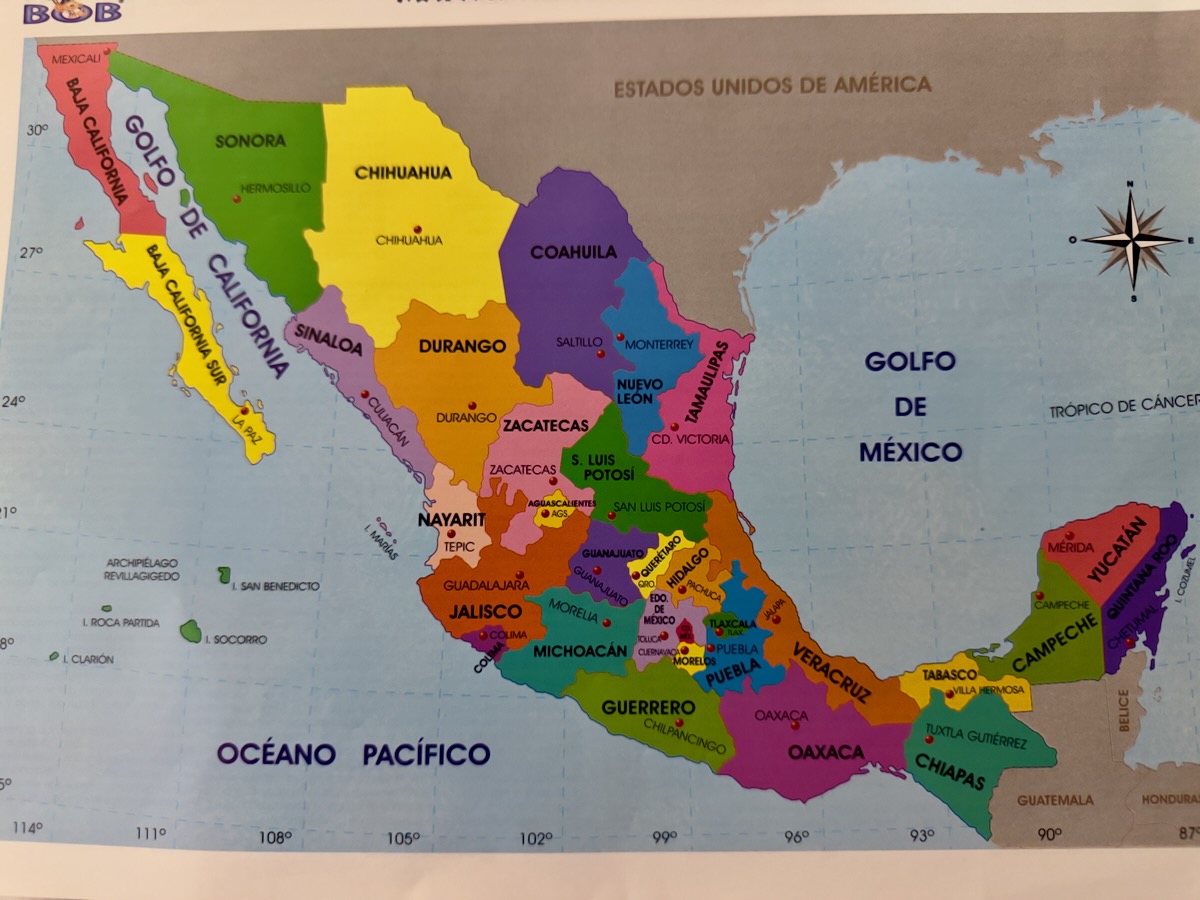
Mexico has 36 states and a diverse, artistic, musical, historical, inventive culture with much to offer visitors. I plan to return.
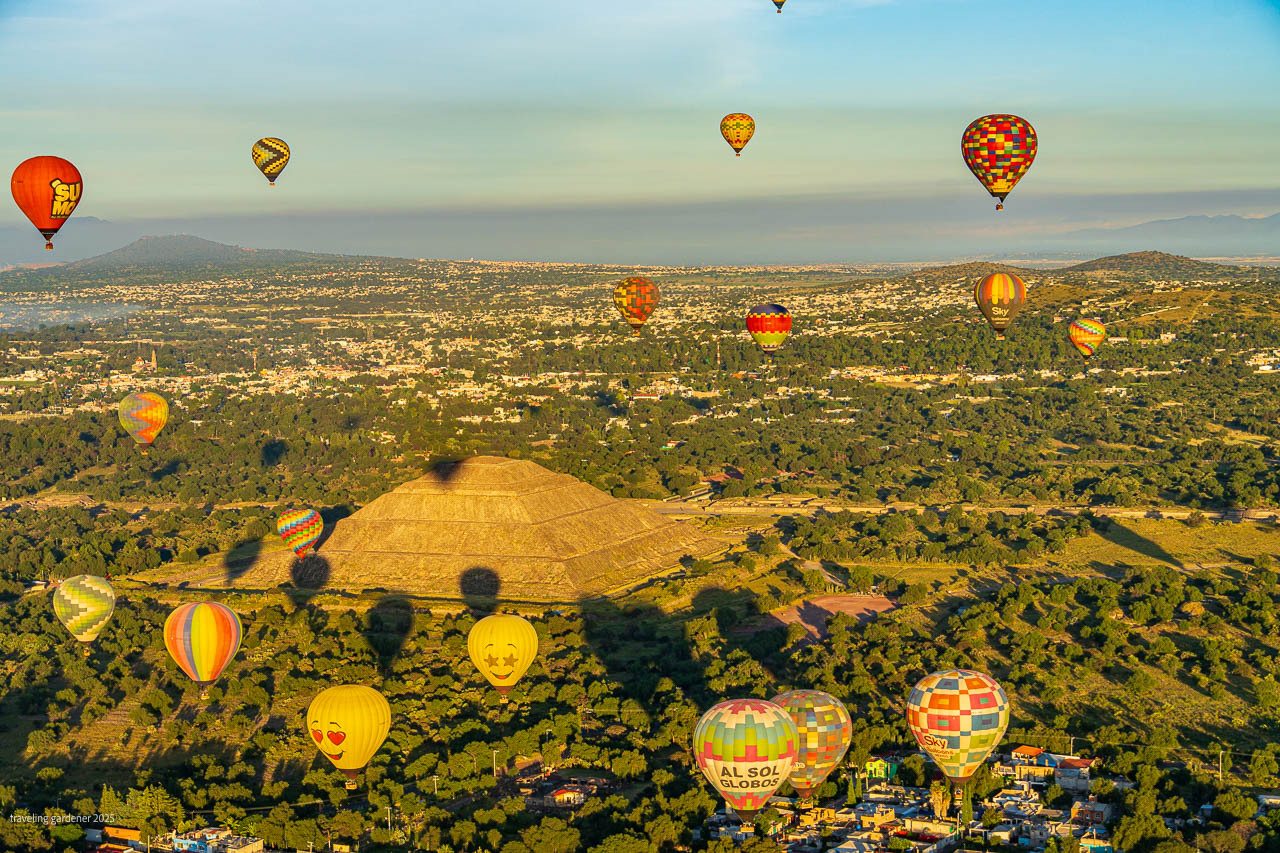
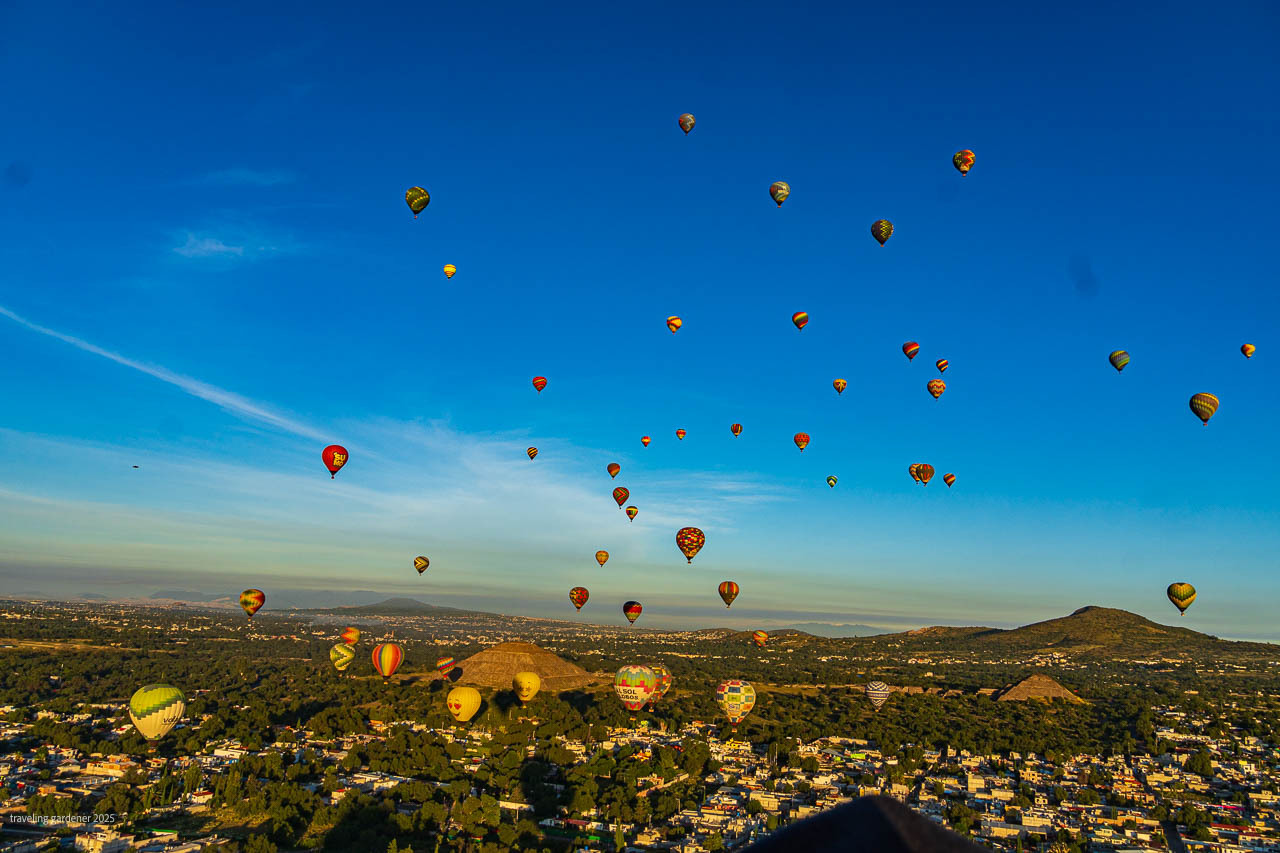
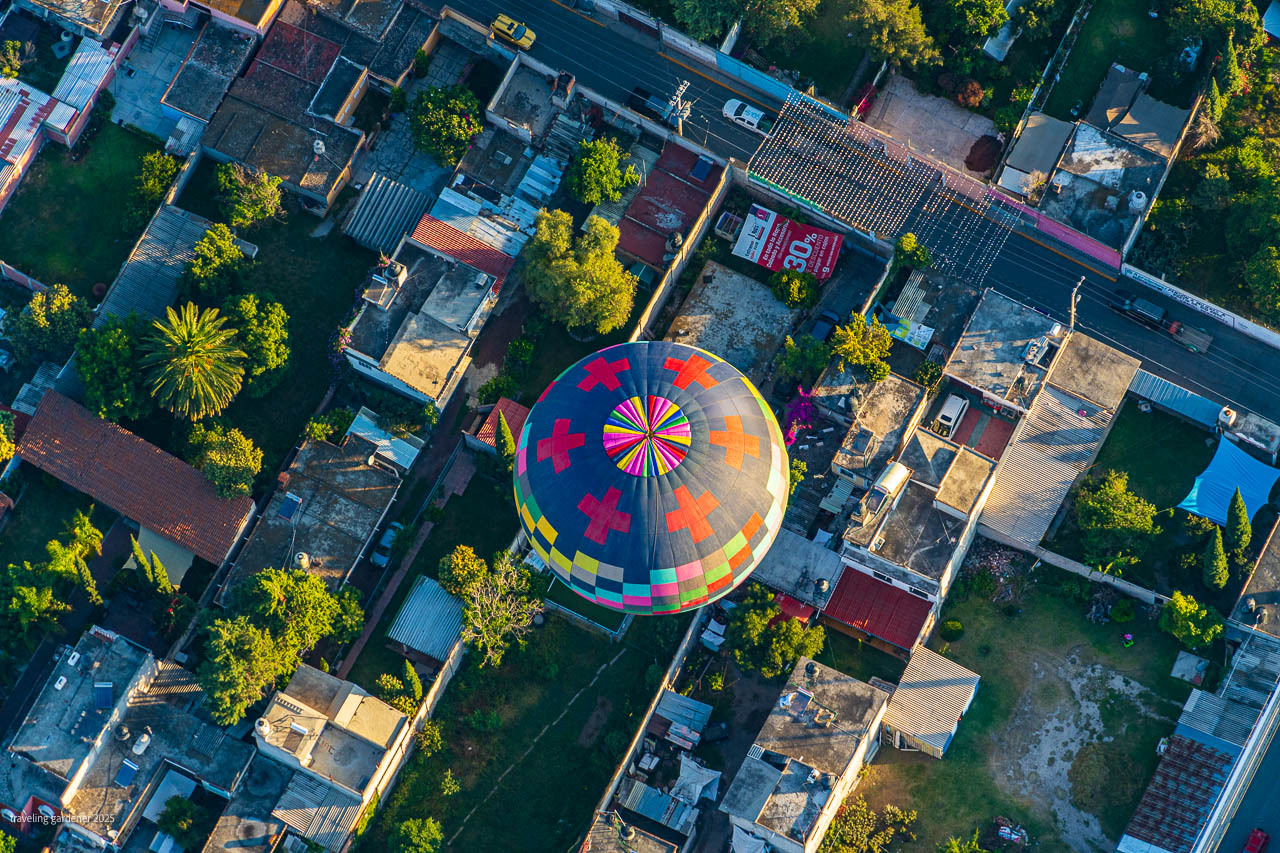
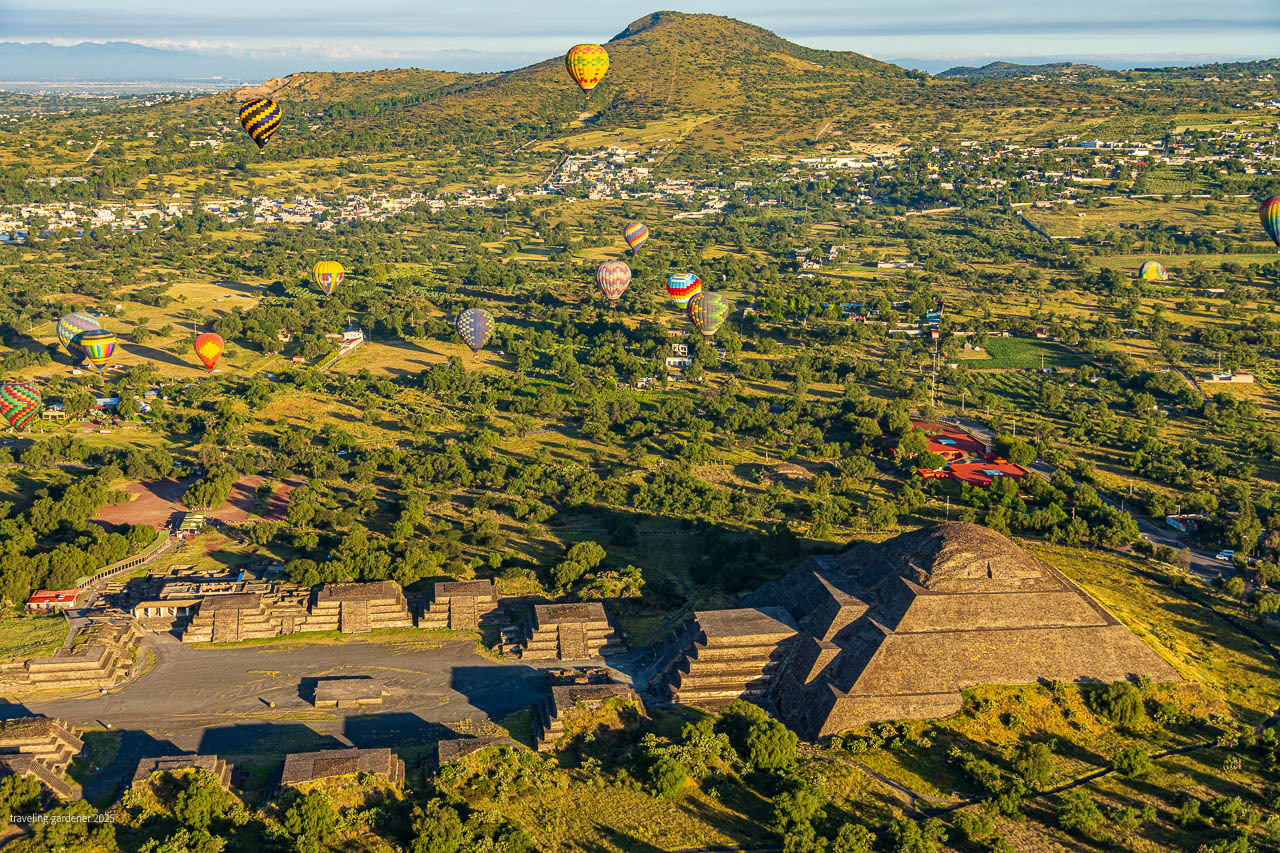
We also took a balloon ride over the Aztec pyramids and attended a soccer game in the Mexico City Stadium. 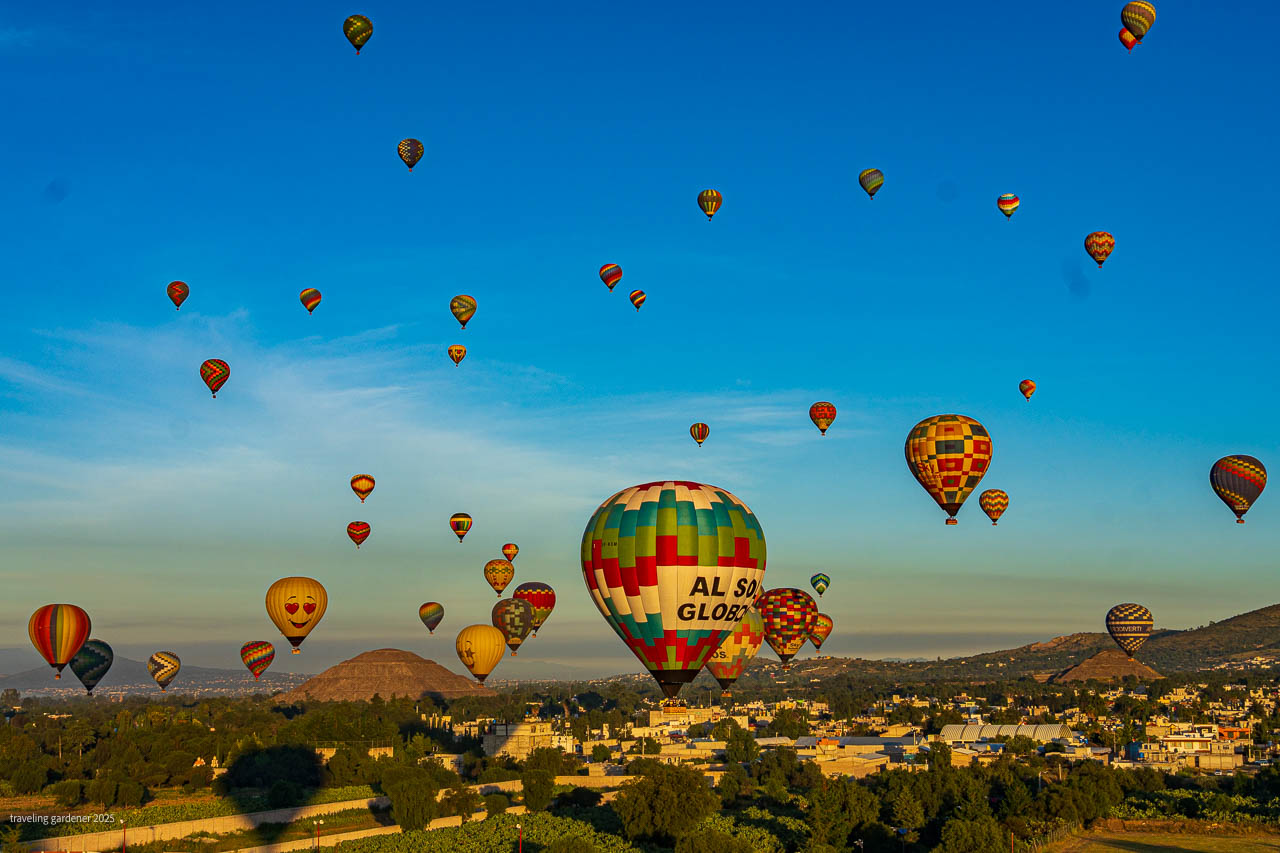
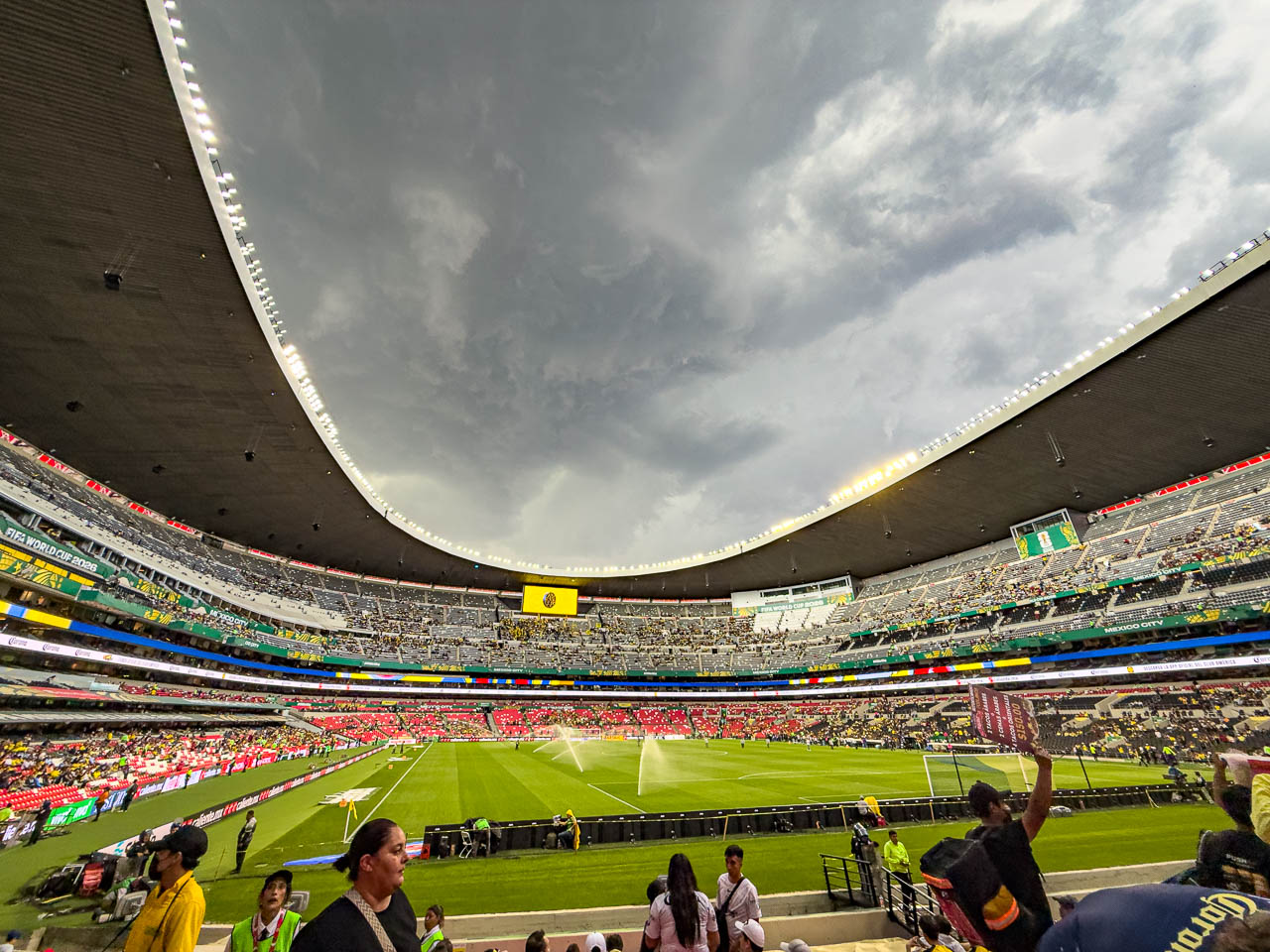
Enjoy the gallery attached here.
So enchanting!! Who knew?? I’ve never been to Mexico City. Most of what we hear about the country is tinged with fear and loathing of the illegal drug cartels and all the killings . Thank you-!! Loved this piece. Thanks so much.
Yes, it’s a curious thing that so much news dismisses the magic of this great country
I love all of the pictures and comments that you make on all of your travels.
I’ve enjoyed your work for many years. It is Armchair Travel at its best
Oh thank you!