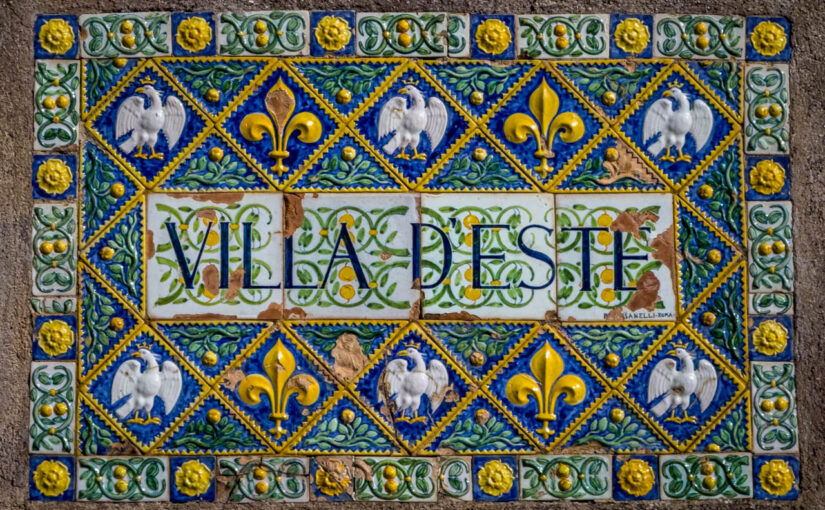
Creativity is driven by various motivations. Joy can inspire one path, while disappointment can push in a different direction. For instance, Cardinal Ippolito, son of Lucrezia Borgia 1, was deeply disappointed when he was overlooked for the papacy in 1550, with Julius III being chosen instead. While pleasantries were shown in public, behind the scenes Julius banished Ippolito from Rome forever, but awarded him the governorship of Tivoli. Ippolito could never return to Rome and the Vatican.
In the mid-16th century, revenge drove Cardinal Ippolito to build a garden villa in Tivoli to rival Rome’s beauty, consuming his life and fortune. Today, his creation, Villa d’Este, is an Italian treasure. Who remembers Pope Julius III?
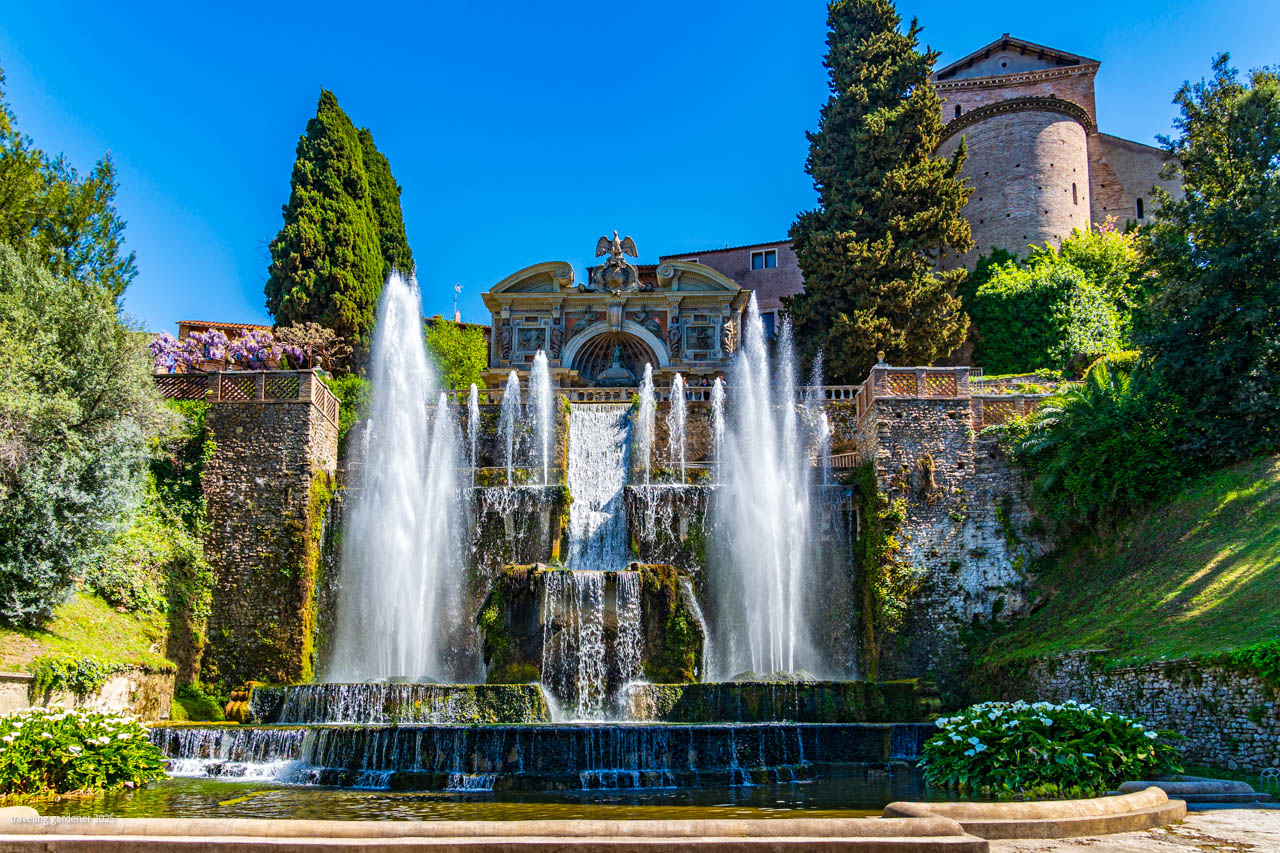
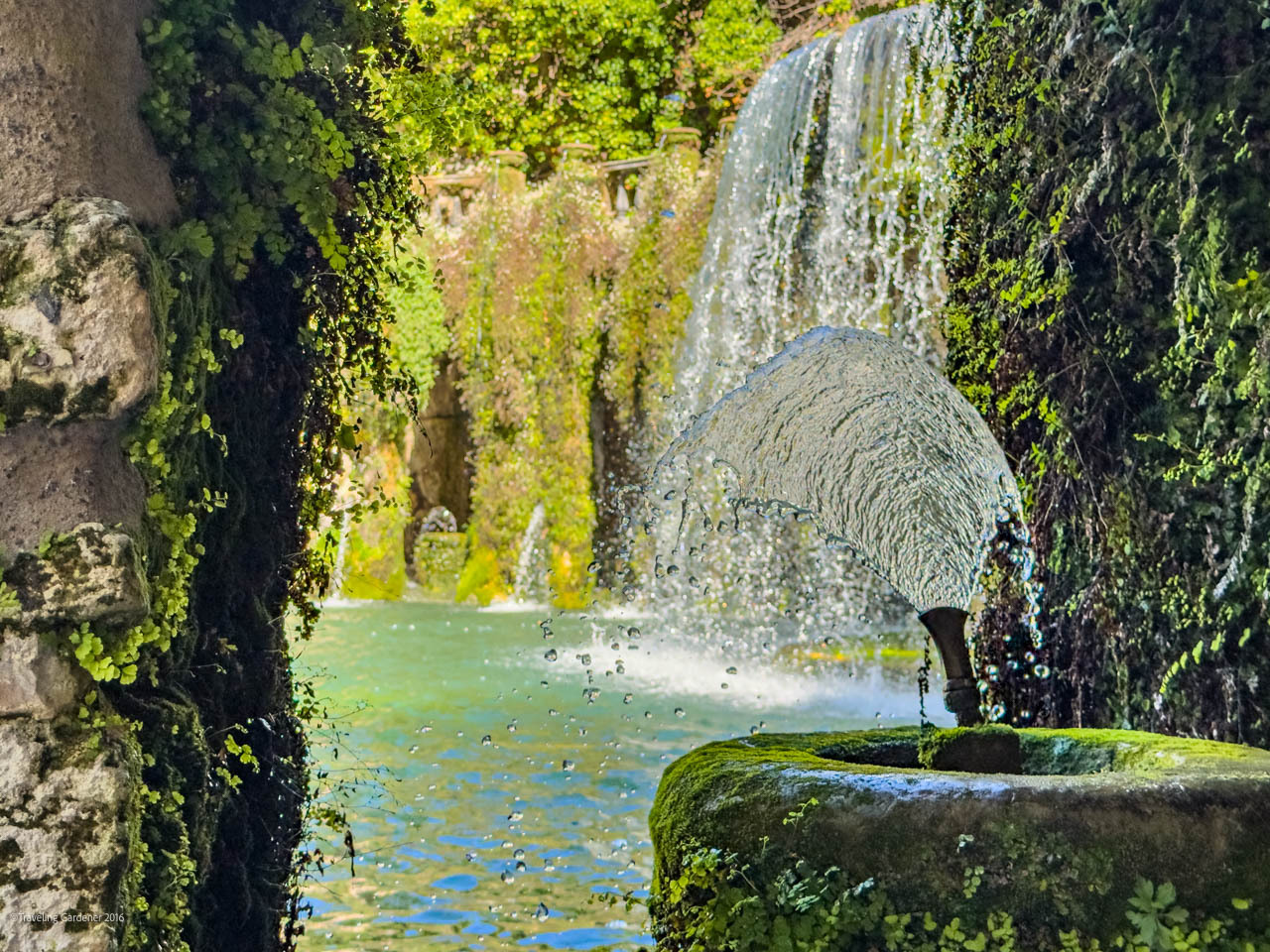
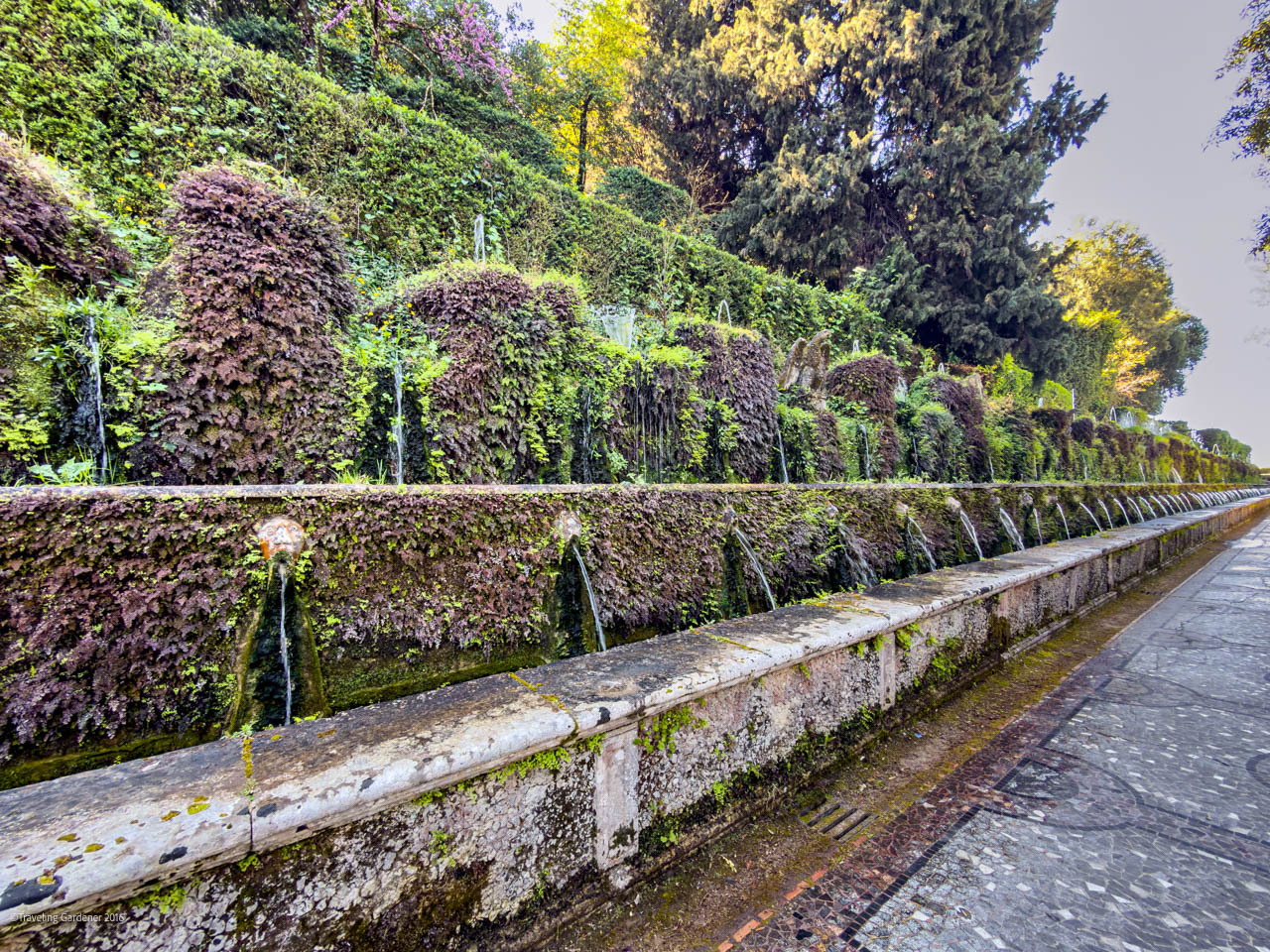
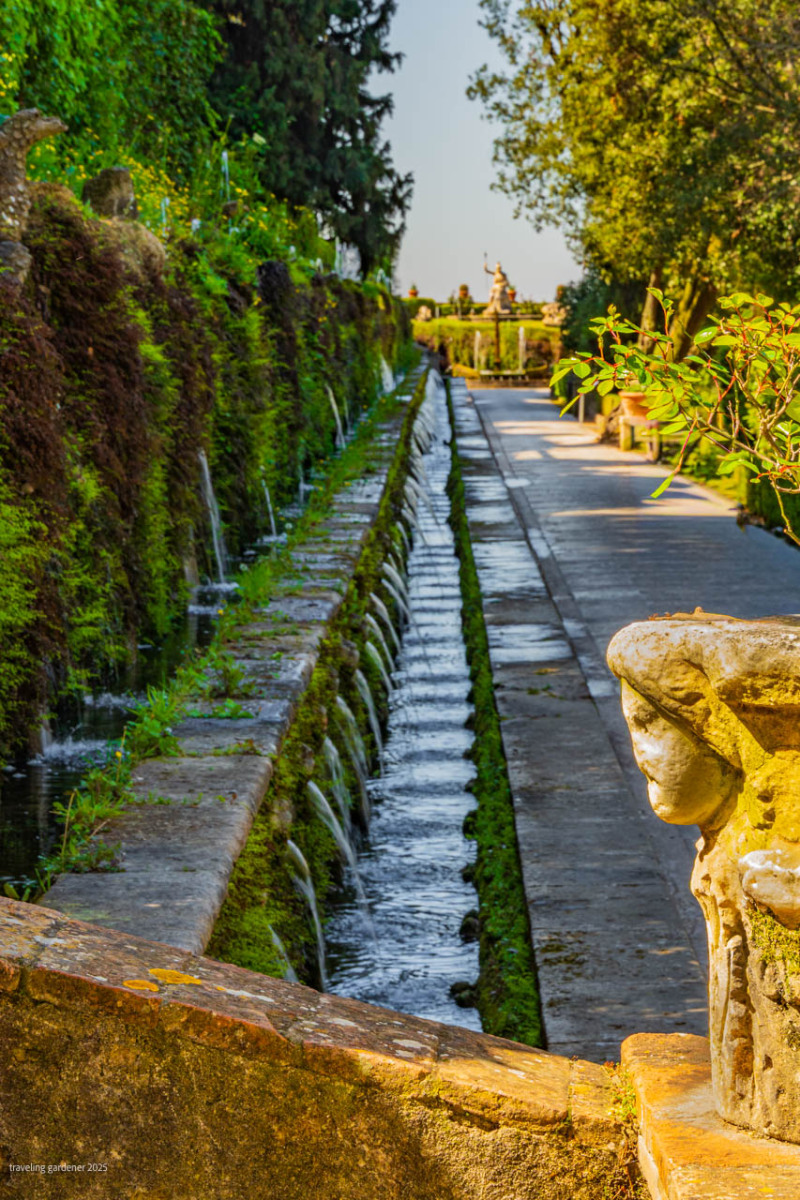
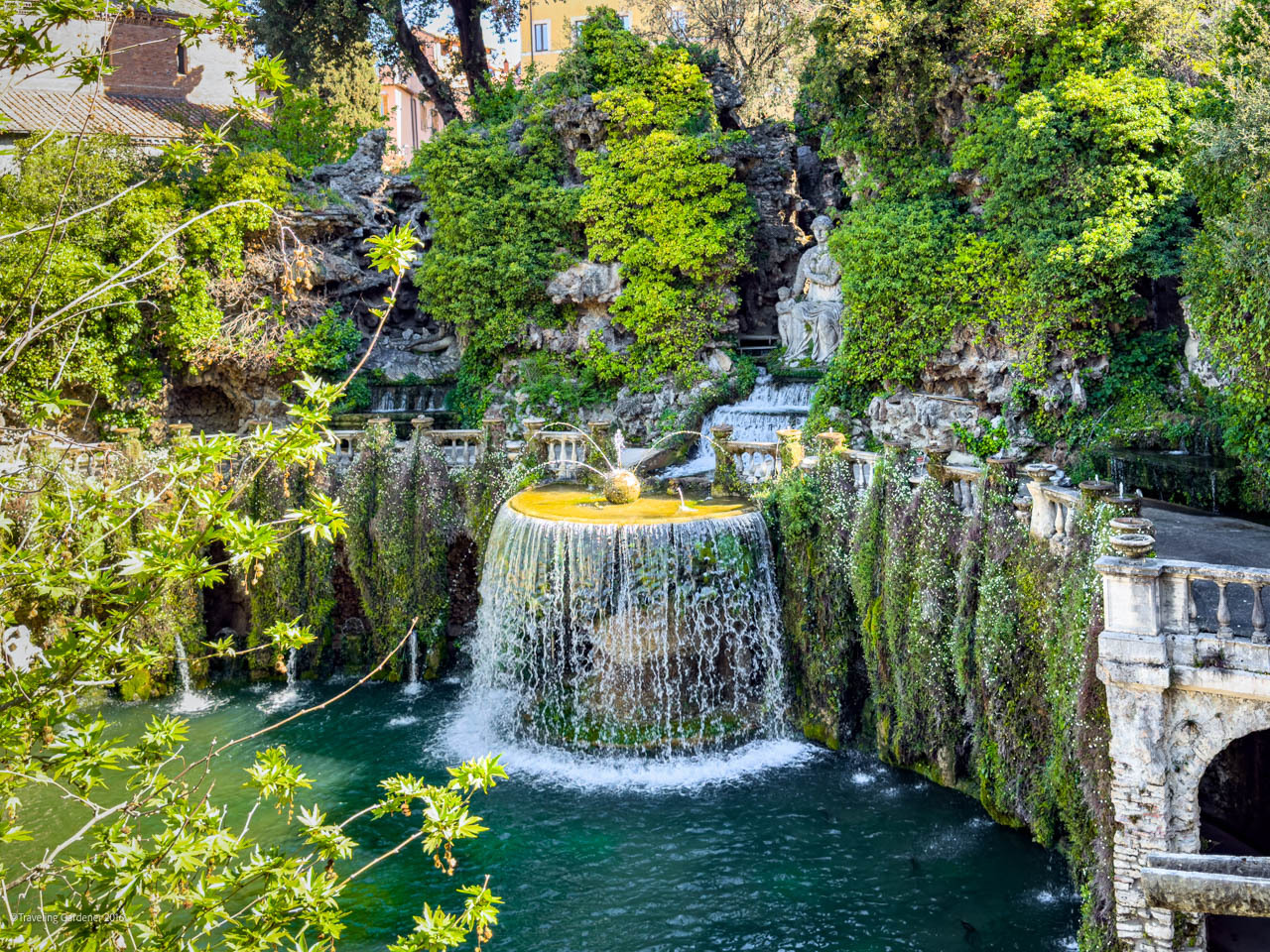
Villa d’Este is a marvel of 500 individual fountains, water jets, and cascades. It sparkles in the sunlight, it tinkles in the ear, it plays music on the hydraulic organ. The water travels down eight levels of terracing.
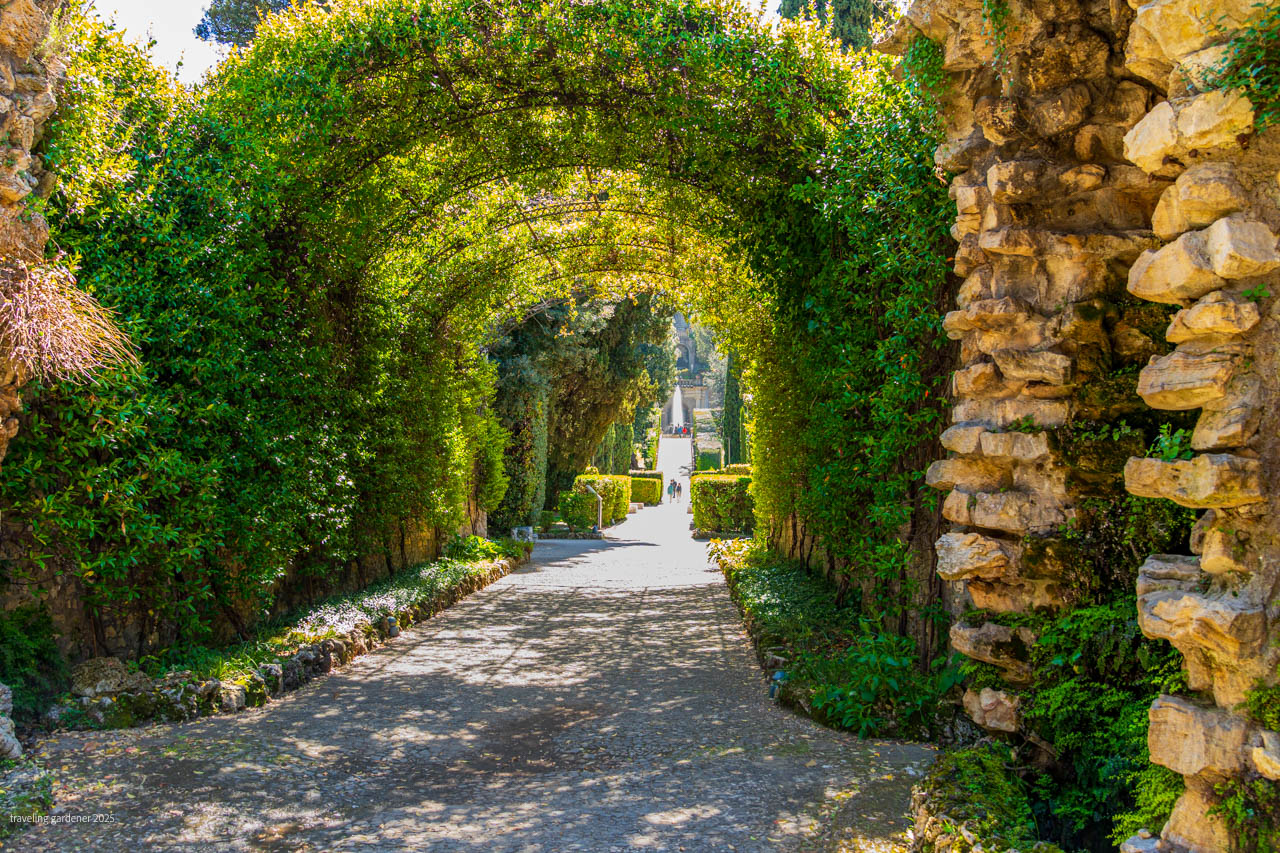
Visitors originally entered at the lowest level of the garden and climbed to the villa (enjoying the beauty but struggling with the steep ascent), where they were offered comfort and refreshment upon arrival.
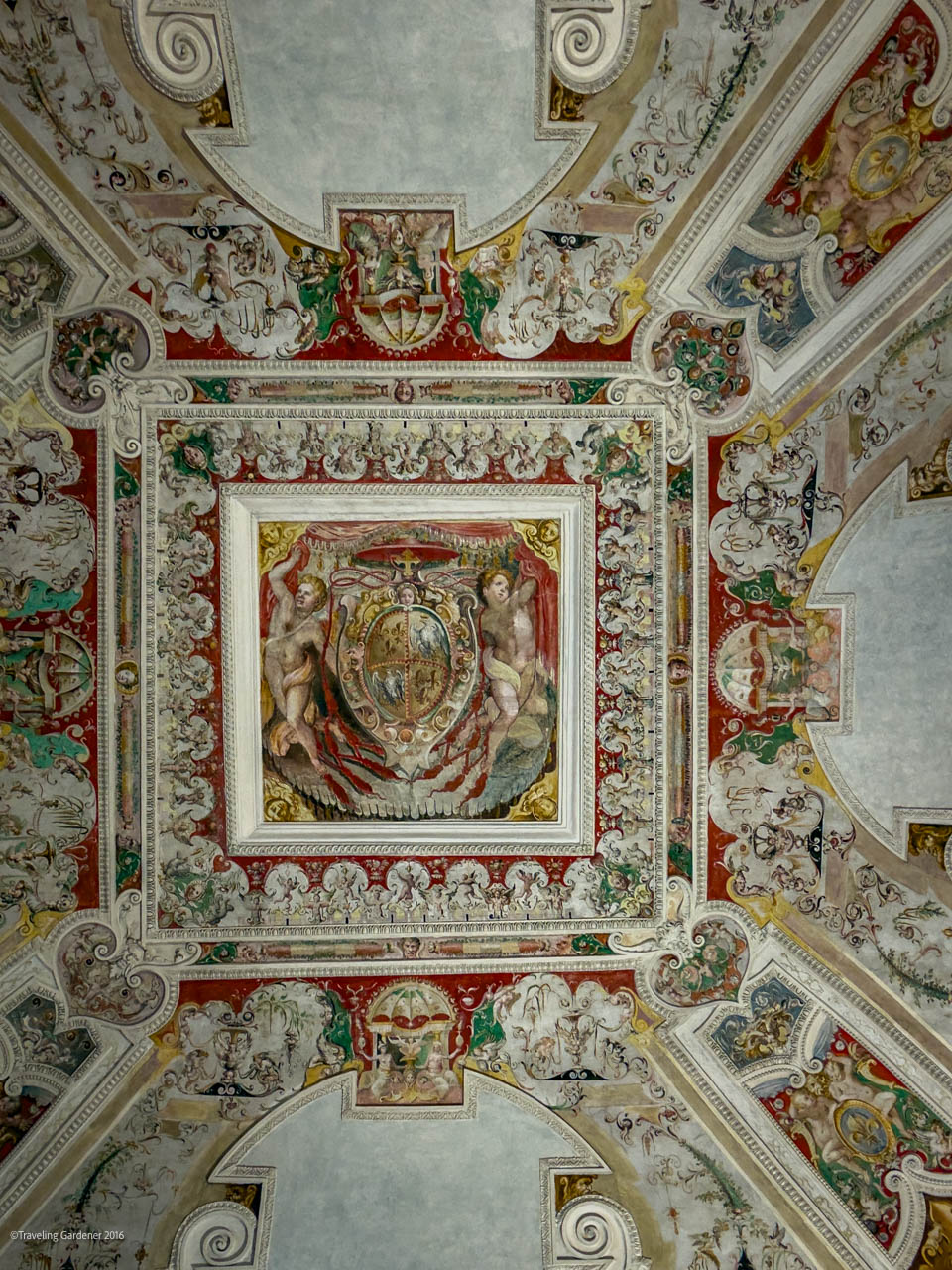
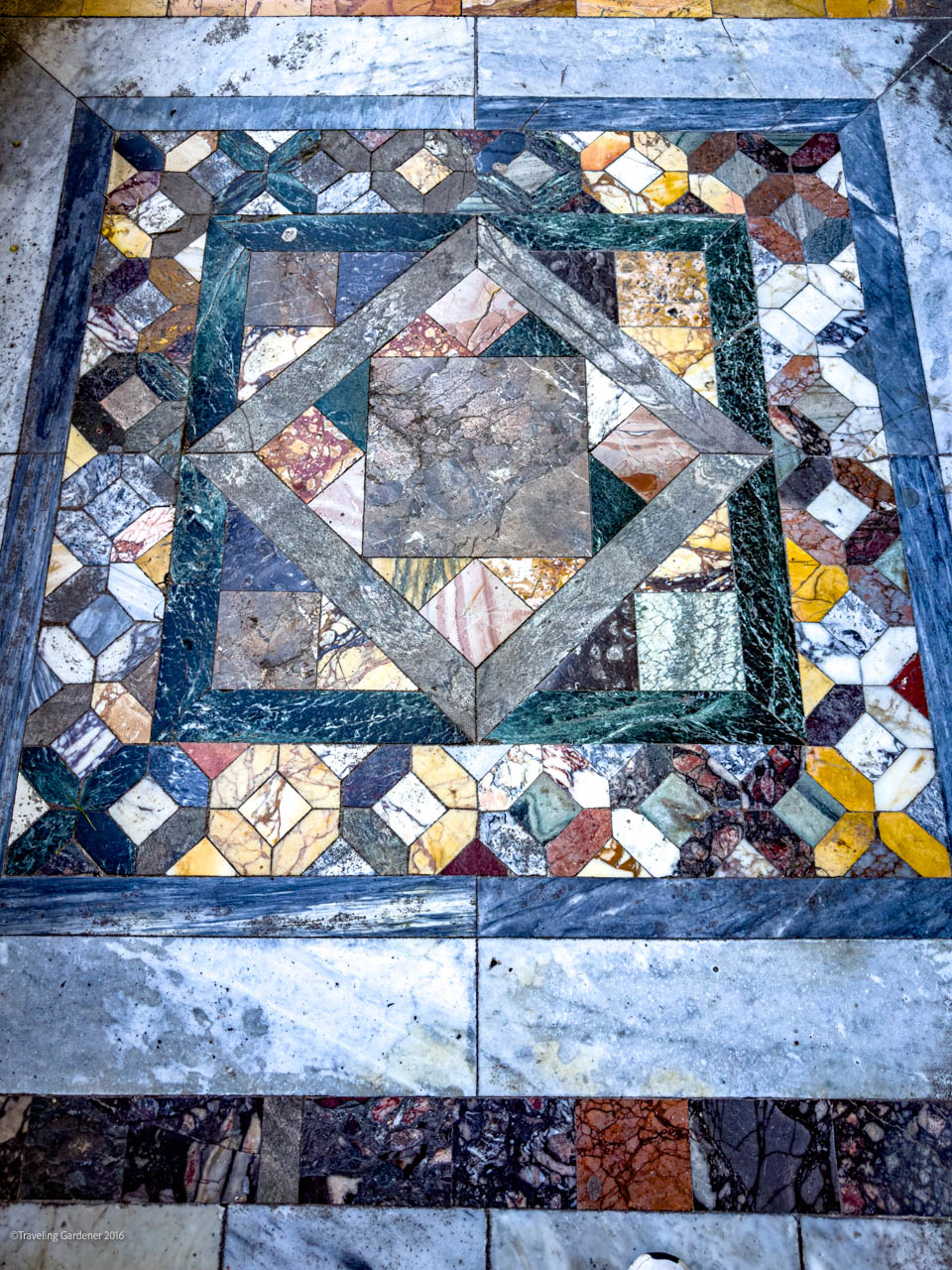
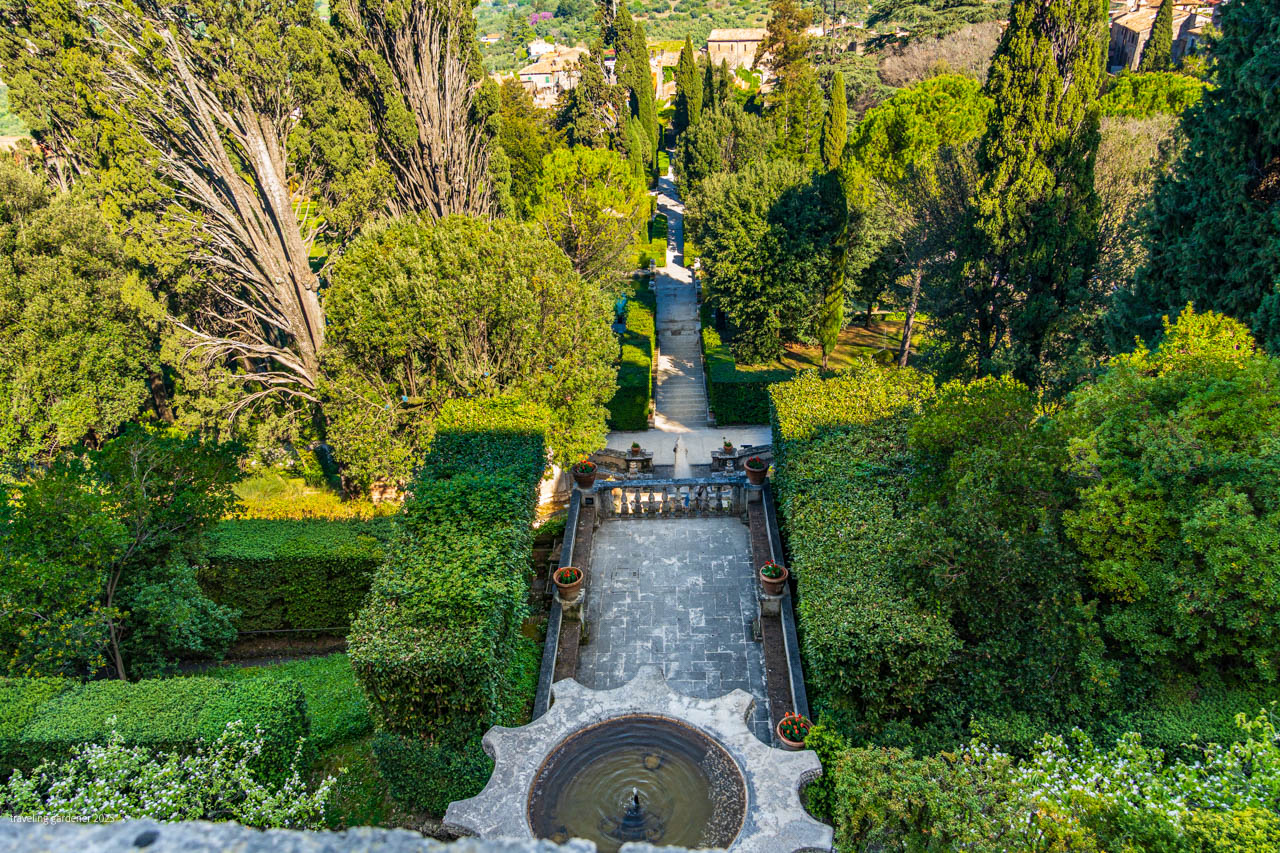
Today, visitors begin at the top, entering through the villa and exploring its elaborate ceilings and murals. Leaving the villa, you walk out on the terrace to view the green beauty below.
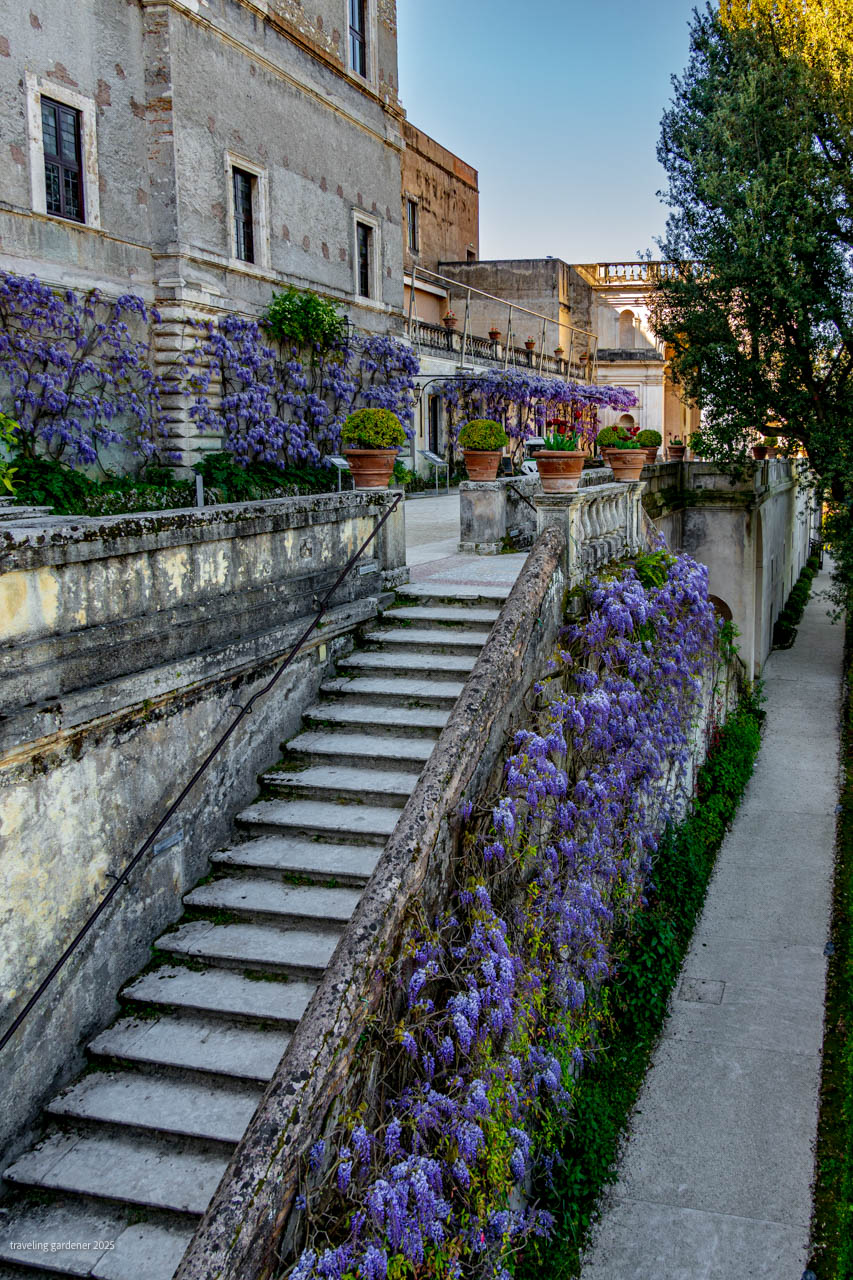
I was there to remember my enchantment with this garden when I first visited with my cousin Randy. We were 18 & 16 years of age and enrolled in a Travel Study International adventure. When we exited the airport upon our arrival in Rome local families were eagerly waiting for their loved ones. I turned to her and said, “Look at all the foreigners!” Rome was the first stop of our five-week, six-country tour. We were innocents abroad.
We visited the garden at night, and strategic lighting cast pools of light, shadows, and mystery in every direction. We sat on the edge of the Boulevard of One Hundred Fountains with water cascading over three levels. Sitting in the magic of the fountains, we realized the world was a much bigger place than our childhood homes in Indiana. This year, I went back to sit by the Boulevard of 100 Fountains.(526′ in length, 130 m)
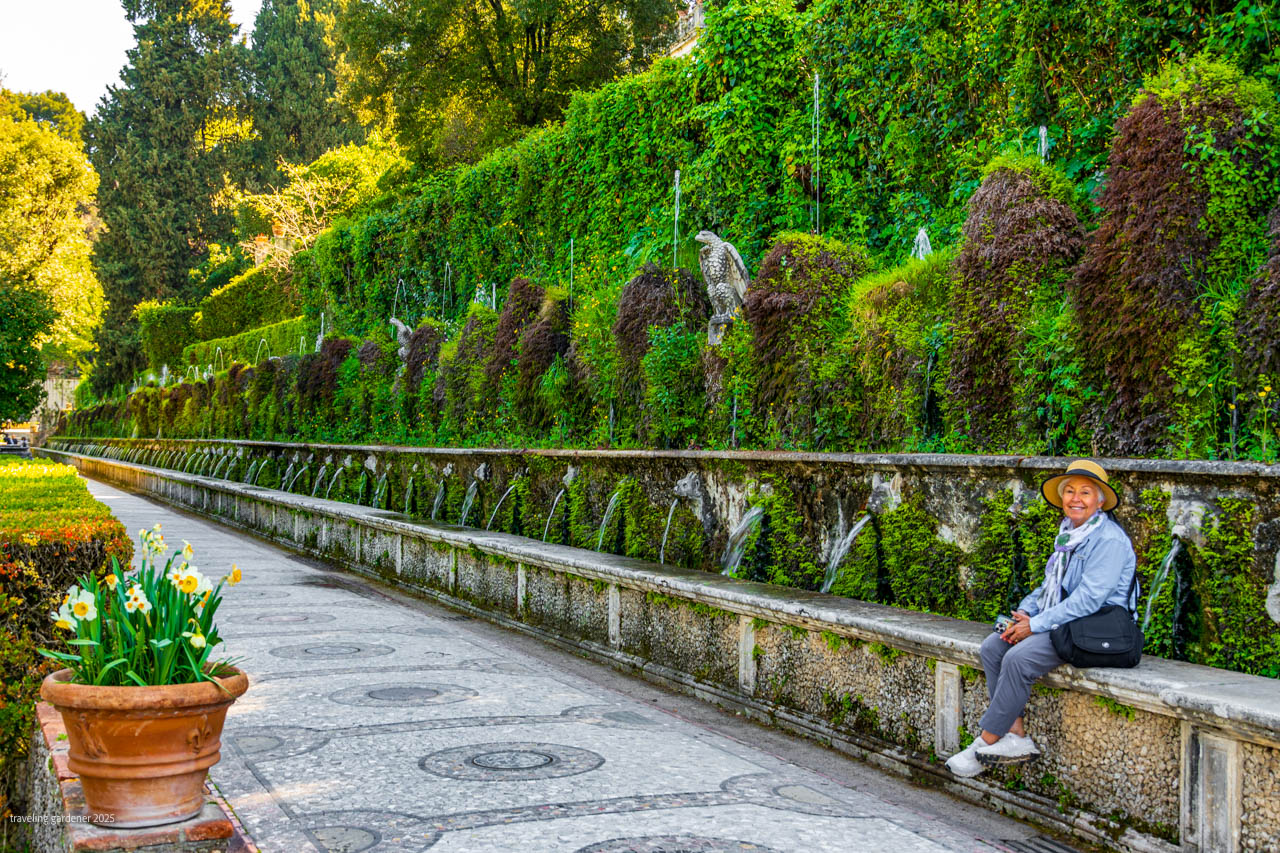
My return visit was equally enchanting and allowed me to spend the entire day wandering up and down, seeking out all the fountains and views the 11 acres (about 4.5 hectares) offered.
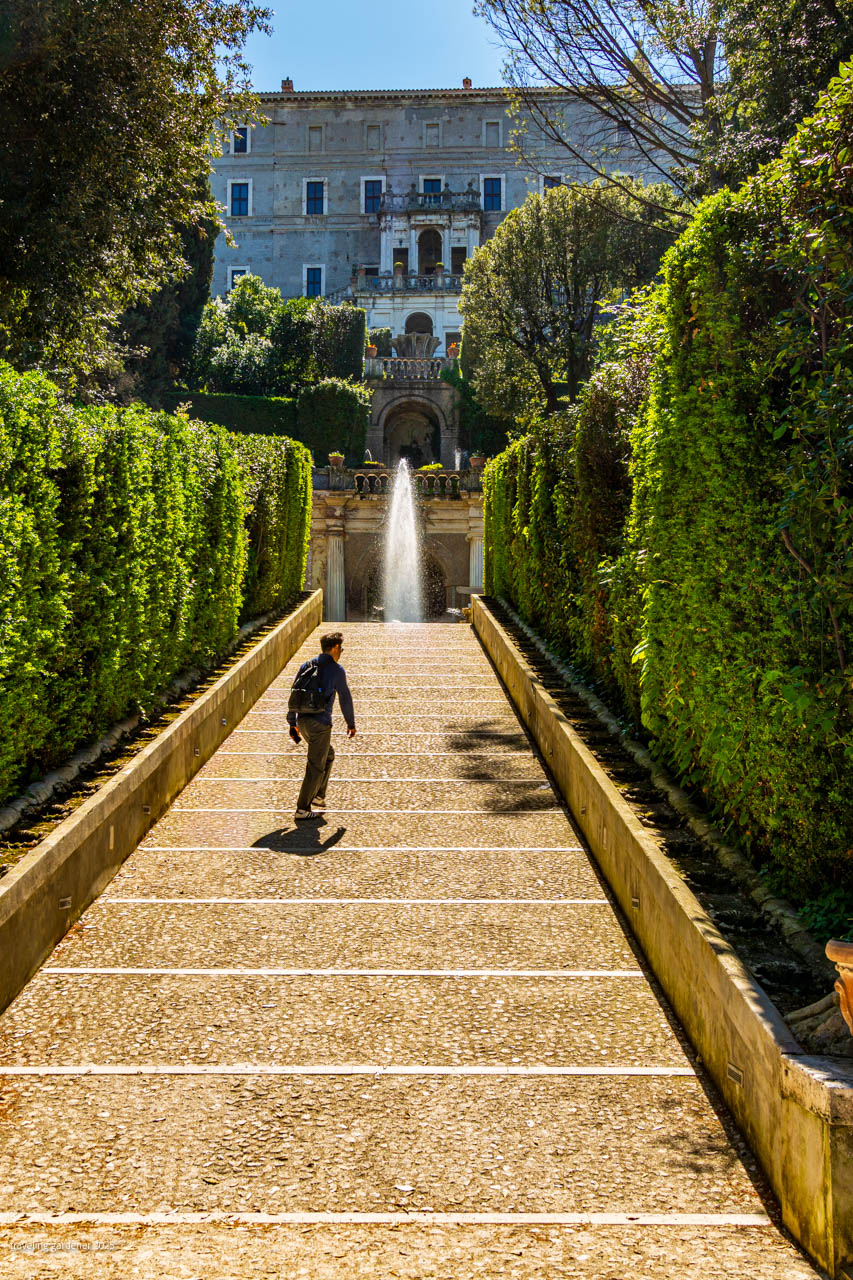
Today, Villa d’Este is protected as a UNESCO World Heritage Site. Identified as one of the grandest and best-preserved examples of an Italian Renaissance garden. 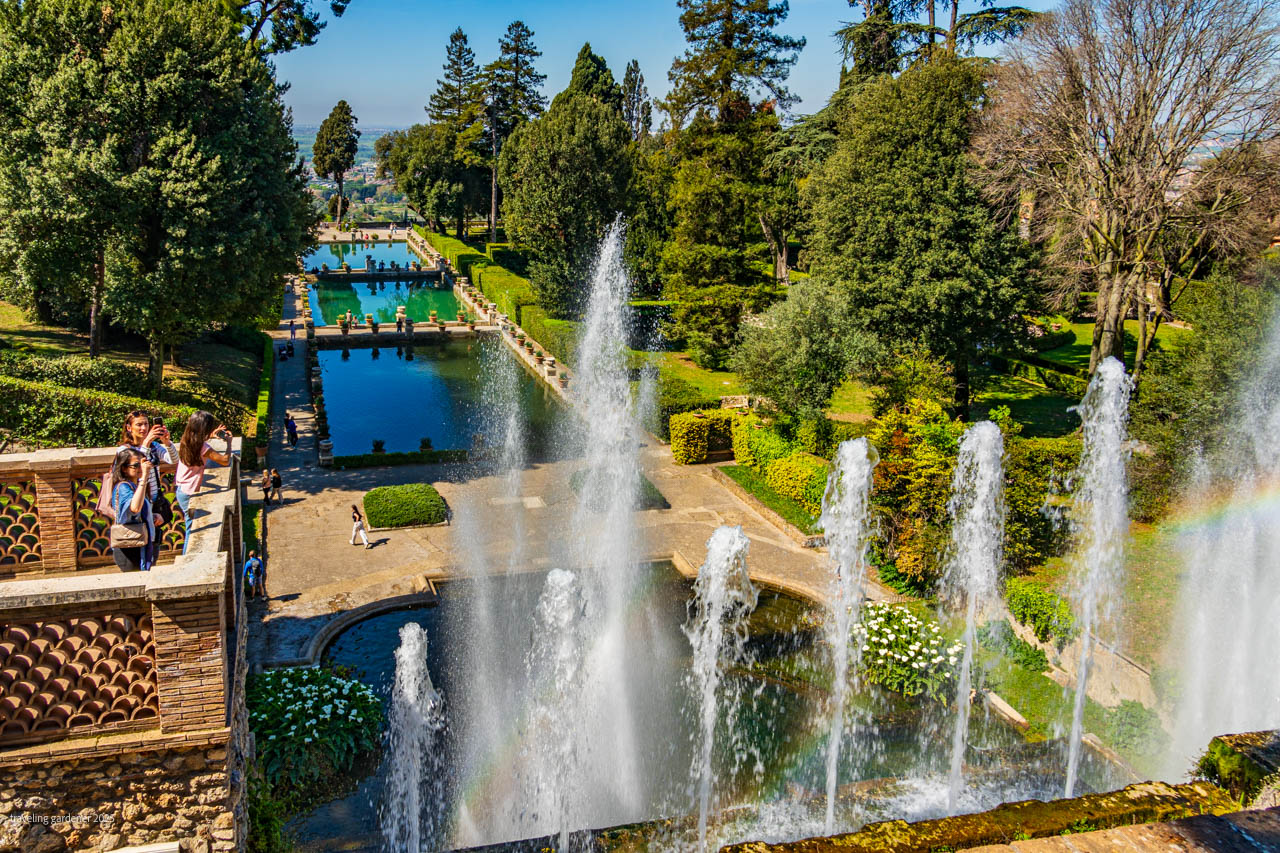 Rather than using pumps, this 16th-century engineering marvel operates entirely by gravity, drawing water from the nearby Anion River and the Rivellese spring.
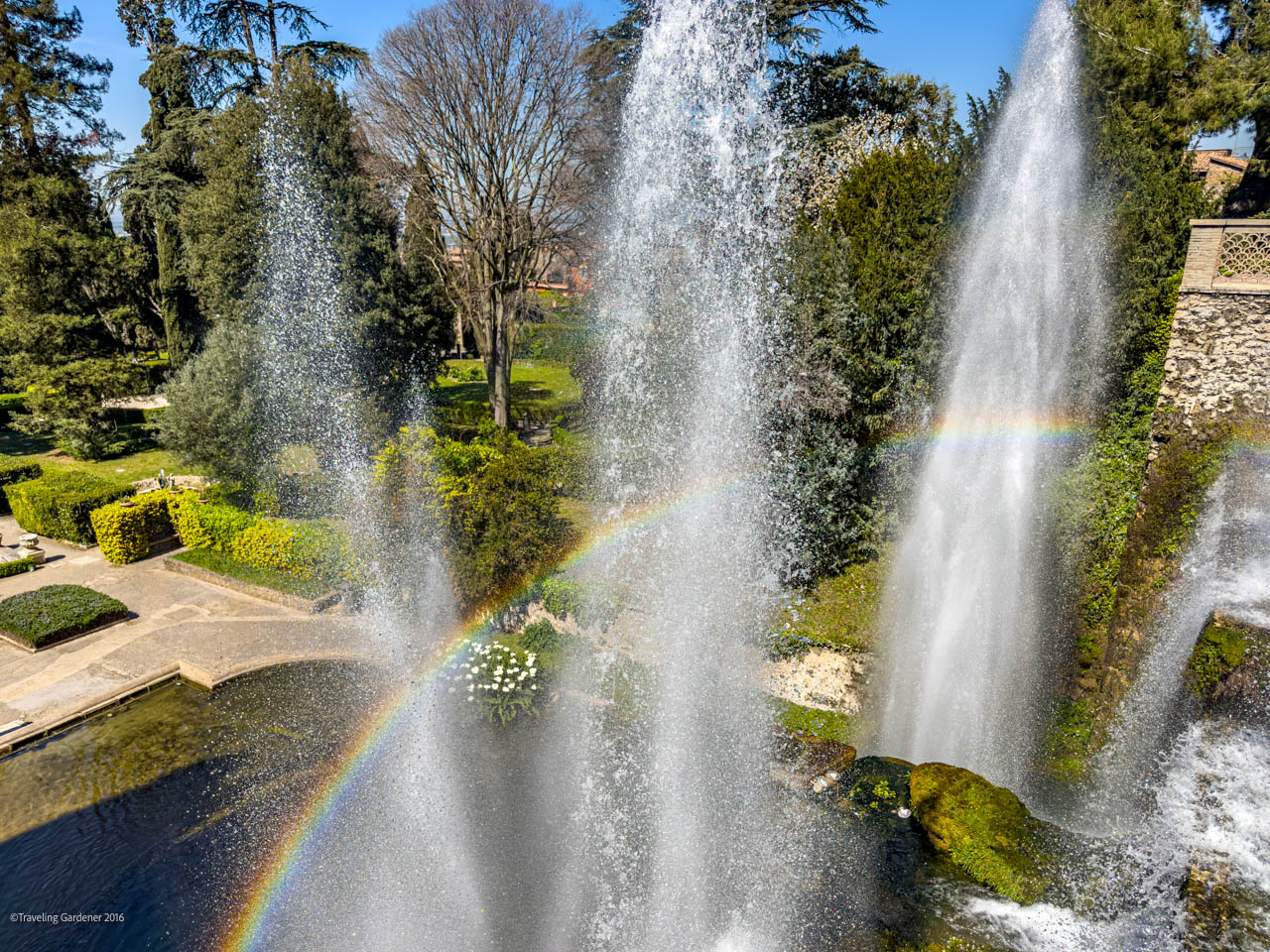
This visit was in sunshine with blue skies and wispy white clouds. The sprays of the fountains created rainbows. The pools reflected the fountains. There was magic in every step.
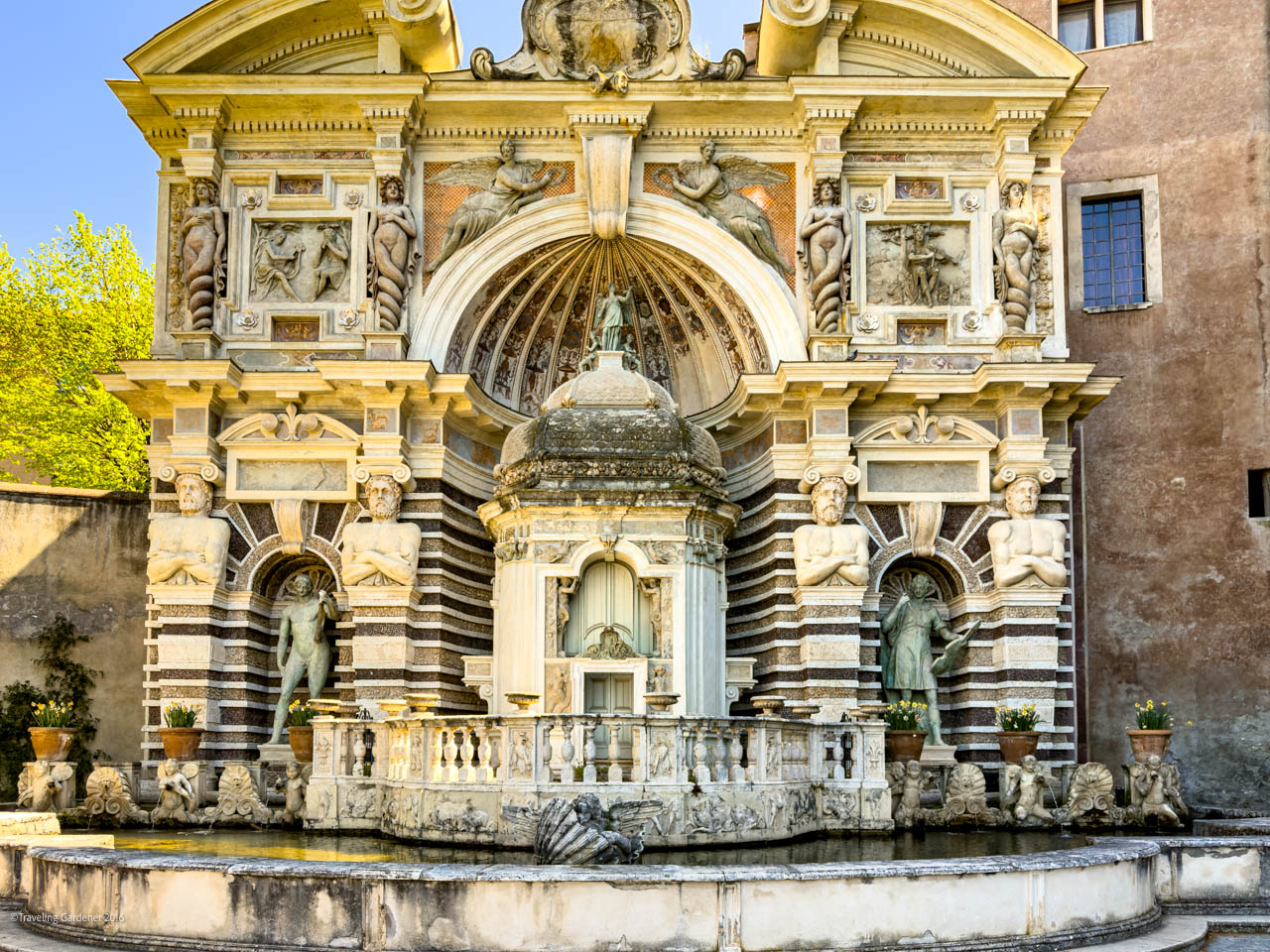
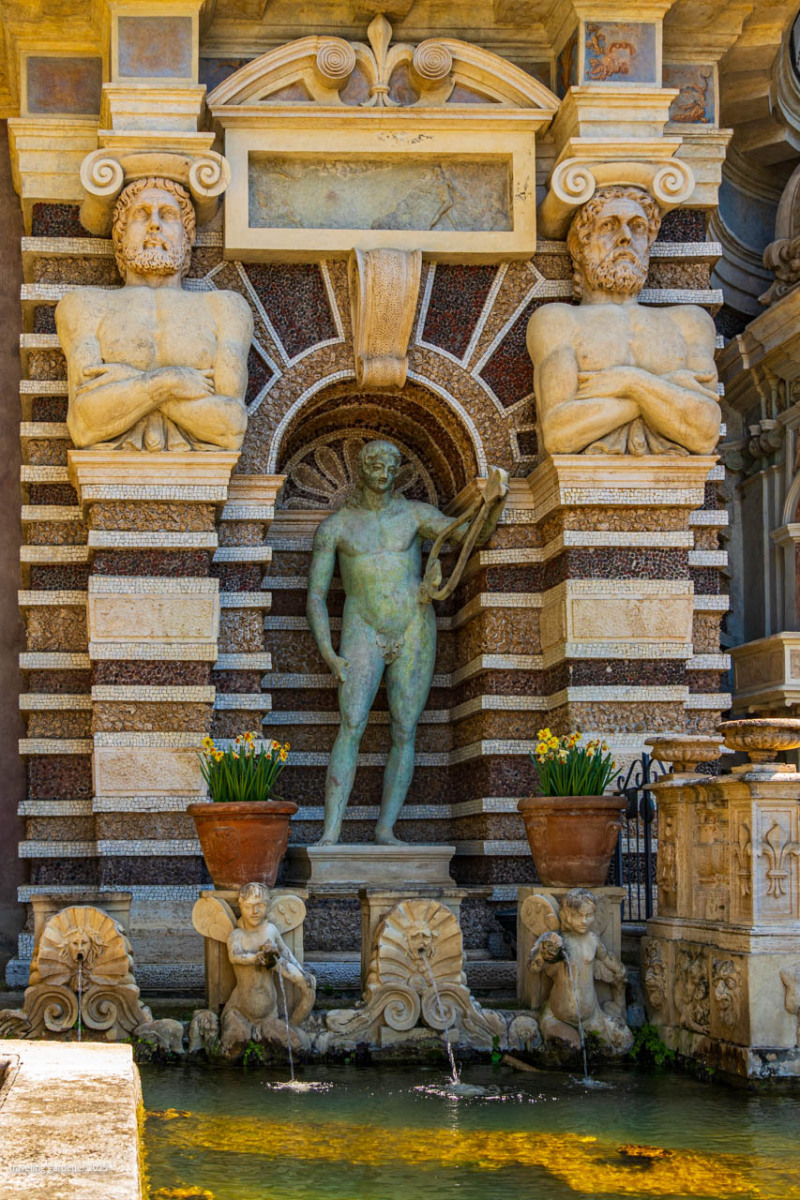
Music filled the garden when the organ fountain began to play a trumpet fanfare. This was followed by Renaissance madrigal melodies. “The Organ Fountain at Villa d’Este works using water pressure to create music. Water flows through the fountain and pushes air through pipes, much like a water-powered pipe organ. As the water moves, it forces air into different pipes, producing musical notes that sound like an organ playing. This clever system allows the fountain to “play” music naturally, using only the water flowing through it.” 2
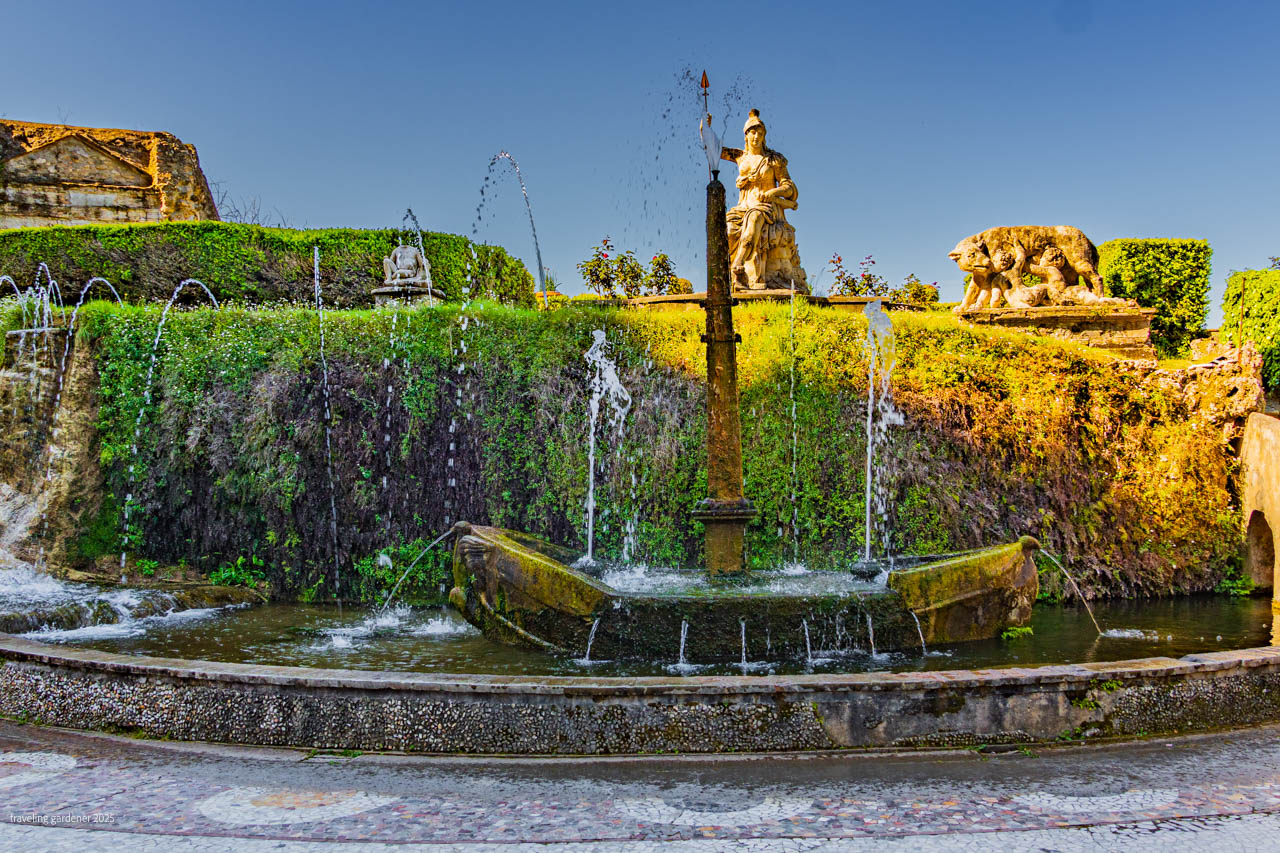
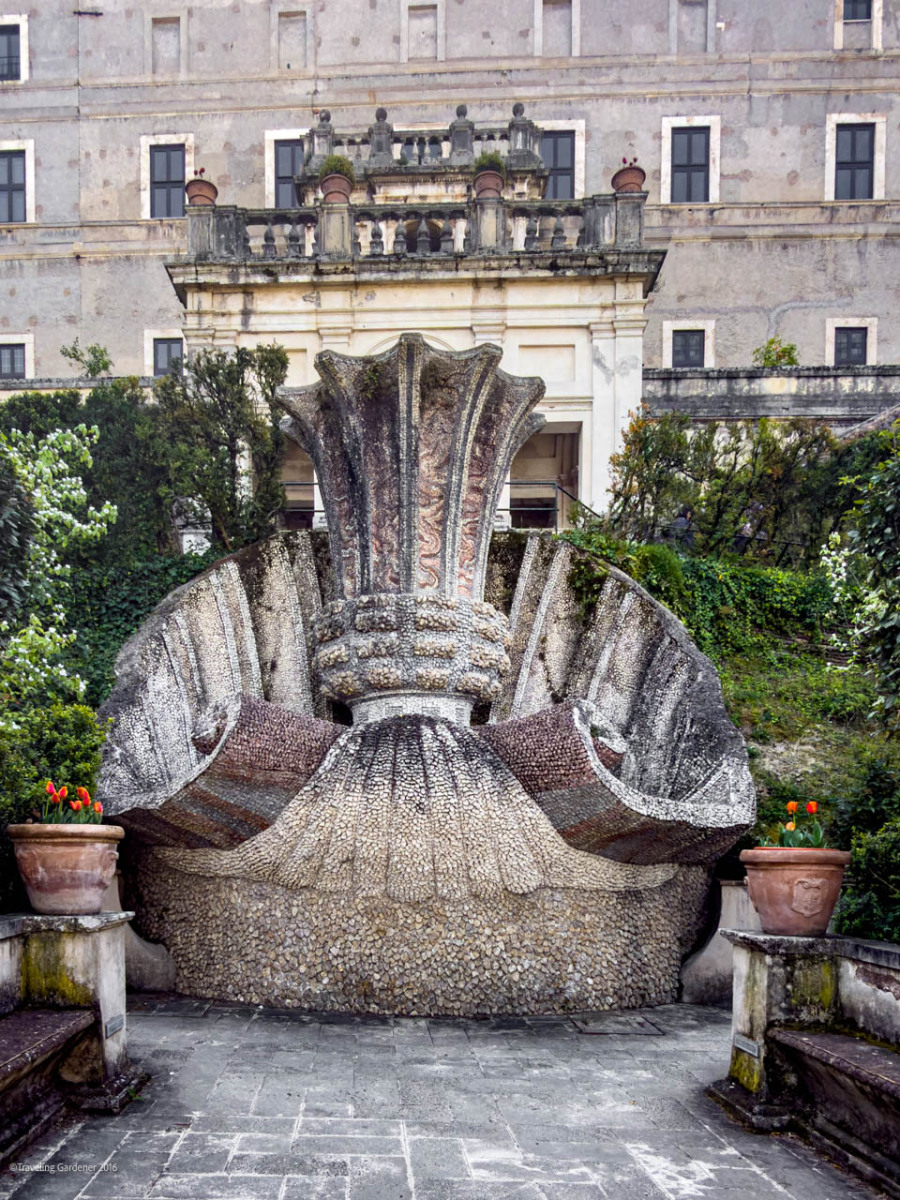
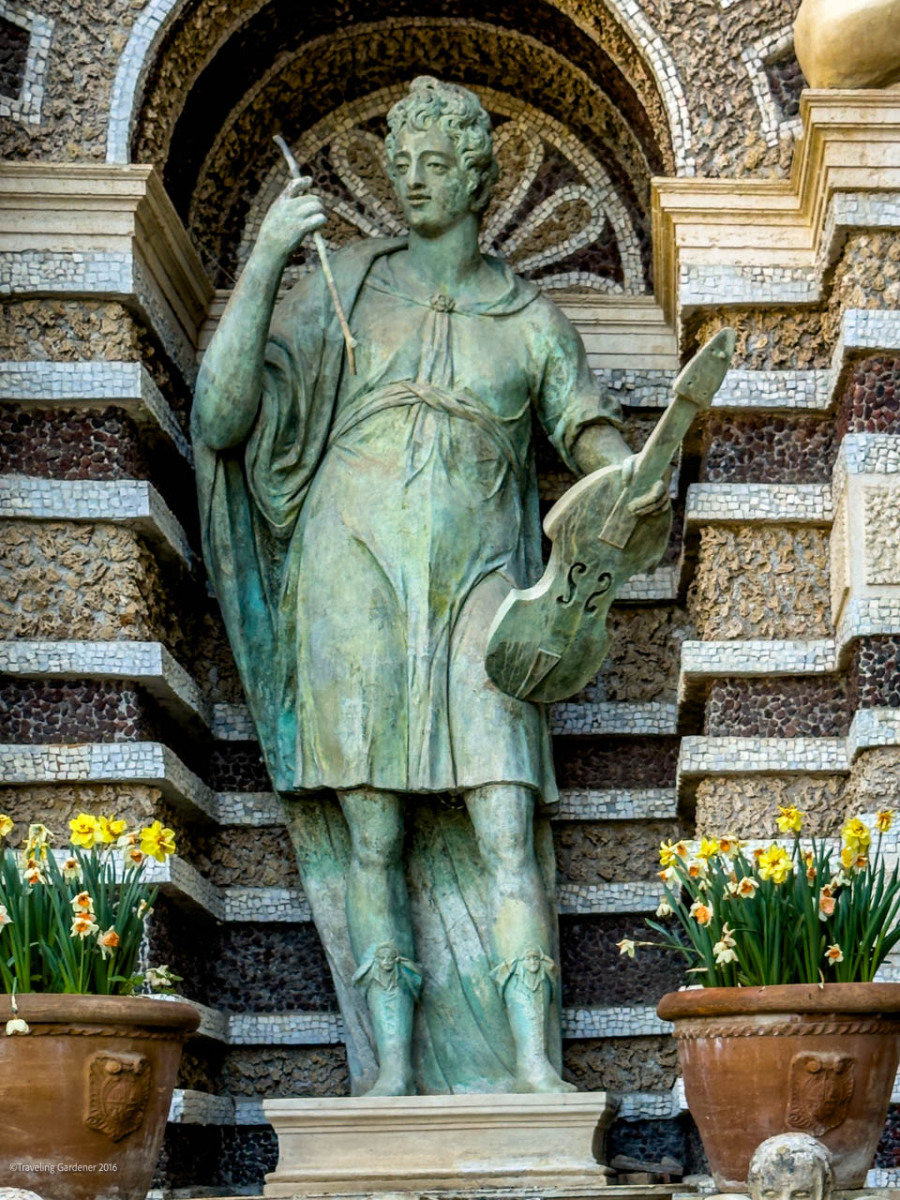
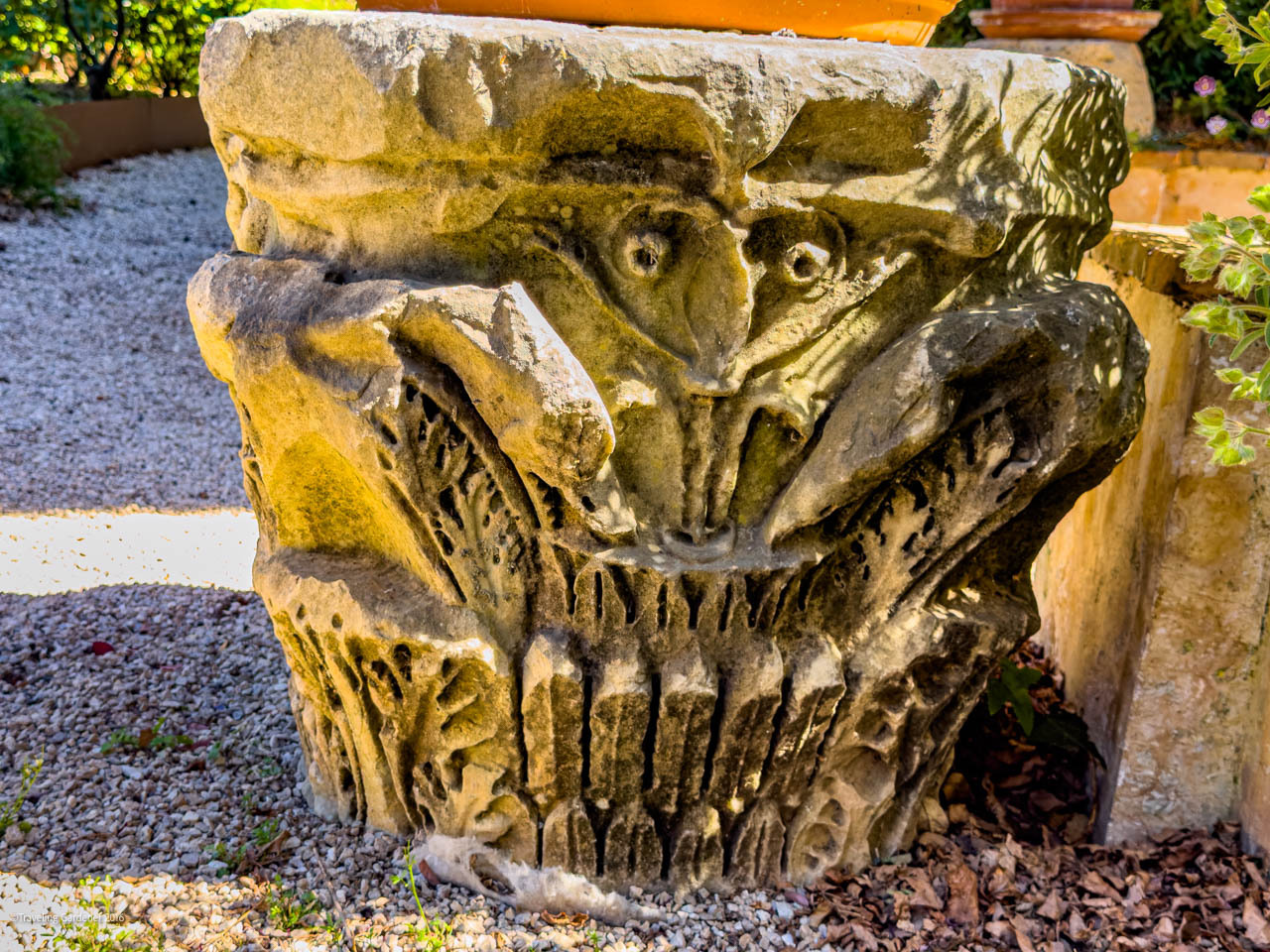
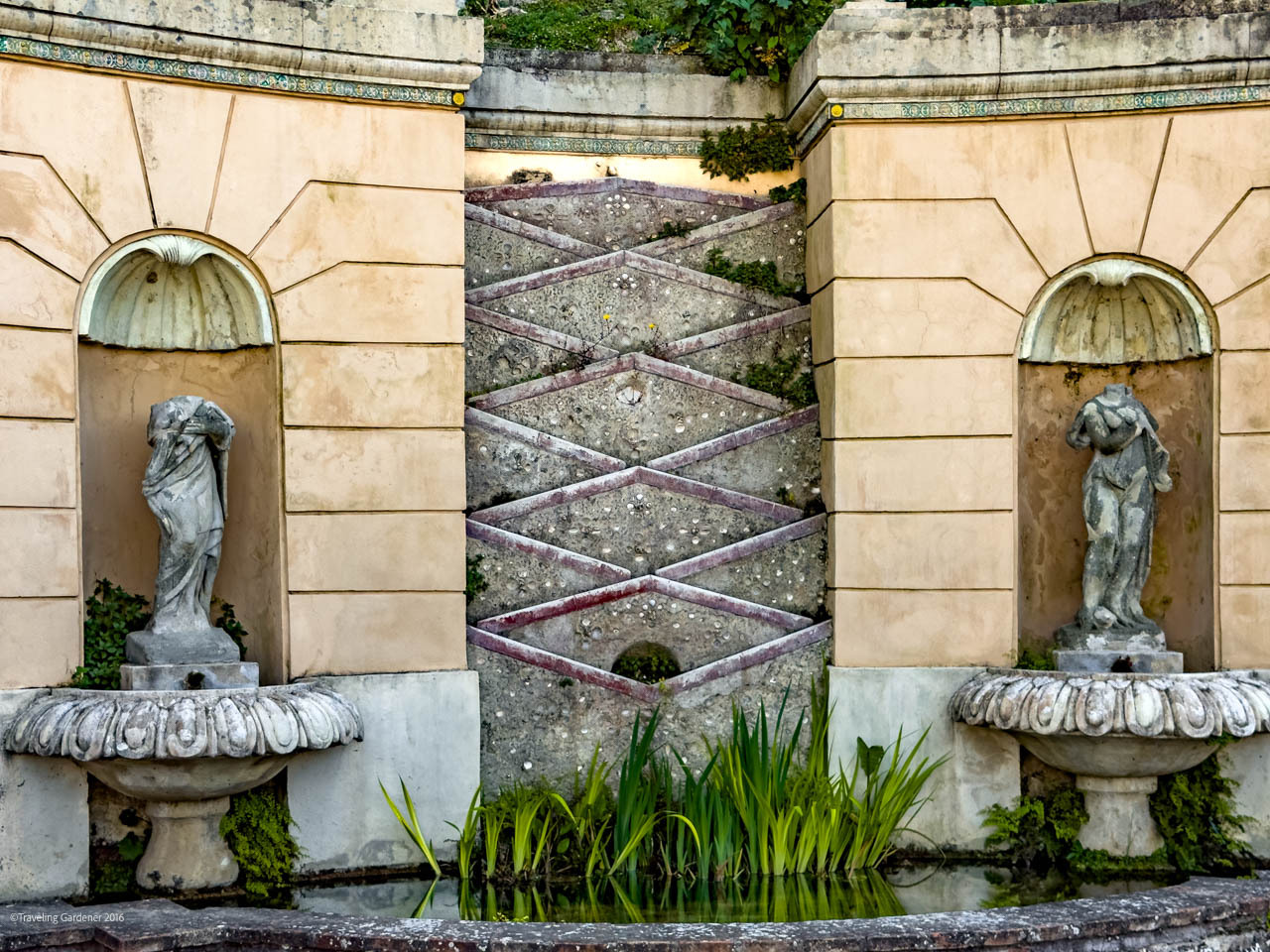
There are fountains featuring Pegasus, Bacchus, Neptune, Apollo, Orpheus, Hercules, and the Sybils. Classical education makes these names come alive, but as there are no photos of these Deities and as the water washing over their sculptures for 400 years has softened their features, it is a bit hard to see the significance of their placement throughout the garden.
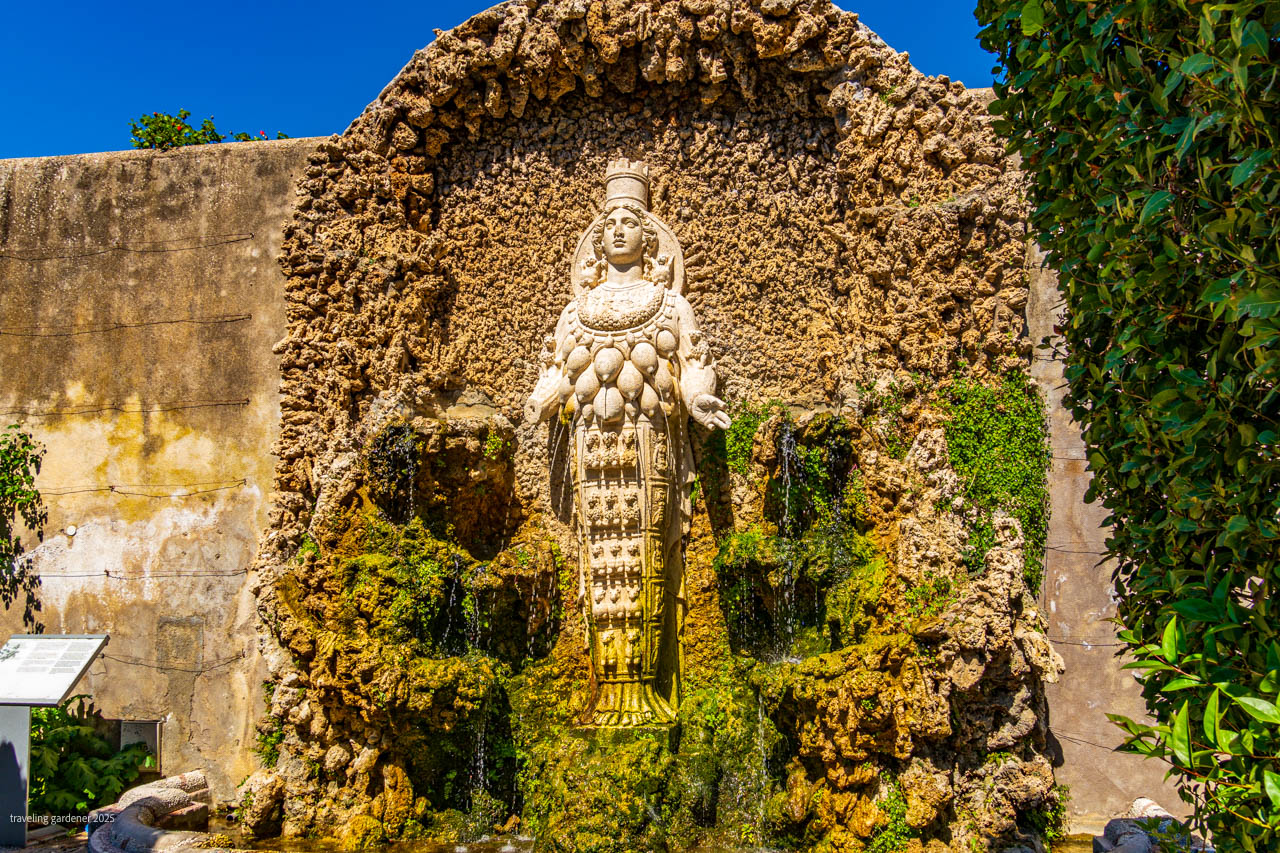
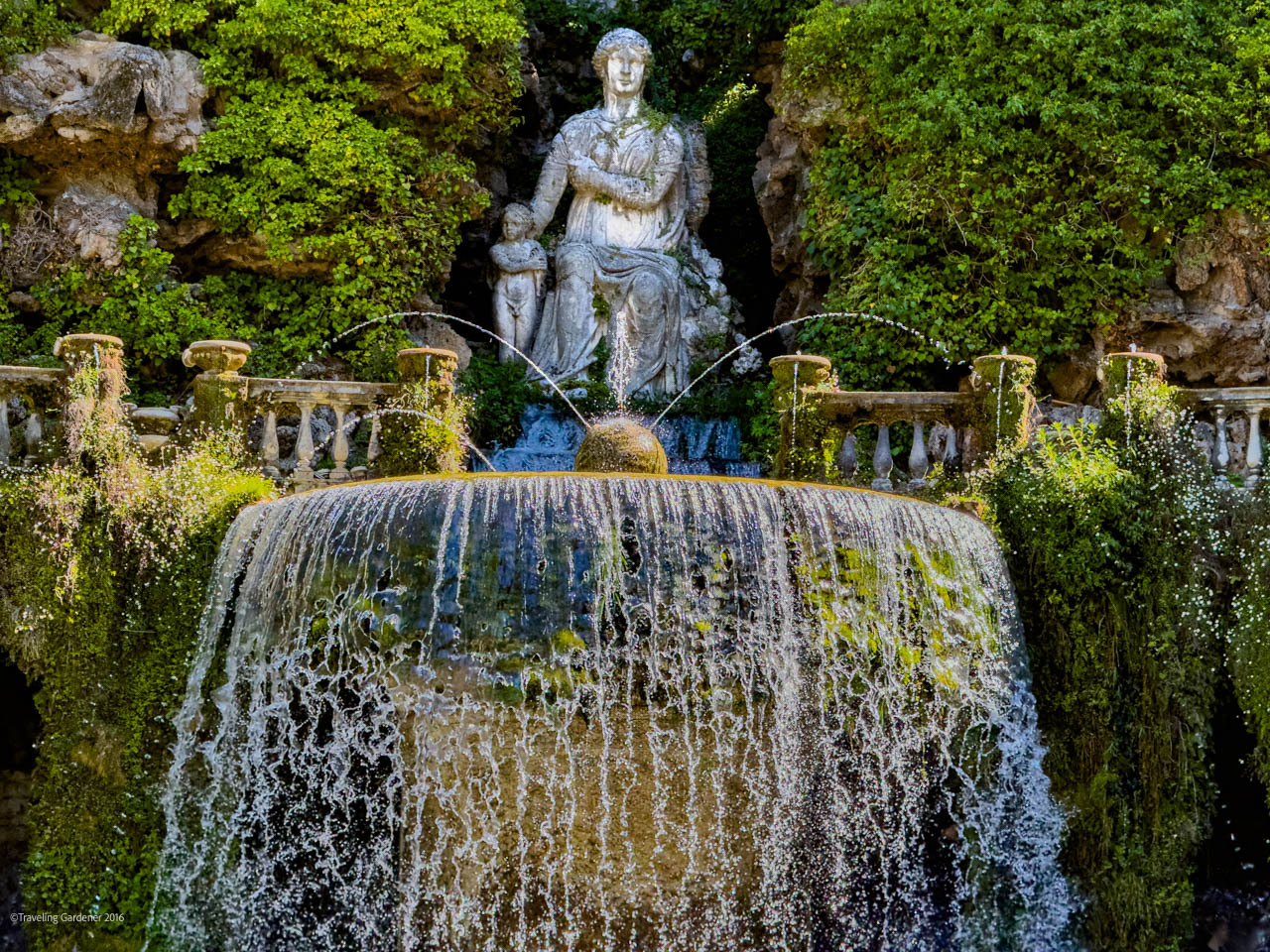
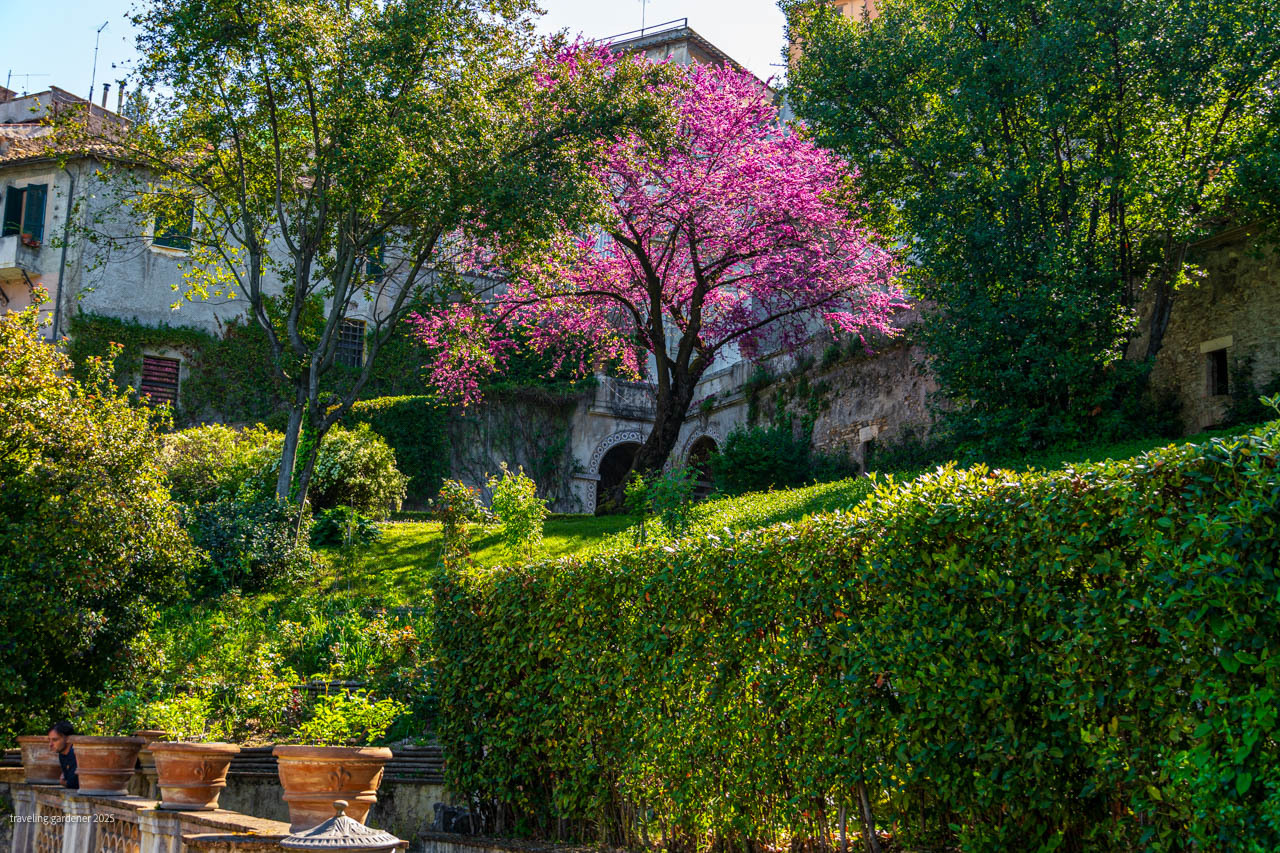
I wasn’t there to study the symbolism, though you can hardly avoid it when you are face-to-face with Diana of Ephesus, with her “numerous oval ornaments” representing fertility and abundance. I discovered Hercules is a legend, not a real person (regardless of the movies.) The garden is alive with the magic of the water, the green oasis surrounding it, and the vistas overlooking the surrounding hills. 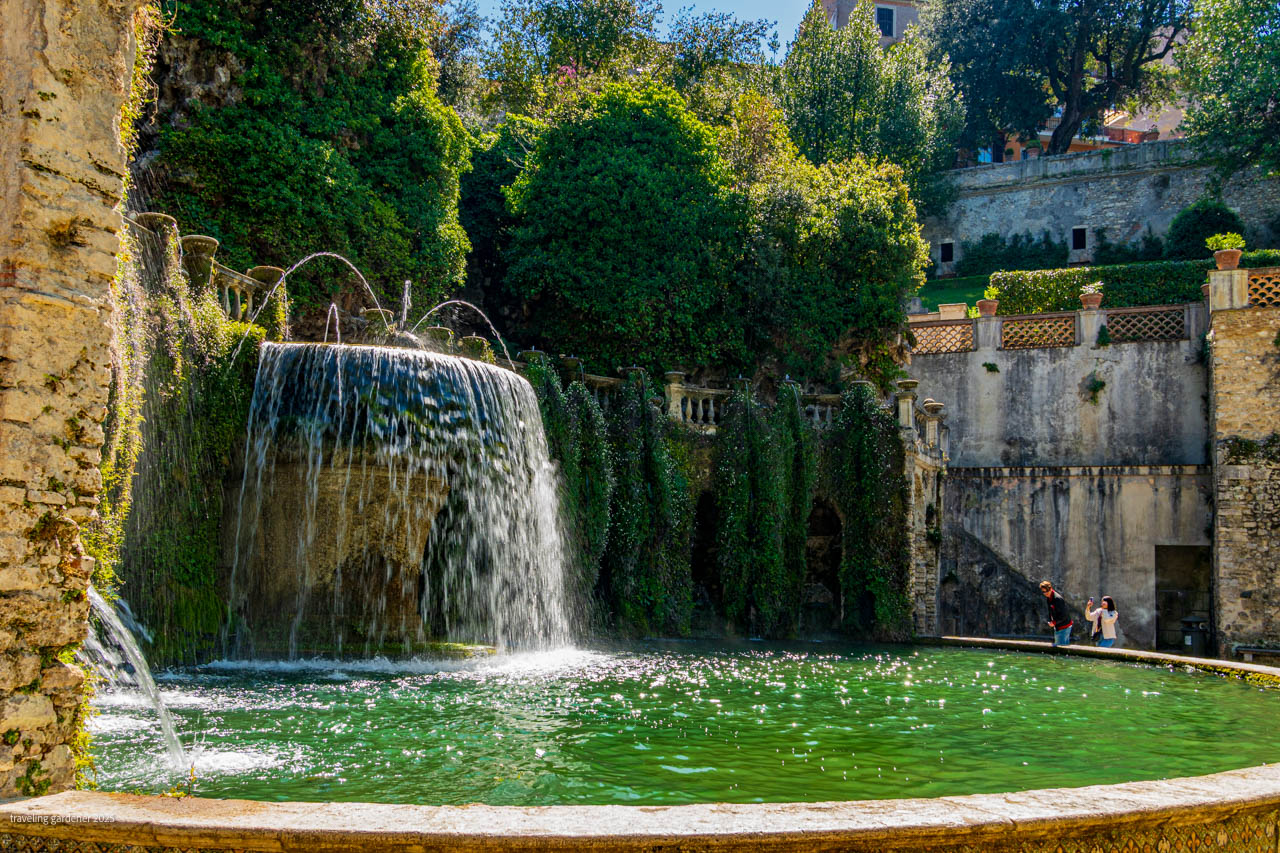
I had the pleasure of a full day to explore this garden. There are benches, ledges, and viewpoints to sit and enjoy this incredible garden designed 400 years ago. Cardinal Ippolitio spent his energy and his entire fortune to build this place. He hired the best architects, engineers, and sculptors. He died before it was completed. He meant to impress his visitors, and he dazzles this visitor still today.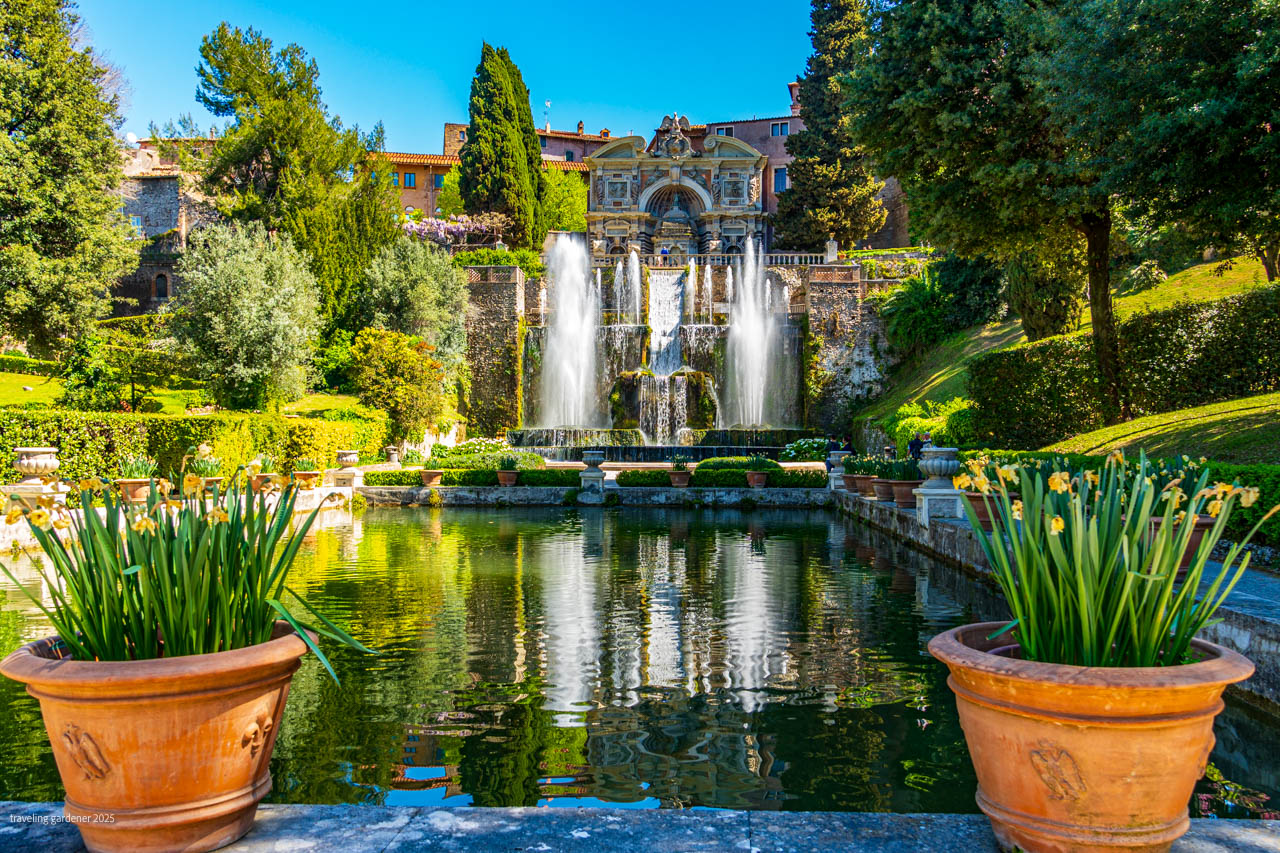
1 The Borgia family is famously known as the most corrupt and infamous dynasty of the Italian Renaissance. Lucrezia was accused of poisoning her enemies. They wielded absolute power through simony, (profit out of spiritual or religious elements” political marriages, and alleged assassinations. They were also brilliant, ruthless political operators and massive patrons of the arts.
2 as explained by ChatGPT (because seriously I didn’t understand how it worked!)
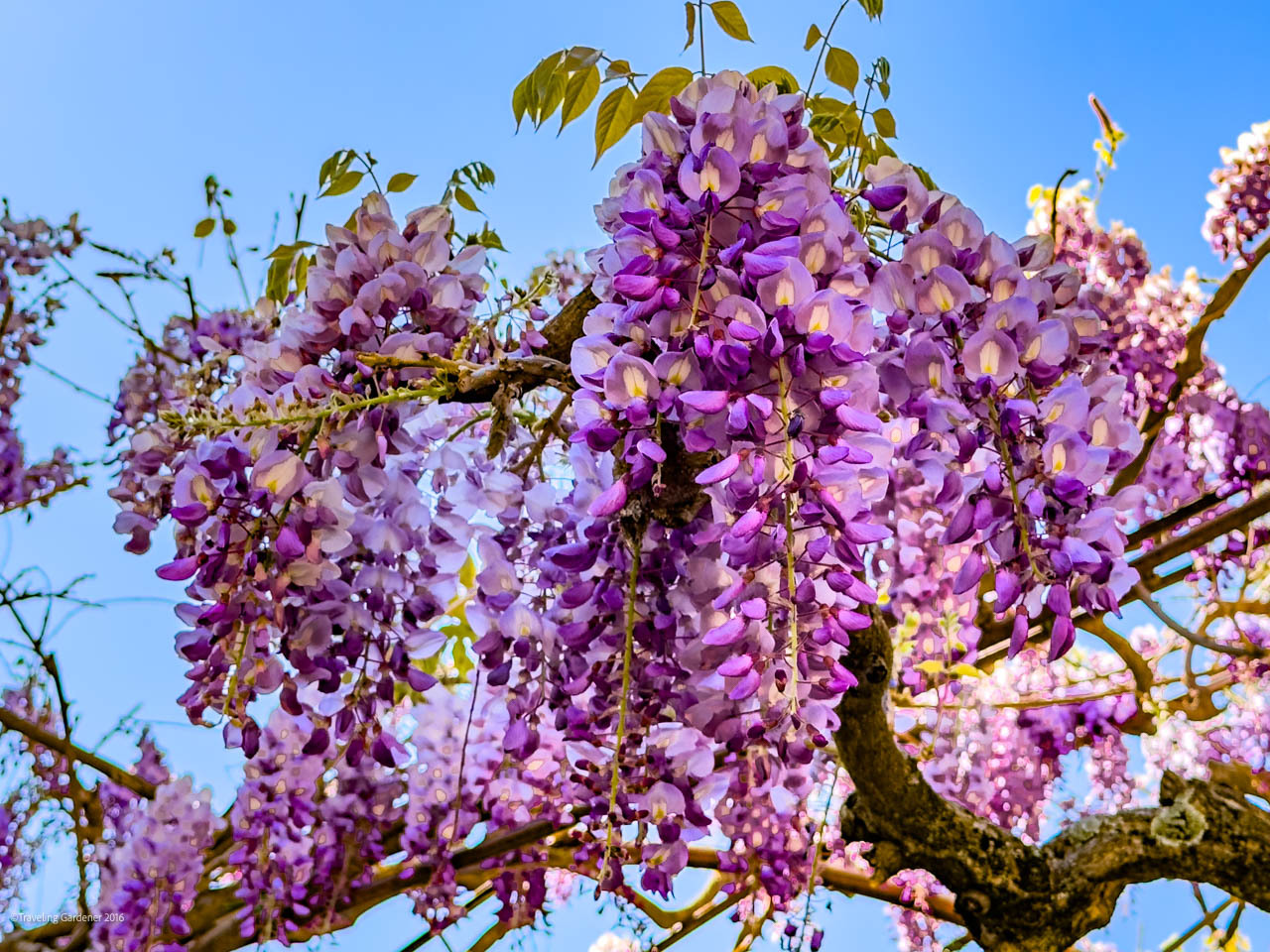
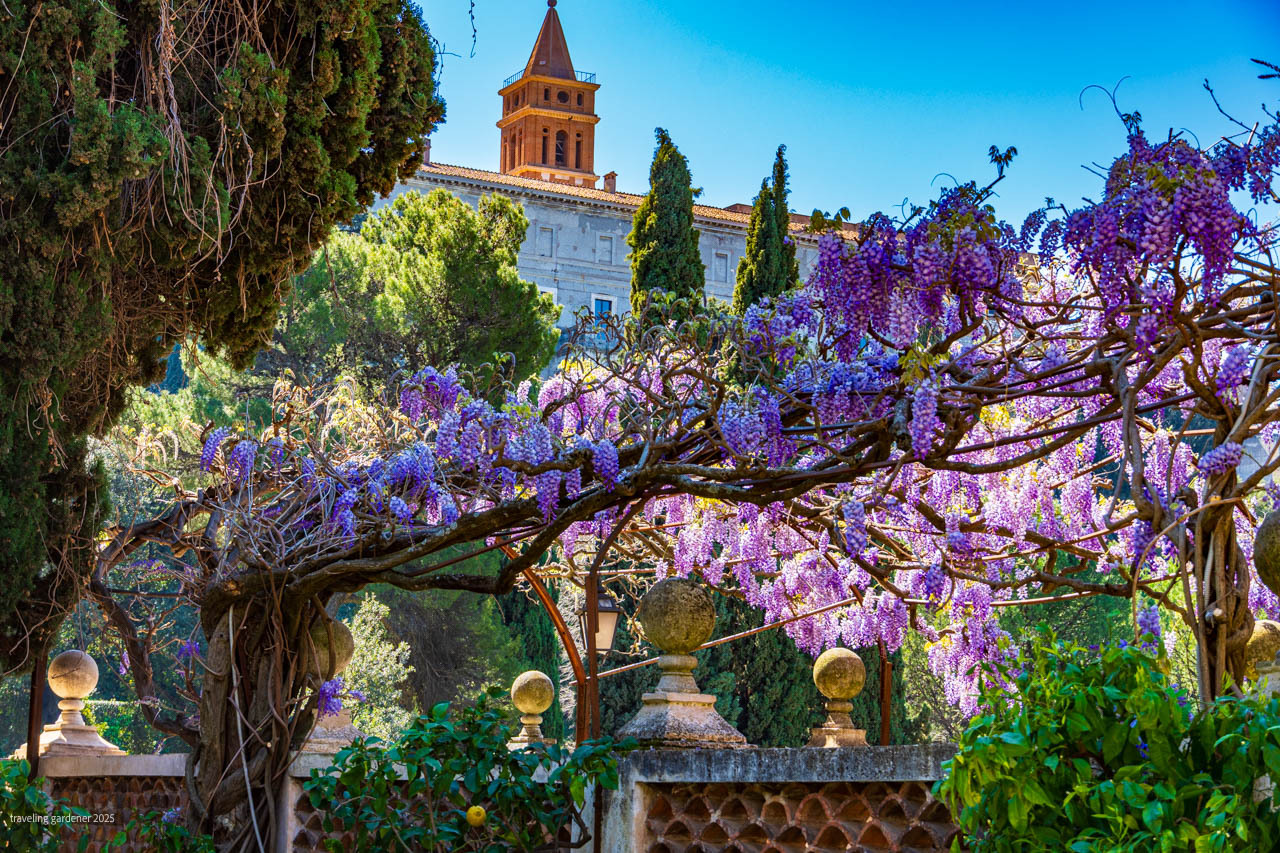
So lovely, love the wisteria. I must visit this garden!
Wisteria is so beautiful!
Ah, yes, so many glorious sights and sounds. To spend an entire day — not just a few hours at the end of the day — especially on a hot summer day — must make you think that “All roads [should] lead to [the Villa d’Este and not] Rome.” Thank you for taking us with you.
We did go directly to Tivoli and then a bit of time in Rome.
The best of trips, Linda, realizing all you saw as teens, has spurred you to keep exploring. We can always go back to nature’s beauty. Thanks M
It was quite a moment to return to the 100 fountains.
Linda,
You always deliver a most pleasant respite from my email in box,
Thank you
Oh thank you, email is really becoming a struggle!
What a magical garden with the amazing water features! I went to Rome once but never visited this garden. I sure wish I did! But thank you so much for taking us with you! I love it!
So happy you enjoyed the visit!
Thank you, Linda, for taking us to such a beautiful, magical place. The story and photos are wonderful.
It is an incredible garden!
Thank you, Linda, for sharing this. Like you, I visited this wonderful estate many years ago, and remember it fondly (if not in detail). I don’t read every one of your missives, but when I do, it’s like a mini-vacation for me, to a place that is so refreshing, so wonderful, so fascinating. Thanks!
Thanks for traveling along, and you didn’t have to pack!
This is a wonderful “visit.” Your descriptions, information, and insight blend so seamlessly with the fine photography. You take your readers to see it too. Thank you so much.
Thanks for sharing this beautiful place with us. It must be one of the most spectacular sites ever. Glad you were able to visit it again. Wonderful photos, Rich!
I look forward to projecting these on our big screen. It is as impressive as I ever could imagine or remember! Thanks for bringing me along twice!! life changing for us both, the beauty we got to see so young made a lifetime impact. Also pretty much ruined modern “art” for me, though. The sculpture at IU campus especially, looking like old pieces of equipment our dads might have thrown away!
Loved this!
What a fantastic garden and a fascinating story of why and how it was built.
The photos are brilliant.
My garden is starting to bloom and adding nice color to the backyard.
LeeAnn – In Montana